Why Dopamine Decor Sparks Joy in Bedrooms
Many individuals examine their bedrooms and sense that an essential element is absent, despite the space appearing orderly. Neutral palettes dominate these rooms, resulting in a safe yet uninspired atmosphere, often due to apprehension toward vibrant hues. Homeowners hesitate with bold choices, fearing fatigue or errors in execution. Inviting bedrooms, however, emerge from designs that embody genuine character. Dopamine decor addresses this need.
Dopamine decor extends beyond fleeting trends; it represents a philosophy that employs color, texture, and pattern to evoke happiness and ease. This approach aligns with emotional responses in spaces, prioritizing sensation over superficial appearance. Decades of guiding homeowners through redesigns reveal that effective transformations occur when individuals prioritize personal fulfillment over market appeal.
The Role of Color in Emotional Design
Assessing Personal Preferences Before Starting
Prior to selecting paints or fabrics, evaluate the desired energy for the bedroom. Not all individuals thrive in vivid yellows or pinks; some discover serenity in navy, emerald, or earthy ochre. The objective involves identifying tones that simultaneously invigorate and soothe, avoiding an overly saccharine aesthetic.
Follow these steps to gauge preferences:
- Arrange small samples of paints or textiles on the bed and observe emotional responses to each.
- Account for lighting variations; a warm coral may energize in sunlight but overwhelm in lamplight.
- Combine elements intuitively rather than adhering to predefined schemes from design resources.
Constructing a Revitalizing Bedroom Layer by Layer
Joyful bedrooms evolve through incremental, accessible modifications rather than comprehensive overhauls.
Selecting a Primary Hue
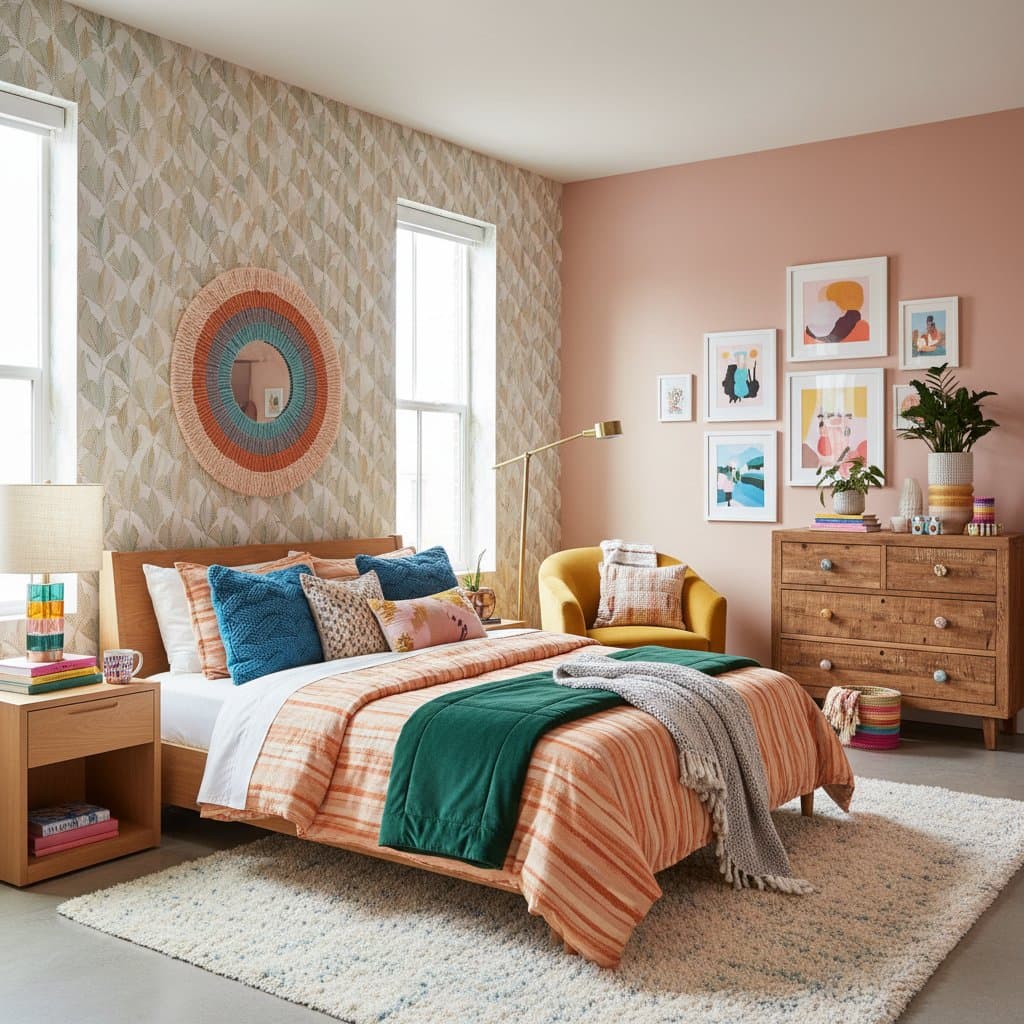
Establish a foundational color to define the atmosphere. Opt for sage, lavender, or azure for tranquil vibes; choose coral, ochre, or teal for lively tones. Incorporate this hue via a feature wall, linens, or drapery, ensuring repetition for cohesion.
Introducing Complementary Accents
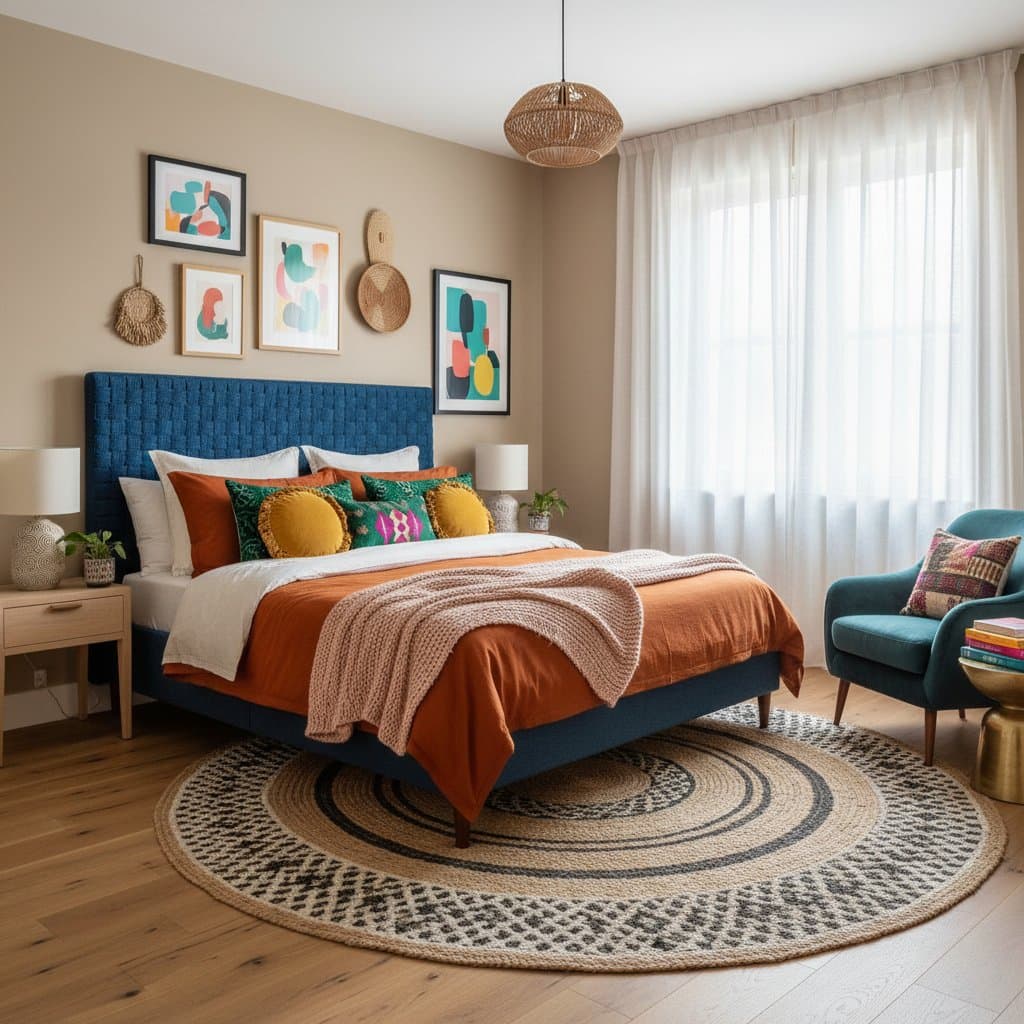
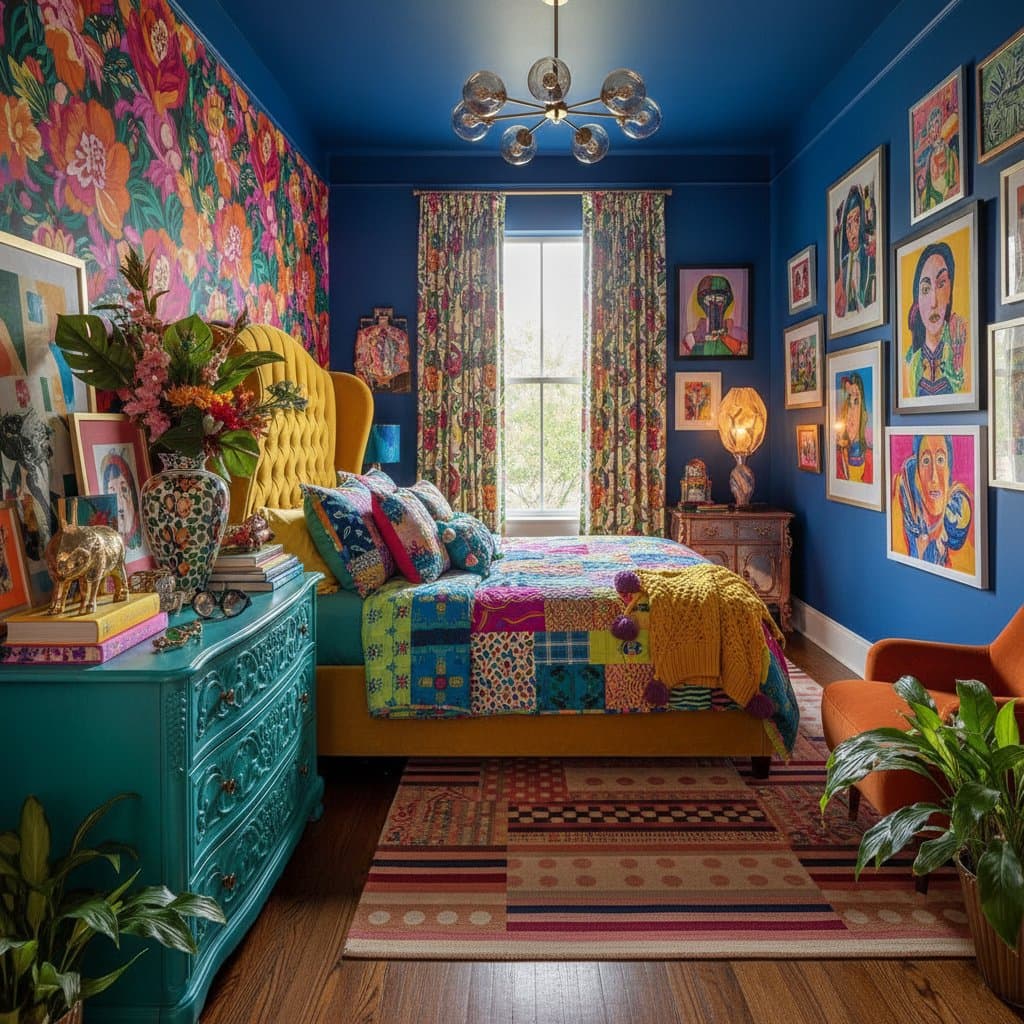
With the base established, incorporate two or three supporting shades through art, flooring, or upholstery. Pair teal bases with rust or blush for equilibrium. Contrasting elements stimulate visual interest, contributing to the desired emotional spark.
Incorporating Diverse Textures
Hues require textural support for dimension and coziness. Blend plush velvets with crisp linens, rattan with polished stone, or shag with matte woods. Such tactile variety sustains sensory involvement.
Infusing Personal Significance
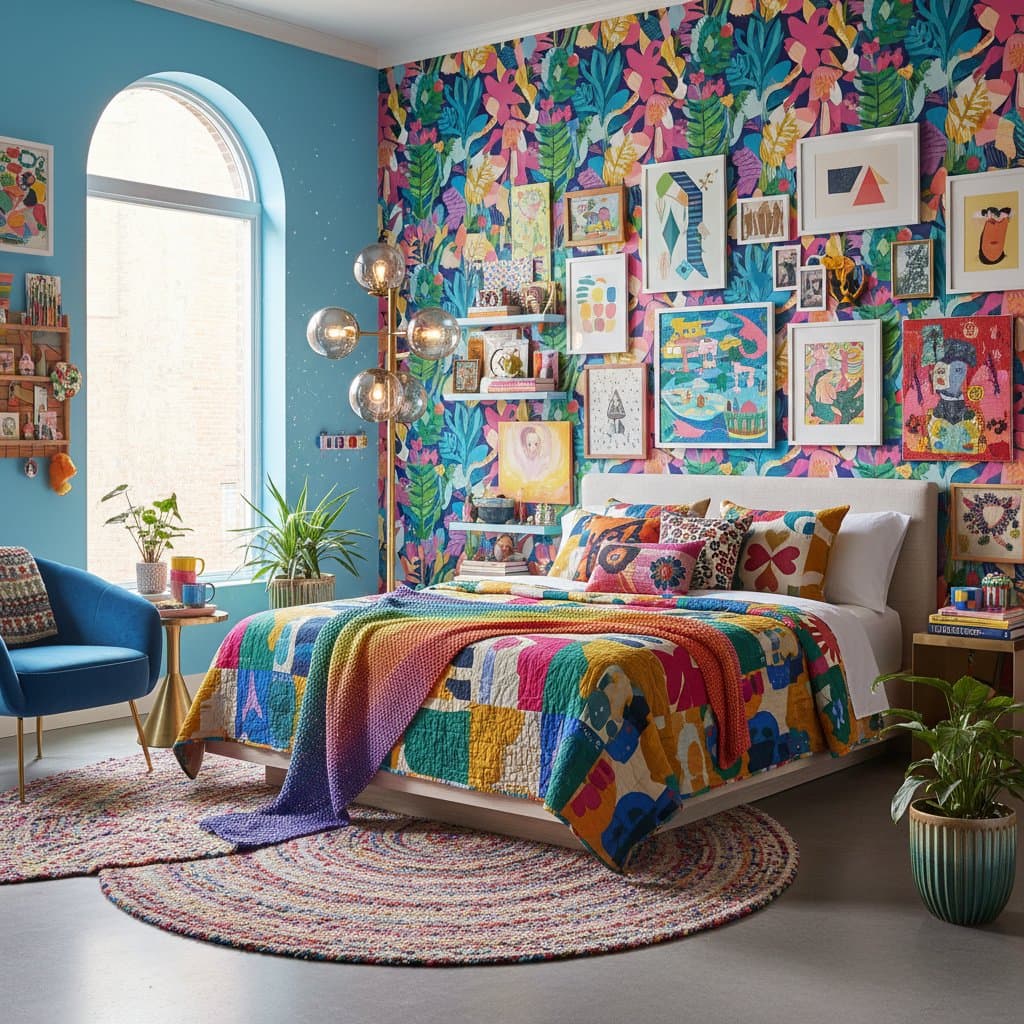
Dopamine decor flourishes through bespoke elements. Showcase cherished photographs, mementos from journeys, or unique vintage finds. These selections bridge emotional voids, deriving satisfaction from authenticity over flawlessness.
Optimizing Illumination for Atmosphere
Illumination profoundly influences design outcomes. Employ soft, warm sources and incorporate adjustable fixtures like table lamps or string lights. Avoid stark ceiling fixtures, which diminish vibrancy; subtle glows amplify chosen colors and surfaces.
Pitfalls in Dopamine Decor and Prevention Strategies
Enthusiasm for dopamine decor frequently wanes midway, leading to common errors. Limit palettes to three core tones, repeating them to prevent chaos from excessive brightness. Balance bold walls with subdued furnishings, or vivid textiles with plain surfaces.
Ensure practicality aligns with aesthetics; storage and flow must accommodate routines. Experience demonstrates that innovative designs falter without functional integration. Bedrooms demand restful utility as the foundation, with expression as enhancement.
Engaging Experts When Necessary
For alterations involving wiring, embedded lights, or structural changes, consult qualified specialists like electricians or contractors to guarantee safety and precision. Personal intuition suffices for most aspects, eliminating the need for full design oversight. Brief advice on arrangement or palettes can avert costly missteps if challenges arise.
Strategies for Enduring Results
Projects refined over numerous renovations yield reliable outcomes through these practices:
- Apply samples to walls and observe them over several days before final decisions.
- Employ peelable wallpapers or adhesives for pattern experimentation without permanence.
- Refresh accents quarterly by exchanging covers or displays to sustain vitality.
- Foster cohesion in varied styles via recurring motifs or shades.
- Prioritize intrinsic satisfaction above external validation, true to dopamine decor's essence.
Embracing the Evolving Sanctuary
As the bedroom mirrors individual essence, daily interactions reveal nuanced mood enhancements. Morning light invigorates, evening tones soothe, weaving emotional resonance into routines. This alignment transcends chance, stemming from intentional spatial dialogue.
Over time, the design integrates into habits, potentially inspiring broader home applications. When environments reciprocate positivity, upkeep transforms into nurturing investment. Dopamine decor builds rewarding havens that affirm identity and belonging upon entry.