Dual-Zone Bedrooms: Reshaping Rest Through the Sleep Divorce Trend
Imagine one partner bundled in heavy blankets while the thermostat rises, as the other seeks cooler air across uncovered sheets. This nightly conflict over comfort affects many households. Dual-zone bedrooms address this issue by redefining shared spaces for individual rest without diminishing closeness.
The sleep divorce concept, where couples opt for separate sleeping arrangements, has shifted from a taboo to an endorsement of self-care. It promotes respect for personal needs in rest. By establishing distinct zones, partners secure better sleep while preserving emotional bonds.
Factors Driving the Rise of Dual-Zone Bedrooms
Daily demands strain physical and mental resources, making quality sleep essential. Shared beds often lead to compromises on schedules, temperatures, and mattress preferences, fostering pre-dawn tension. Dual-zone designs provide tailored environments within a single room or adjacent areas.
Crafting Unified Yet Distinct Spaces
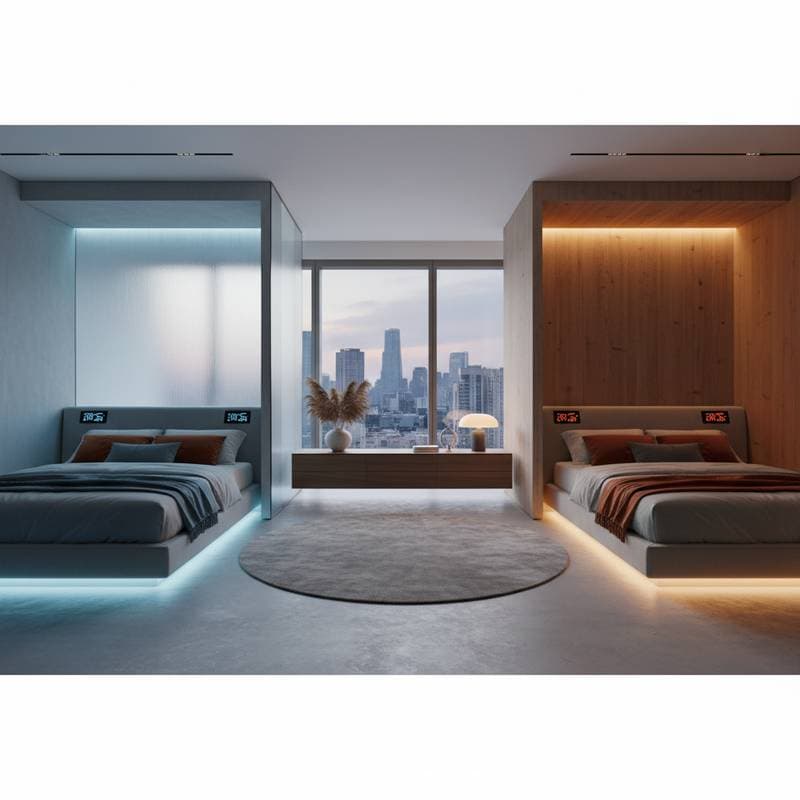
Successful dual-zone bedrooms achieve balance between separation and unity. Design twin areas that honor personal styles while sharing a cohesive theme. Begin by discussing priorities: one partner may require blackout shades and sound machines, the other natural dawn light and ambient sounds.
Incorporate subtle dividers such as sliding screens, lightweight curtains, or open shelving to delineate zones without isolation. Select a unified color scheme of serene neutrals or gentle blues for continuity. Add individual elements like personal artwork, potted plants, or custom fixtures to infuse character.
For compact rooms, rearrange furnishings strategically. Position headboards back-to-back or elevate platforms at angles to define areas while ensuring smooth circulation. These adjustments make personalization seamless and integrated.
Scientific Benefits of Independent Sleep Environments
Experts emphasize that continuous sleep supports health and emotional stability. Minor interruptions from movement, noise, or climate variations disrupt cycles, affecting concentration and interactions over time. Dual-zone setups minimize these issues by granting environmental control.
A partner preferring cooler conditions adjusts settings freely, while another avoids disturbances from devices. This leads to more restorative sleep and, counterintuitively, heightened daytime intimacy. Rested individuals engage more effectively, reducing conflicts and enhancing shared experiences.
The sleep divorce thus serves as a tool for relational strengthening. It reallocates energy from nighttime disputes to daytime vitality.
Sustainable Customization Options for Dual Zones
Eco-conscious couples can build zones using natural materials. Opt for breathable organic fabrics like cotton, bamboo, or linen sheets that naturally moderate temperature. Wool toppers provide insulation without chemicals, and natural latex offers resilient support.
Address temperature variances with efficient tools: install fans that direct airflow precisely or use low-energy heaters. Introduce air-purifying plants such as snake plants, peace lilies, or pothos to regulate moisture and refresh the atmosphere.
Select adjustable lighting with dimmable LEDs or smart systems for personalized ambiance. Incorporate sustainable elements like reclaimed wood frames, clay accents, or woven rattan for a calming, grounded feel that aids relaxation.
Steps to Introduce Dual-Zone Elements
Begin implementation gradually to test compatibility. Introduce separate duvets or blankets to eliminate pulling during sleep. Layer pillows and bedding variations for targeted temperature management.
In larger homes, reconfigure layouts to form dedicated corners for winding down or resting. Assess budgets and spaces: urban dwellers might use multifunctional furniture, while those in bigger properties expand into suites. The adaptability ensures accessibility across living situations.
Strengthening Bonds Through Optimized Rest
Dual-zone bedrooms illustrate that relationships flourish with intentional space. Respecting sleep differences revives mornings filled with energy and attentiveness.
Envision zones in equilibrium: one bathed in soft illumination, the other shrouded in darkness, each promoting profound recovery. This arrangement prioritizes health while sustaining unity. Ultimately, superior rest transforms daily interactions, fostering lasting connection.