Japandi Fusion: The Path to Serene Dining in 2026
My dining room once triggered anxiety. The space occupied an uncomfortable position between a provisional arrangement and a deferred decoration project. It featured a secondhand table, mismatched chairs, an overly bright overhead fixture, and a wall shade that never suited the mood. Each dinner felt like lingering in an incomplete idea. Then, I encountered Japandi design, and a shift occurred.
With two decades of experience writing on home design, I have observed numerous trends emerge and fade. Japandi stands apart. It avoids the pursuit of flawlessness or the need for complete furnishings. Instead, it cultivates environments that promote calm, purpose, and genuine habitability. Applied to a dining room, this approach yields elegance grounded in everyday reality.
Defining Japandi Design
Embracing Imperfection in Design
Wabi-sabi in Japandi views flaws as integral to beauty. A subtle fissure in a crafted bowl, irregular patterns in wood, or faint creases in fabric elevate the authenticity of the setting. These details render the dining experience tangible and rooted.
This perspective proved freeing. Previously, I pressed napkins smooth for gatherings. Now, I value the lived-in softness of repeatedly laundered linen. The minor mark on my oak table no longer concerns me; it chronicles gatherings and extended discussions.
Balancing Cultural Influences
Japandi achieves equilibrium. Scandinavian elements introduce brightness and openness, while Japanese aspects provide stability and restraint. Their combination produces rooms that feel expansive yet secure.
In a dining context, this balance manifests as follows:
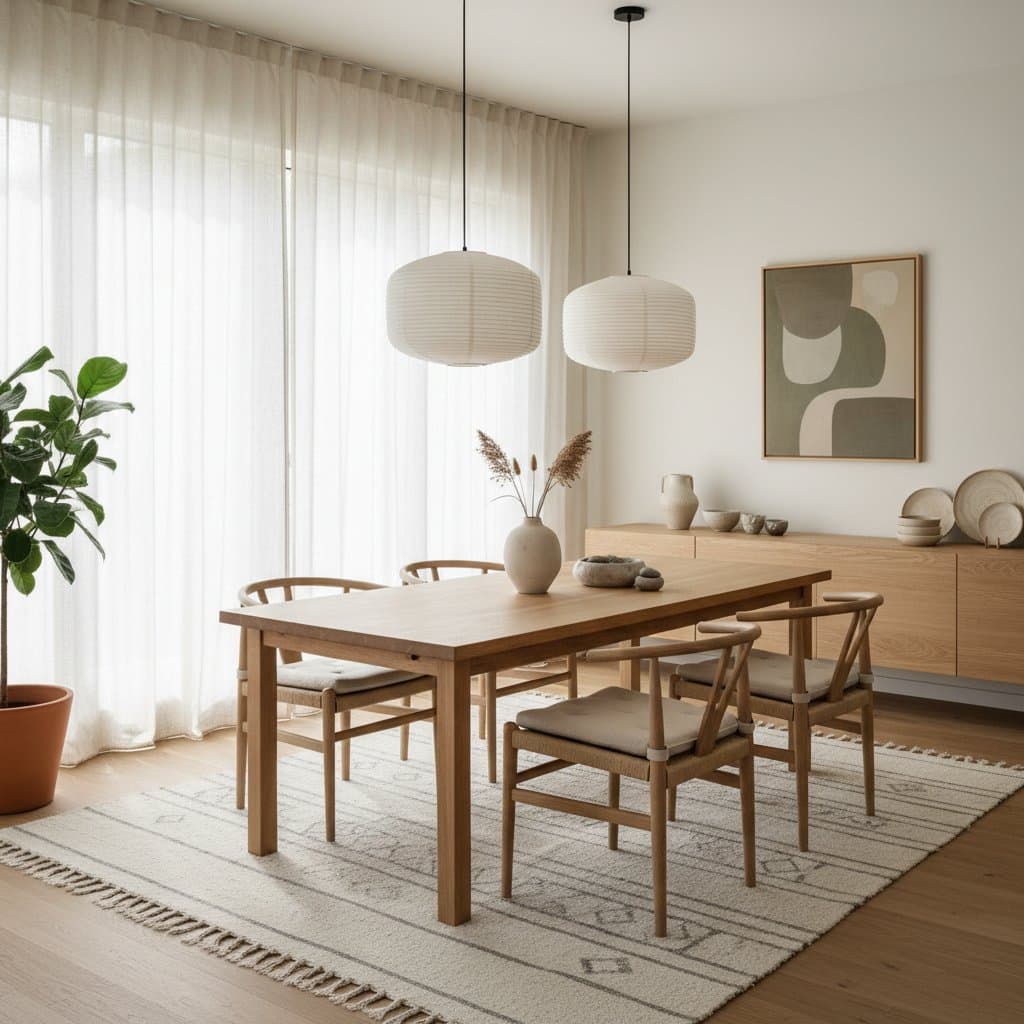
- Neutral palette. Select whites, beiges, pale grays, and earthy browns. These tones offer a tranquil foundation that highlights tactile qualities.
- Organic materials. Incorporate wood, stone, clay, and cotton to evoke nature. Steer clear of shiny or artificial surfaces.
- Uncomplicated shapes. Opt for furnishings with precise edges and subtle arcs. Pair a Scandinavian table with Japanese-style seating for cohesion.
- Layered illumination. Combine ceiling, surface, and ambient sources like candles to deliver warmth without intensity.
- Purposeful accents. Ensure each object serves a function, whether utilitarian or simply uplifting.
Implementing these principles surprised me with their soothing effect. The dining room improved visually and encouraged a deliberate pace.
The Psychological Impact of Dining Spaces
Environments where we dine shape our eating habits and interactions. My compact Staten Island apartment merges the dining zone with a writing area. Yet, amid plush fabrics, diffused daylight, and a table evoking a tranquil retreat, I consume meals with greater awareness. Discussions extend naturally.
A setting that promotes quietude grounds the act of eating profoundly. Japandi avoids ostentation. It encourages presence in the now.
Implementing Japandi in Your Dining Area
Transformation requires no total overhaul. Japandi excels with existing items, provided you proceed mindfully.
Declutter first. Eliminate excess visuals from the space. Retain only calming essentials.
Select a centerpiece. Position the table as the focal element. Choose a sturdy wood piece with a basic form; prioritize quality over cost for enduring appeal.
Layer textures thoughtfully. Contrast sleek pottery with coarse linen, or matte surfaces with varied wood finishes. Aim for unified variety.
Minimize ornamentation. One vase holding sparse foliage outshines a cluttered display. Allow negative space to contribute aesthetically.
Prioritize illumination. Replace stark fixtures with a rice-paper shade that scatters light evenly. Supplement with candles or a compact lamp for evenings.
Incorporate textiles for coziness. Place a neutral mat beneath the table to delineate and texturize the area. Favor jute, wool, or cotton weaves.
Introduce foliage sparingly. Greenery vitalizes without overwhelming. A modest fern pot or lone monstera frond in clear glass suffices.
Reflections on My Japandi Journey
My initial effort included missteps. An online-purchased bench appeared sleek but proved uncomfortable. My husband endured it briefly before reverting to familiar chairs. The takeaway: Prioritize ease above all.
Subsequently, I chose inviting additions like a linen path, artisanal plates, and a Kyoto-esque decanter. Gradually, the area evolved from task to sanctuary.
Even my dog, typically couch-bound, now rests near the table during meals. Japandi alters perception and sensation alike.
Japandi's Relevance Today
Extended home time has highlighted environmental effects on well-being. Japandi's understated minimalism counters chaos. It emphasizes choice over deprivation.
In an accelerating, sensory-rich world, this style prompts deceleration. For dining, it elevates meals to mindful ceremonies.
Cultivating Lasting Tranquility
Japandi's strength lies in its adaptability and sustainability. Build it incrementally with resonant acquisitions. Blend vintage discoveries and bespoke crafts. Tailor the level of sparseness or snugness to your preference.
At my table now, I attend to the clink of utensil on plate, the flicker on wood, and the faint urban murmur. Serenity prevails without fragility.
Japandi embodies accord, ease, and truthfulness. Apartments or estates alike can adopt it for dining harmony.
Steps to Initiate Your Transformation
Begin modestly in your dining room. Tidy the surface, ignite a candle, and place one organic item, such as a stem, vessel, or crafted plate. Observe the shift in atmosphere.
Japandi accommodates your current setup. It requires neither renovation nor extravagance.