The Bold 2026 Comeback of Grandmillennial Dining Rooms
Homeowners increasingly sense a void in contemporary spaces dominated by minimalism. Sleek lines and neutral palettes once promised serenity, yet they often deliver isolation. Enter the grandmillennial dining room, a resurgence that infuses tradition with contemporary edge. This aesthetic draws from heirloom elegance, floral motifs, and artisanal details to foster genuine warmth and narrative depth.
The shift stems from a collective fatigue with impersonal environments. Dining areas merit spaces that encourage gatherings, not mere functionality. Grandmillennial design achieves this through layered elements that evoke heritage while embracing modern sensibilities. Such rooms transform routine meals into memorable occasions.
Why Modern Dining Rooms Lost Their Soul
Understanding the Grandmillennial Look
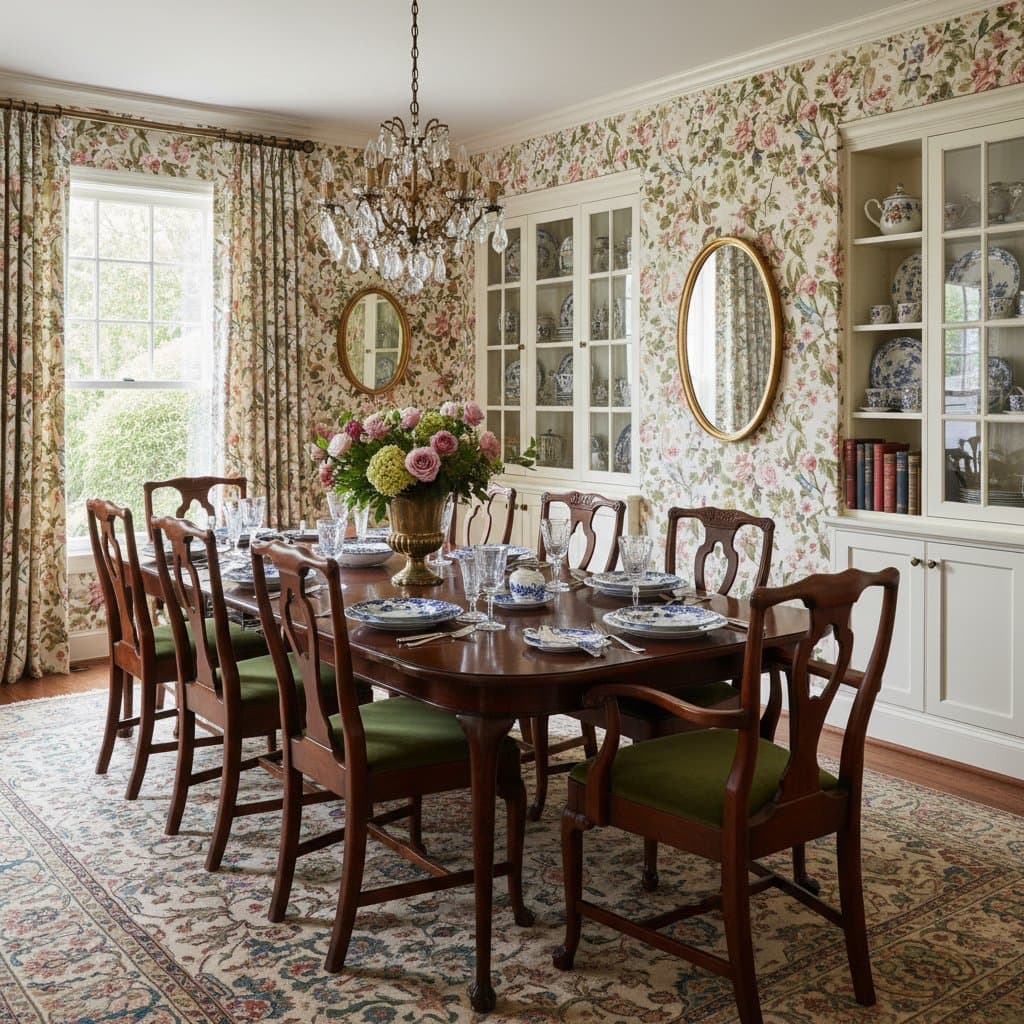
Grandmillennial style merges classic motifs with assured execution. Influences span pastoral English estates, refined Southern verandas, and poised mid-century layouts, all tempered by today's precision. Success hinges on curation over accumulation.
Key features include:
- Chintz and floral motifs: Delicate, recurring designs that soften angular forms.
- Antique or reproduction furnishings: Polished mahogany surfaces, turned-leg seating, and glazed cabinetry.
- Layered textiles: Drapery, bolsters, and carpets that harmonize through subtle variations.
- Ornate illumination: Faceted pendants, metallic wall fixtures, or shaded table lamps.
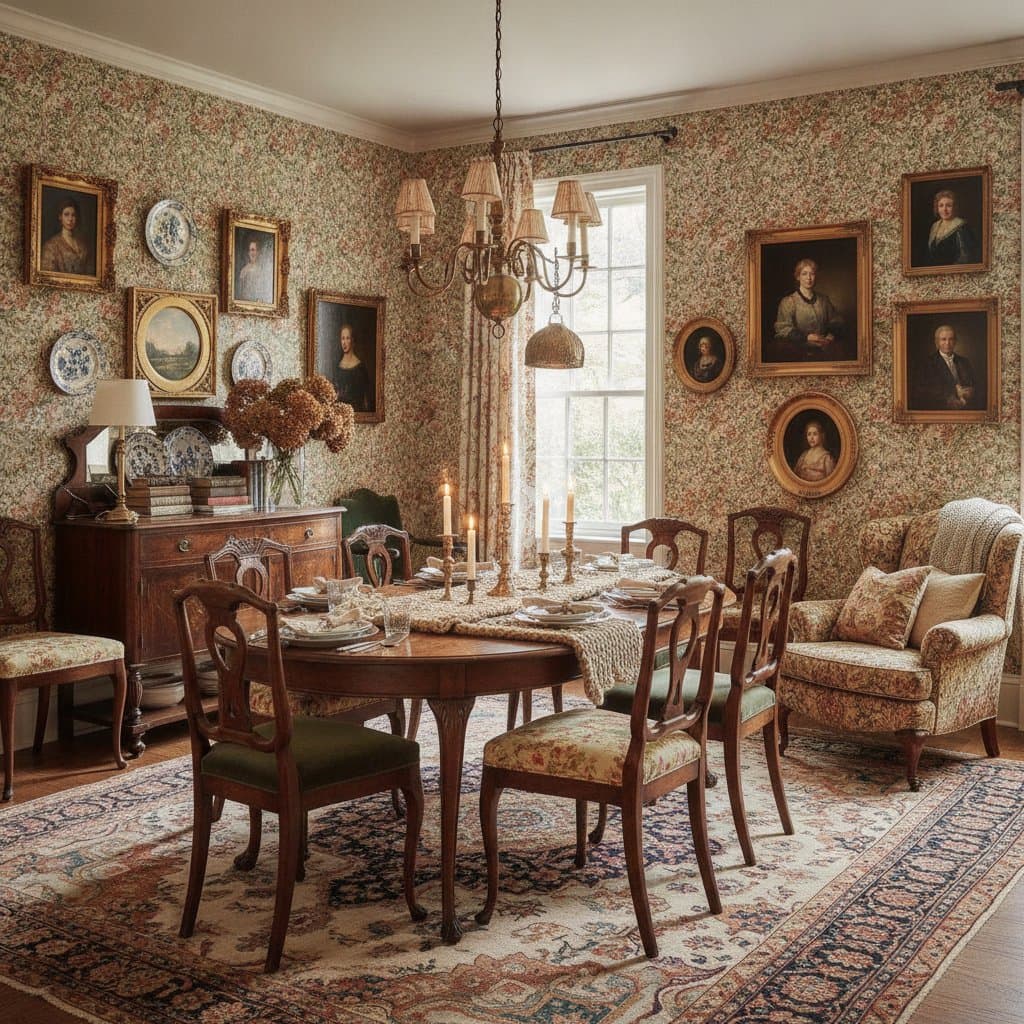
- Evocative accents: Framed heirlooms, porcelain collections, and crafted textiles.
Authenticity defines the approach. Mass-produced items dilute the essence; prioritize pieces with provenance or patina to cultivate an organic evolution.
Preparing to Bring the Look Home
Inventory existing possessions before acquisitions. Attics and basements often harbor forgotten treasures like inherited buffets or vintage dishware overlooked in sparse setups. These form the authentic core.
Evaluate the room's architecture next. Natural illumination and details such as paneled walls enhance the style. Introduce dimension via peel-and-stick moldings or gallery arrangements if inherent features fall short; these installations require minimal tools like levels and adhesives.
Establish a budget grounded in longevity. Source from flea markets or online consignments for value; allocate funds toward durable foundations rather than fleeting accents. Patience yields cohesion, as the aesthetic builds gradually.
Building the Foundation: Walls and Floors
Walls set the tone with patterned coverings, favoring botanical or scenic motifs in muted palettes. Opt for durable, washable varieties to withstand spills near cooking areas. Panel an accent wall if full coverage intimidates, pairing it with complementary trim paint.
Hardwood flooring in warm tones like honeyed oak anchors the scheme. Layer with a Persian-style runner or oversized medallion rug to define zones and cushion steps. Select natural-fiber options that develop character over time, ensuring nonslip backing for safety.
Choosing Furniture That Lasts
Prioritize construction over aesthetics in selections. Seek tables with dovetailed drawers and reinforced frames, ideal for daily use. Estate auctions yield gems at fractions of retail; inspect for stable joints and even wear.
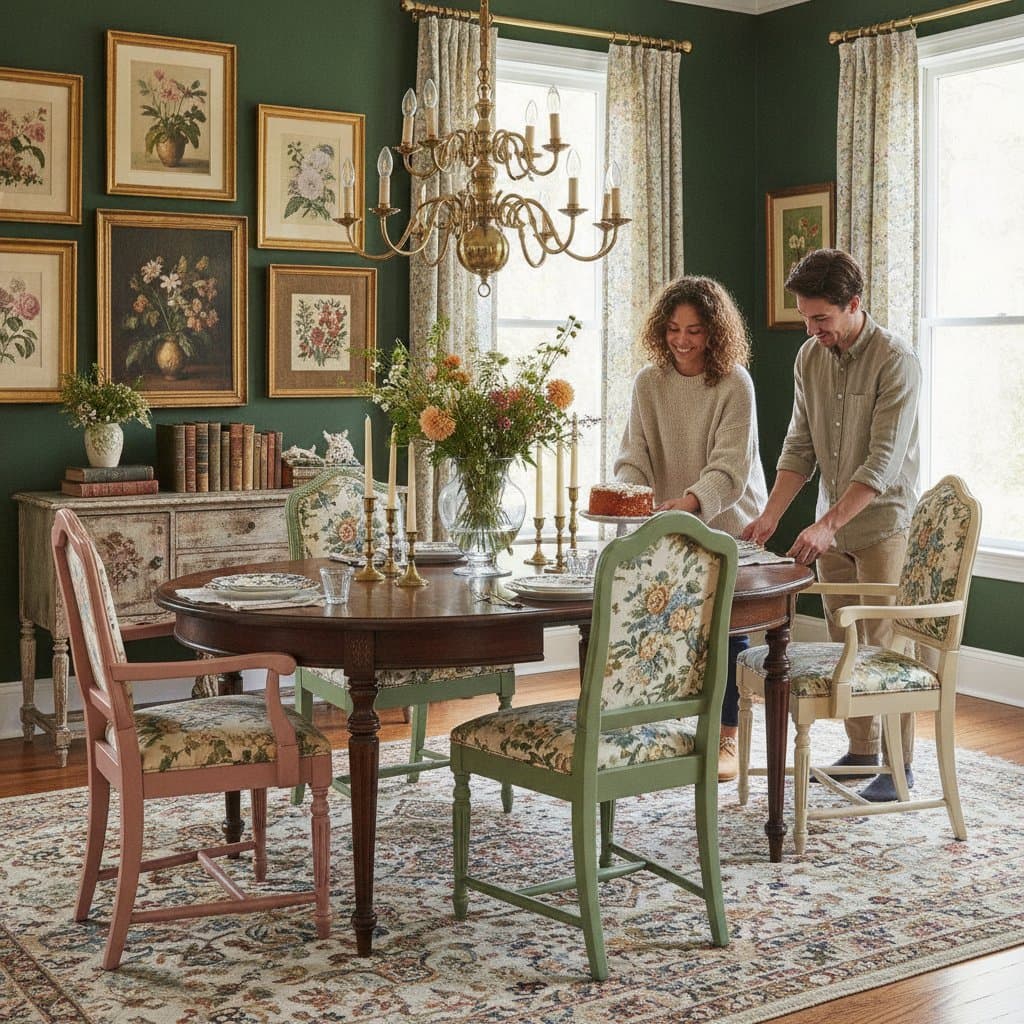
Vary chair configurations for dynamism: tufted armchairs at heads, ladder-back sides throughout. Refresh faded seats by stapling new yardage, choosing performance fabrics resistant to stains. This method revives thrift finds affordably.
Incorporate a credenza for utility and display. Arrange stemware on open shelves, reserve drawers for flatware. Maintain breathing room to prevent visual overload, rotating vignettes seasonally.
Lighting That Elevates the Room
A central pendant establishes ambiance, scaled to table dimensions for harmony. Crystal iterations add sparkle for formal affairs; woven alternatives suit casual vibes. Position at eight feet above floor level for clearance.
Supplement with perimeter sources like candelabra or picture lights to mitigate shadows. Employ incandescent equivalents in 2700K warmth for intimacy. Integrate dimmers via basic wiring kits, or hire professionals for complex setups to ensure code compliance.
The Power of Pattern and Texture
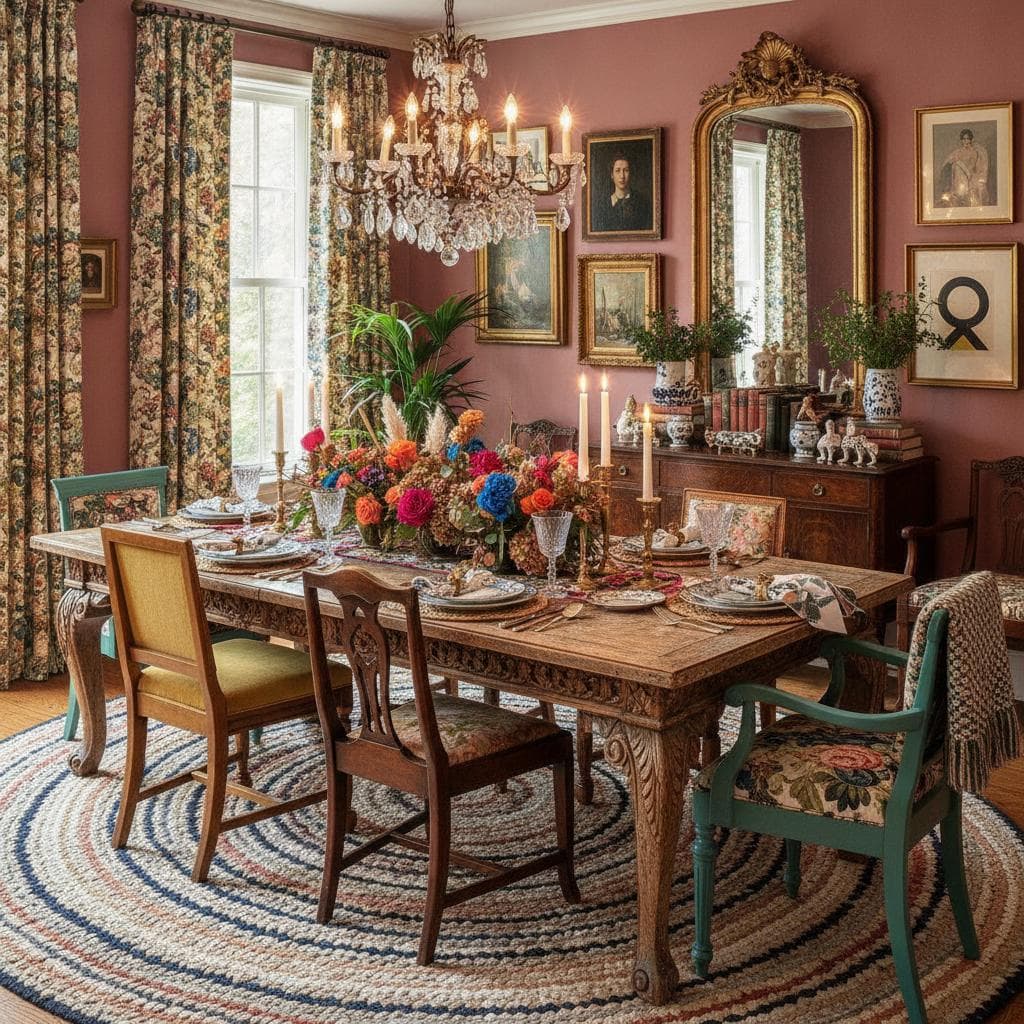
Diverse materials invite interaction, from crocheted overlays to chenille throws. Scale motifs strategically: bold wall coverings alongside fine ikat pillows prevent monotony. Anchor with a unified scheme, such as sage greens accented by coral blooms.
Neutral grounds like ivory backdrops allow bolder experiments. Test combinations in situ, adjusting for light shifts that alter perceptions. This deliberate layering crafts depth without discord.
Common Mistakes to Avoid
Enthusiasm can lead to excess; navigate these hurdles:
- Overcrowding furniture: Maintain 36-inch pathways for fluid circulation.
- Ignoring lighting balance: Combine ambient, task, and accent sources for versatility.
- Using too many patterns: Cap at three scales, ensuring tonal unity.
- Skipping quality finishes: Invest in scuff-resistant enamels and reinforced papers.
- Forgetting storage: Integrate concealed compartments to sustain tidiness.
Pro Tips for Success
Sample materials in ambient conditions to gauge true hues. Stock spares for repairs, as patina emerges from mindful upkeep. Allow the space to mature organically, incorporating mementos from gatherings to deepen resonance.
Hosting in Your Revitalized Haven
Activate the room through intentional use. Plan intimate suppers or lively brunches to imprint memories. This style endures by nurturing connections, evolving with the lives it shelters.