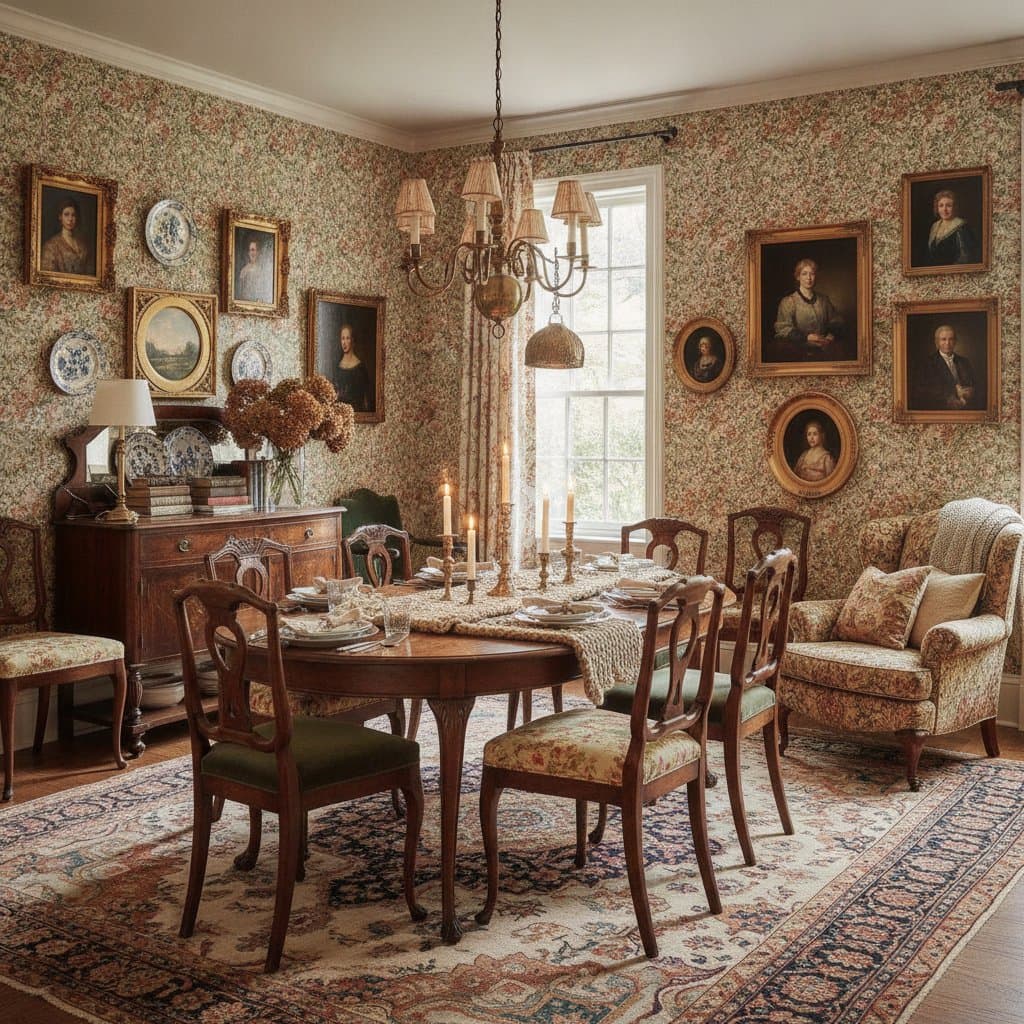
Why Grandmillennial Style Revives Dining Room Charm
Many modern homes feature dining rooms that serve as mere afterthoughts rather than central gathering spots. Clean lines, sparse furnishings, and subdued colors often create an attractive appearance, yet they frequently lack inviting warmth. Grandmillennial style addresses this need effectively. Known as granny chic, this approach emphasizes comfort, nostalgia, and skilled craftsmanship while maintaining a contemporary appeal. The dining room provides an ideal setting for this aesthetic to flourish.
The Emotional Pull of Nostalgia
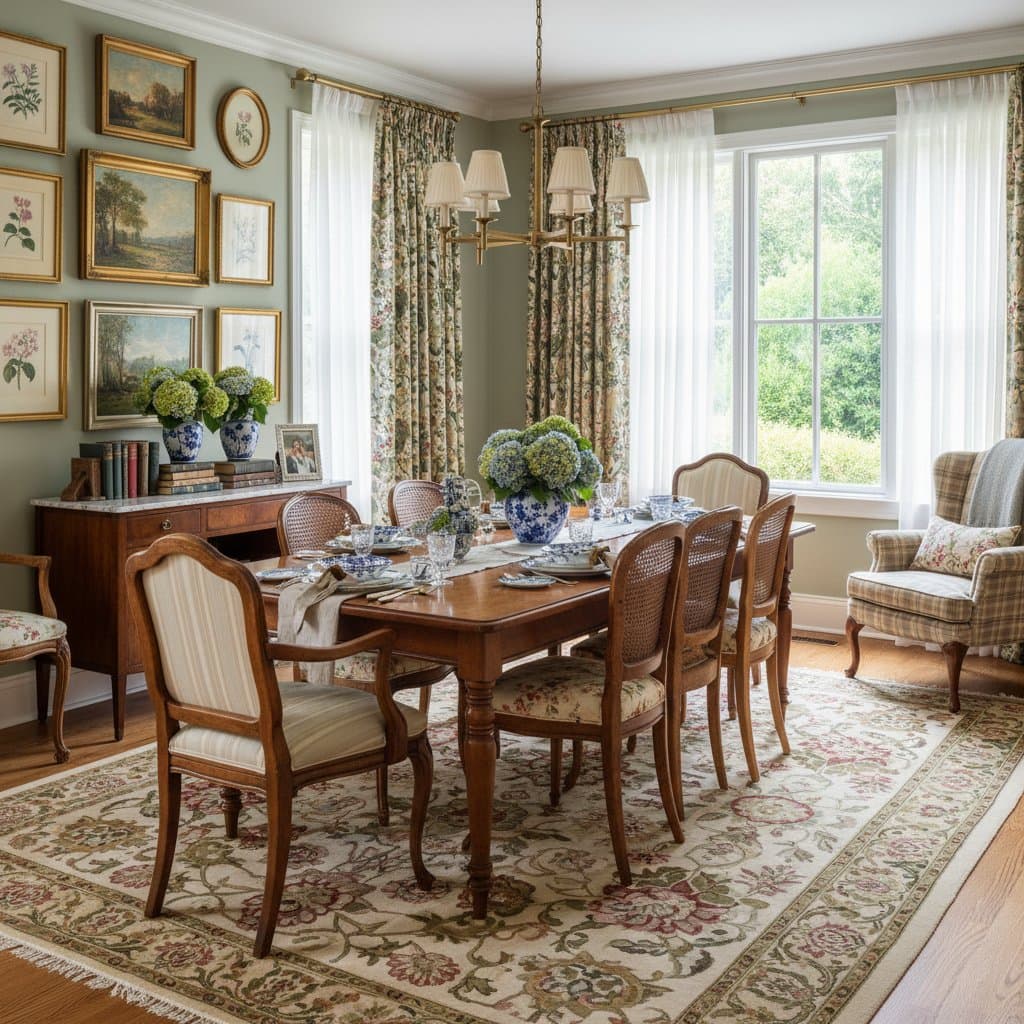
A dining room rich in character offers profound comfort, as if it holds tales from generations past. Grandmillennial style harnesses this sentiment by integrating classic decor such as floral wallpaper, pleated lamp shades, and china cabinets alongside current design principles. This combination yields spaces that appear lived-in and multifaceted, rather than impeccably staged for display.
Mixing Tradition with Modern Ease
Grandmillennial design avoids fussiness or obsolescence through careful equilibrium. Consider it a tribute to heritage without rigid adherence. A substantial mahogany dining table may seem imposing alone, but combining it with rattan seating or a rug featuring lively motifs revitalizes the arrangement.
Several elements excel in grandmillennial dining environments:
- Classic wood furniture with distinctive features: Select items boasting sculpted legs or aged brass fittings. These contribute substantial texture and dimension absent in mass-produced alternatives.
- Layered textiles: Combine embroidered linens with woven runners or botanical-printed drapes. Experiment with pattern combinations, provided they adhere to a unified color scheme.
- Traditional lighting enhanced by innovation: A faceted chandelier appears conventional, yet it pairs seamlessly with abstract artwork or streamlined furnishings to serve as a captivating centerpiece.
- Curated accessories: Arrange inherited porcelain alongside a sleek modern vessel. Allow these juxtapositions to narrate their own history.
The appeal intensifies through personalization. Rather than replicating a prescribed aesthetic, craft an environment reflective of individual heritage and preferences.
Why the Dining Room Serves as the Ideal Canvas
The dining room aligns naturally with grandmillennial principles, given its focus on communal rituals and interpersonal bonds. It remains one of the few areas where individuals convene, set aside devices, and partake in shared nourishment. The style amplifies this ritual by prioritizing both aesthetic appeal and physical comfort.
Envision assembling around a table adorned with ancestral serveware, fresh blooms in an opaque glass container, and gentle illumination reflecting from polished silverware. Such an ambiance promotes dialogue and mindful enjoyment. Subtle details, like sunlight filtering through ornate wallpaper or the plush support of a fabric-upholstered chair during after-dinner relaxation, enhance the overall allure.
Grandmillennial dining rooms accommodate adaptability. Formal touches such as ornate rugs and paneled walls impart sophistication, while whimsical motifs or vibrant accents prevent rigidity. This flexibility supports transitions from casual family suppers to elaborate hosted events.
Implementing Grandmillennial Elements in Contemporary Spaces
Achieving grandmillennial charm requires no historic architecture or ornate trim. Compact apartment alcoves can adopt the style with minimal effort. Initiate with select focal items and expand gradually.
- Select a heritage-evoking centerpiece: Opt for a column-based table or a salvaged cabinet. Use this foundation to inform subsequent selections.
- Introduce texture via fabrics: Employ a botanical-printed cloth or draped seating upholstery to instill immediate coziness and depth.
- Incorporate motifs and hues boldly: Apply mural coverings or printed window treatments. Gentle pastels, subdued foliage tones, and softened indigos integrate harmoniously.
- Integrate organic elements: Weave, cane, and natural fibers temper the grandeur of conventional pieces.
To prevent visual overload, maintain a harmonious palette by recurring select shades across the room. Permit open areas amid furnishings to allow visual respite. These strategies ensure accessibility in diverse settings.
Embracing Everyday Use in Your Design
As the grandmillennial dining room materializes, its true value emerges in daily application. The aesthetic invites active engagement rather than distant observation. Imperfections, such as varied stemware or surface marks, enhance authenticity over time.
Collections may accumulate organically, incorporating gifted antique holders or market-discovered linens. This evolution mirrors personal narratives within the space. Design, at its core, enriches existence by fostering beauty and relational depth. Grandmillennial style underscores that sophistication thrives on genuineness rather than flawlessness.
It cultivates an environment brimming with hospitality and individuality. For dining areas lacking vitality or intimacy, introduce historical references, tactile elements, and emotional resonance. Observe the swift shift from functional zone to cherished communal heart.