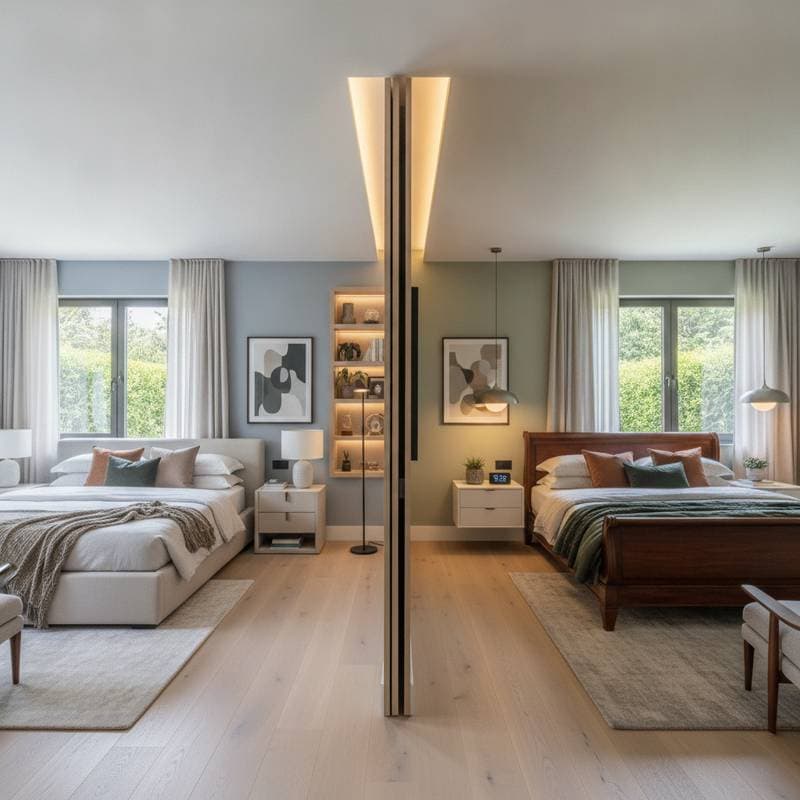
2026's Sleep Divorce Trend: Dual-Zone Bedroom Design for Couples
Key Takeaways
- Sleep divorce prioritizes improved rest and stronger connections over relationship dissolution.
- Dual-zone design creates distinct comfort areas within one bedroom.
- Thoughtful layout and feature selections elevate shared sleep quality.
- Partners preserve intimacy while gaining restorative sleep.
- Targeted adjustments in lighting, temperature, and sound deliver measurable advantages.
Understanding the Sleep Divorce Movement
The term sleep divorce sounds severe, but it centers on health and consideration for each other. Sleep expert Dr. Harriet Green explains, "Couples who choose separate sleeping zones are often strengthening their relationship, not weakening it. Quality sleep brings patience, understanding, and emotional balance."
Building a Dual-Zone Bedroom
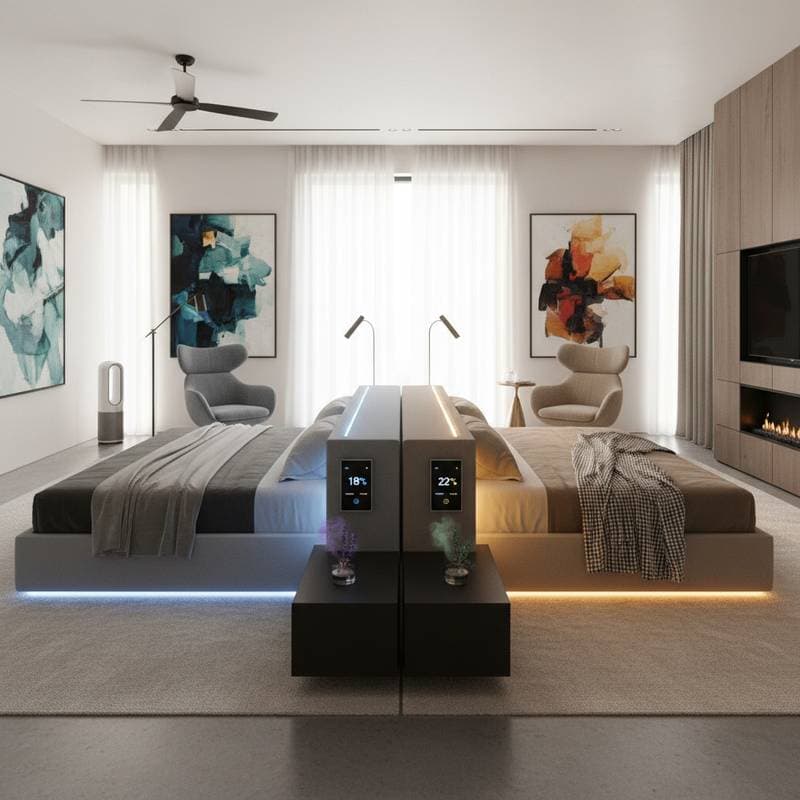
Creating a dual-zone bedroom demands minimal structural changes. Start by evaluating each partner's sleep needs through discussion. Then incorporate targeted solutions in layout, lighting, bedding, and climate control to build harmony.
1. Zoning the Space
Position furniture or add gentle dividers to define sleep zones. A low console table, a rug with distinct patterns, or different wall textures can mark personal areas effectively. In a farmhouse home in London, vintage wooden screens placed behind each bed created visual boundaries while allowing light to flow freely.
Designers often reference Japanese or Scandinavian hotel rooms, which use compact, defined zones in limited space. Maintain equilibrium by ensuring zones feel connected rather than isolated. This approach fosters privacy without disconnection.
2. Temperature Control
Temperature disputes often interrupt sleep, with one partner favoring warm layers and the other cooler air. Dual-zone comforters or separate electric blankets address these differences directly. For homes with distinct seasons, install a zoned heating and cooling system to allow independent adjustments per side.
Such systems require professional installation but provide lasting comfort. Couples report fewer awakenings and better overall rest after implementation. Consider energy-efficient models to balance cost and benefit.
3. Mattress Selection
A mattress anchors dual-zone success. Opt for split kings or adjustable bases that permit individual settings for firmness, height, and even massage features. Alternatively, place two extra-long twin mattresses side by side to mimic a king while enabling personalization.
One couple, after years of compromise, switched to a split mattress and noted immediate changes. The partner with sensitivity to movement stayed asleep through the night, undisturbed by turns or body heat. Test options in stores to match specific needs.
4. Lighting Flexibility
Varied schedules, like one reading late while the other prefers quick darkness, call for versatile lighting. Mount wall sconces with individual dimmers or add reading lights to headboards for independent use. Choose warm-toned bulbs on one side and cooler ones on the other to suit preferences.
Smart bulbs controlled by voice or apps simplify changes without disruption. Position lights to avoid glare across zones. This setup supports routines without compromising rest.
5. Sound and Scent Management
Sound preferences vary as much as temperature ones. Use white noise machines, enclosed speakers, or acoustic curtains to create quiet pockets. For scents, place a lavender diffuser on one side and a cedarwood one on the other to blend aromas subtly.
Test combinations to ensure they complement rather than clash. Soundproofing elements like rugs or panels absorb echoes effectively. These details enhance relaxation without overwhelming the shared environment.
Global Inspiration for Dual-Zone Comfort
Cultures worldwide offer proven ways to blend shared and personal rest. Japanese futons allow easy reconfiguration each night for adaptable setups. In France, separate duvets over a single mattress prevent tug-of-war over covers.
A resident in rural France adopted layered light quilts atop one comforter, enabling personal warmth control. London homes use four-poster beds with fabric panels for private nooks in open rooms. These traditions show how customization boosts both function and style.
Adapting Dual-Zone Design to Small Spaces
Urban apartments prove dual-zone concepts work in tight quarters. In a former New York apartment, heavy drapes blocked light on one side, a compact white noise device handled the other, and separate sheet sets simplified care.
For limited areas, hang sound-absorbing curtains or panels, add adjustable mattress toppers for firmness tweaks, select breathable fabrics that suit both users, and use under-bed storage for extra bedding. Focus on multifunctional items to maximize utility. Incremental changes yield comfort without renovation.
Pursuing Lasting Improvements in Dual-Zone Bedrooms
Tackle challenges like stray light from a lamp or device noise through regular conversations. Commit to ongoing collaboration in updates. One couple swaps lighting fixtures or refreshes linens with seasons to keep balance.
Dual-zone approaches suit any home, from countryside retreats to city dwellings. Enhanced sleep supports deeper relationships, turning the bedroom into a space that respects individuality and unity alike.