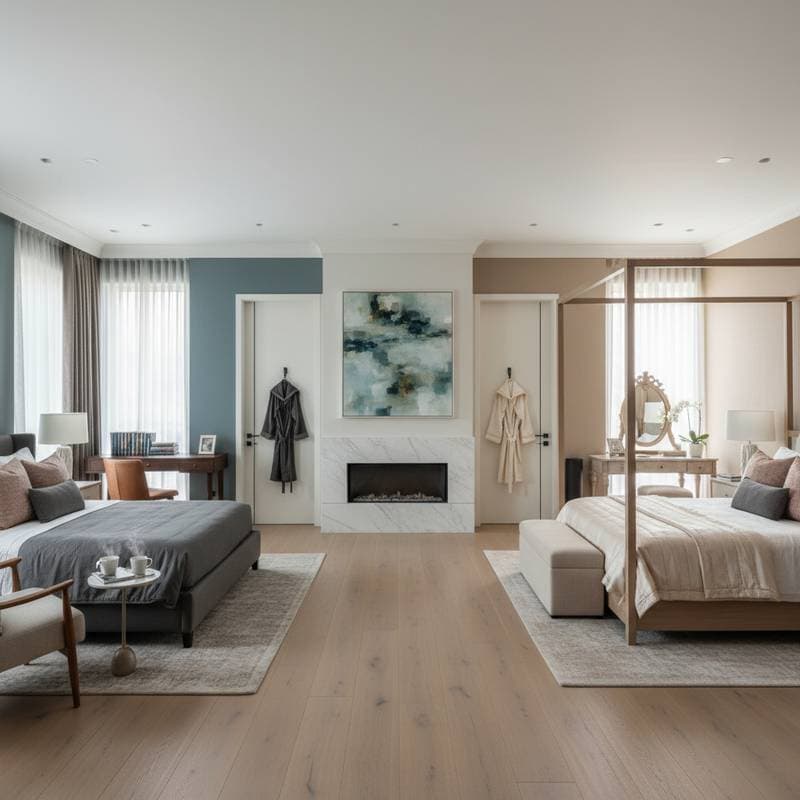
Why Dual Master Suites Are Booming in 2026 Homes
Imagine entering a bedroom tailored to your exact needs: temperature-controlled air, adjustable lighting, and a personal aromatherapy system. Your partner enjoys a similar setup nearby, free from disruptions like snoring or differing schedules. This setup, known as the dual master suite, represents the latest evolution in home design, prioritizing rest and harmony.
Once limited to high-end estates, dual master suites now appear in standard new constructions. They deliver improved sleep, preserved intimacy, and spaces that honor individual preferences. Homeowners value this balance, which fosters stronger daily interactions.
The Rise of the Sleep Divorce
The phrase sleep divorce refers to couples sleeping apart to optimize rest, without ending their partnership. One person may require a cool, dark environment, while the other prefers warmth and ambient sound. Such differences, if unaddressed, lead to fatigue and strain.
Prioritizing Well-Being Through Design
Separate sleeping areas extend beyond luxury to essential wellness. Homeowners invest in elements like breathable fabrics and smart thermostats to create ideal conditions. These choices support better recovery from daily stresses.
Mental health professionals note that dedicated personal spaces reduce conflict and enhance emotional stability. For couples managing work and family, a private retreat allows recharging, leading to more positive shared time.
Adaptations fit various budgets: retrofit existing rooms with dividing walls or update lighting systems. The focus remains on sensory control, from mattress firmness to humidity levels.
Evolving Layouts for Dual Suites
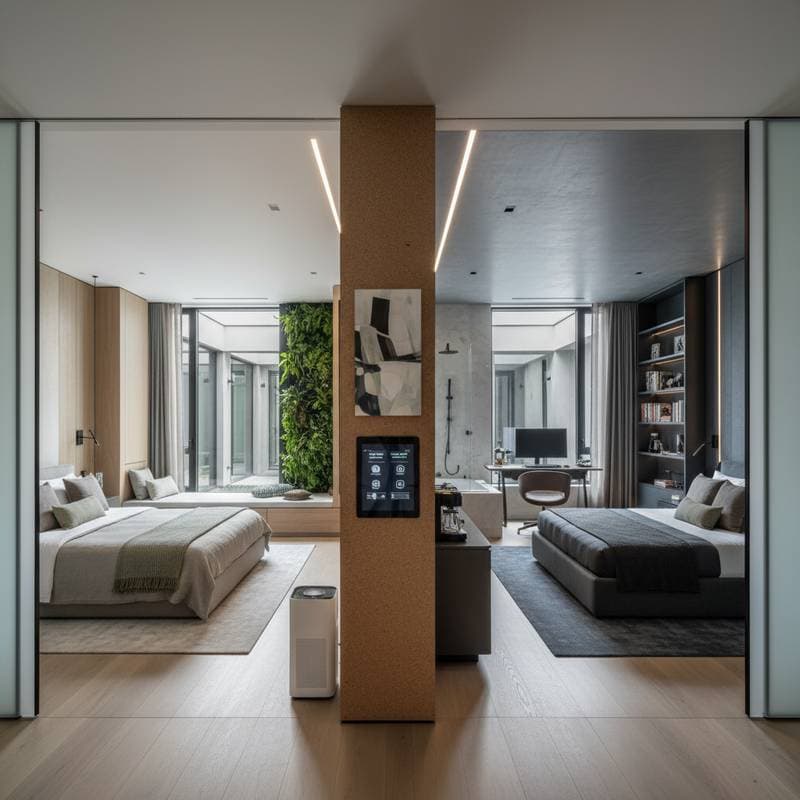
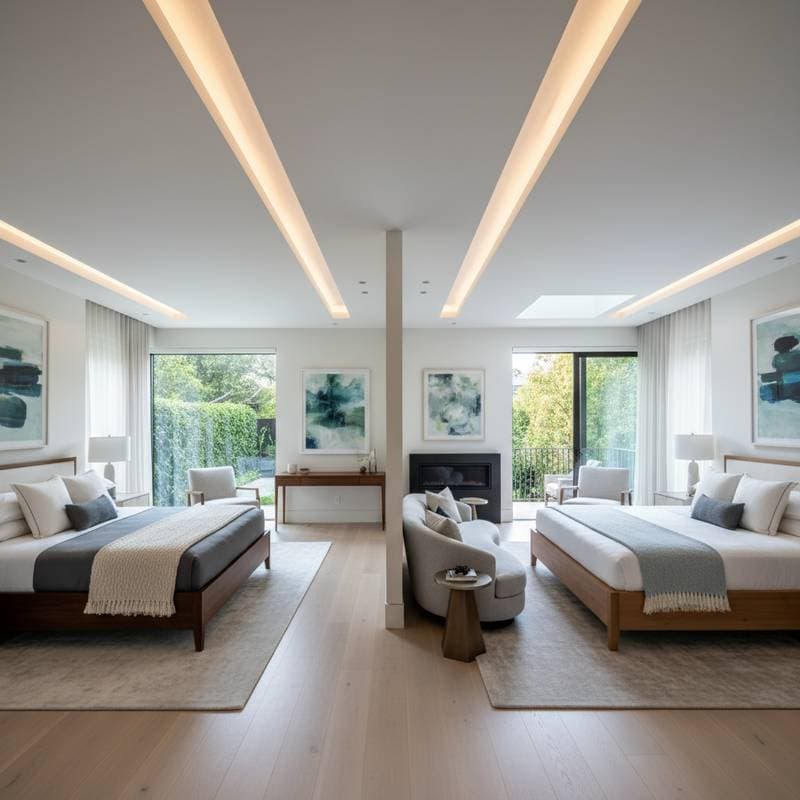
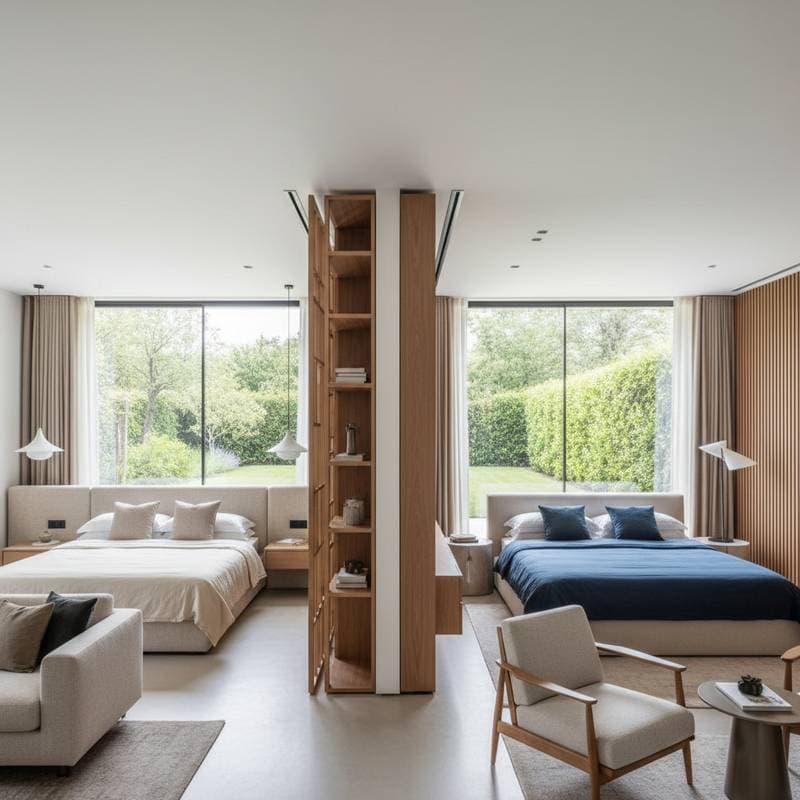
Architects integrate dual suites seamlessly, avoiding isolated feels. Common approaches include adjacent rooms connected by a walk-through closet or a central vanity area. This setup streamlines mornings while preserving privacy.
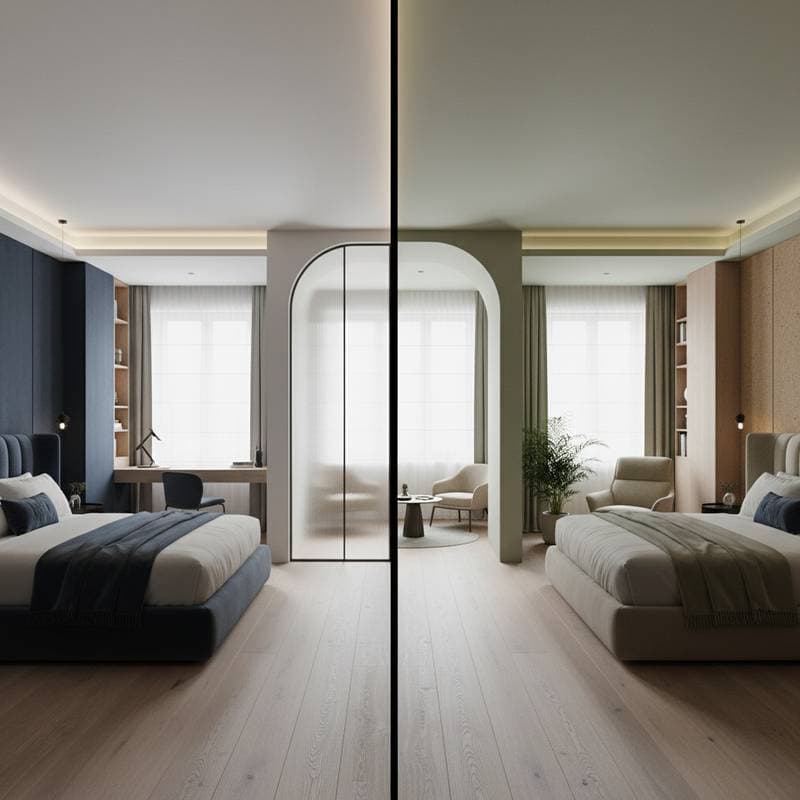
For differing routines, suites may occupy separate wings or floors. One could host a quiet meditation corner, the other a media setup with soundproofing. Materials differentiate vibes: velvet accents in one, crisp whites in the other.
Lighting plays a key role, with options like dimmable LEDs or natural skylights. These elements align spaces with users' natural cycles, promoting deeper sleep.
Extending Benefits to Multi-Generational Homes
Dual suites serve families beyond couples. In multi-generational setups, one suite accommodates aging relatives with features like zero-step entries and grab bars. The other supports caregivers or returning adults.
This configuration ensures independence without isolation. Family members share common areas for meals and gatherings, fostering support. It also future-proofs homes, minimizing later modifications for accessibility.
For temporary arrangements, such as adult children moving back, suites provide boundaries. Each occupant customizes their area, from wall art to storage solutions, reducing household tension.
Real Estate Advantages of Versatile Spaces
Buyers seek dual suites for their adaptability. Realtors report higher interest in properties offering this feature, as it appeals to diverse lifestyles. Singles repurpose the second suite as a gym or library.
Market data shows these homes sell faster, with premiums for flexible designs. Empty-nesters value the option for in-law quarters, while professionals appreciate office potential. Versatility drives long-term value.
The Value of Personalized Retreats
A truly personal space offers emotional security through details like curated bookshelves or signature scents. Dual suites amplify this by allowing full expression without compromise.
Many couples report increased affection post-adoption, as rest eliminates irritants. Intentional togetherness during days replaces obligatory proximity at night, deepening connections.
Incorporating Natural Elements for Better Rest
Renovations benefit from natural materials: wool rugs for insulation, cedar accents for aroma. Add air-purifying plants such as peace lilies to improve oxygen flow.
Layer lighting with warm bulbs for evenings and cool tones for mornings. Essential oils like eucalyptus in diffusers aid breathing. For noise, install wool-blend carpets or fabric-wrapped panels.
These choices create serene environments that align with body rhythms, enhancing overall health.
Adapting Dual Suites to Compact Homes
Smaller properties can incorporate dual setups through clever modifications. Convert a den into a suite by adding a pocket door and half-bath. Use space-saving fixtures like wall-mounted vanities.
Furniture solutions include sofa beds and rolling partitions. Sound-absorbing rugs and heavy drapes define zones without permanent changes. Plants or screens maintain openness while ensuring privacy.
Focus on efficiency: shared utilities reduce costs, and modular elements allow reconfiguration as needs evolve.
Embracing Rest in Evolving Lifestyles
This trend mirrors broader priorities on recovery and boundaries. Homes evolve to support dynamic relationships, where closeness coexists with autonomy.
Designs emphasize function: adjustable vents for climate control, built-in charging stations. These details make daily life smoother, reinforcing the home as a wellness hub.
Insights from Space Psychology
Environmental experts explain that personal domains lower stress by minimizing overstimulation. Ownership of a suite builds confidence and reduces relational friction.
Well-rested individuals engage more fully, turning potential conflicts into collaborative moments. Separate sleep often leads to voluntary quality time, strengthening partnerships.
Sustainable Practices in Dual Suite Design
Eco-friendly builds use zoned HVAC systems for targeted efficiency. Materials like reclaimed wood and hemp textiles minimize environmental impact.
Low-flow showers and LED fixtures conserve resources. Designs anticipate changes, with movable walls for repurposing suites as hobby rooms.
This approach ensures longevity, aligning with green living standards.
Personalizing and Maintaining Your Spaces
After installation, curate each suite with meaningful items: family photos in one, abstract prints in the other. Declutter regularly to sustain calm.
Opt for non-toxic cleaners to protect air quality. Designate a transition area, like a fireside chat spot, for pre-sleep bonding.
Track benefits through journals: note energy levels and mood shifts. Adjustments refine the setup over time.
Achieving Balanced Harmony at Home
Dual master suites redefine partnership by valuing rest as foundational. Refreshed mornings lead to vibrant days and effortless connections.
This design choice empowers individuals within shared lives, proving that thoughtful spaces cultivate lasting fulfillment.