Color-Blocking Bedrooms: The Rise of Dopamine Decor in 2026
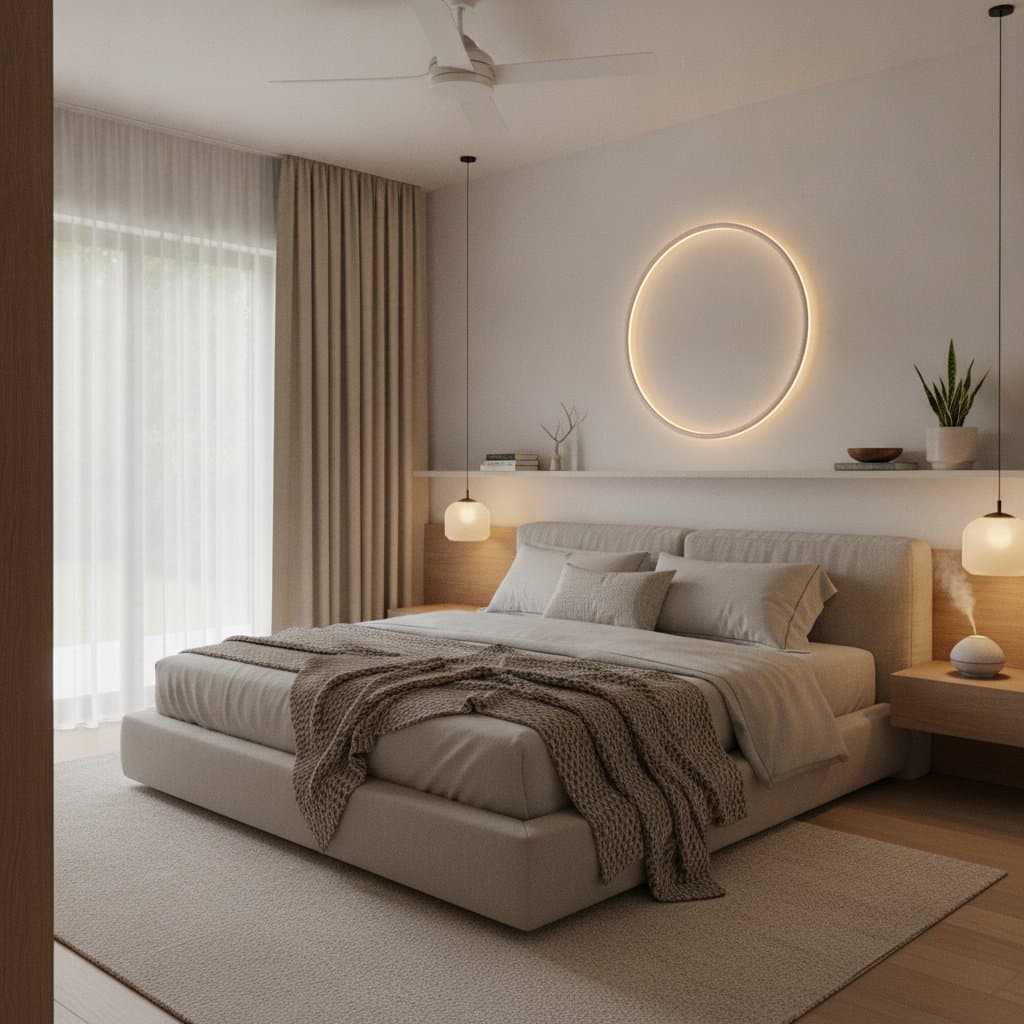
As a home design writer, my bedroom once resembled a generic rental setup. Beige walls met white bedding, accented by a handful of framed prints labeled as minimalist. The space functioned adequately, yet it lacked emotional depth. Scrolling through images of color-blocked bedrooms online, I admired the vibrancy but doubted my ability to achieve similar results. One rainy weekend on Staten Island, I gathered paint samples and committed to action. This initiated my dopamine decor journey, which profoundly altered my daily experience in the room.
The Science Behind Color's Mood-Enhancing Effects
Dopamine decor centers on creating environments that foster joy. It incorporates color, pattern, and texture to evoke positive emotions. This style counters the prevalence of neutral minimalism with saturated colors and unexpected pairings.
Discovering an Ideal Color Combination Through Trial
My initial color-blocking effort fell short of expectations. I envisioned a soft blush wall complemented by a terracotta band at the baseboard. Painter's tape failed to contain the paint, resulting in uneven lines. My husband remarked that the outcome appeared intentionally organic. On the verge of abandonment, I stepped back and appreciated how the flaws added a sense of authenticity and warmth.
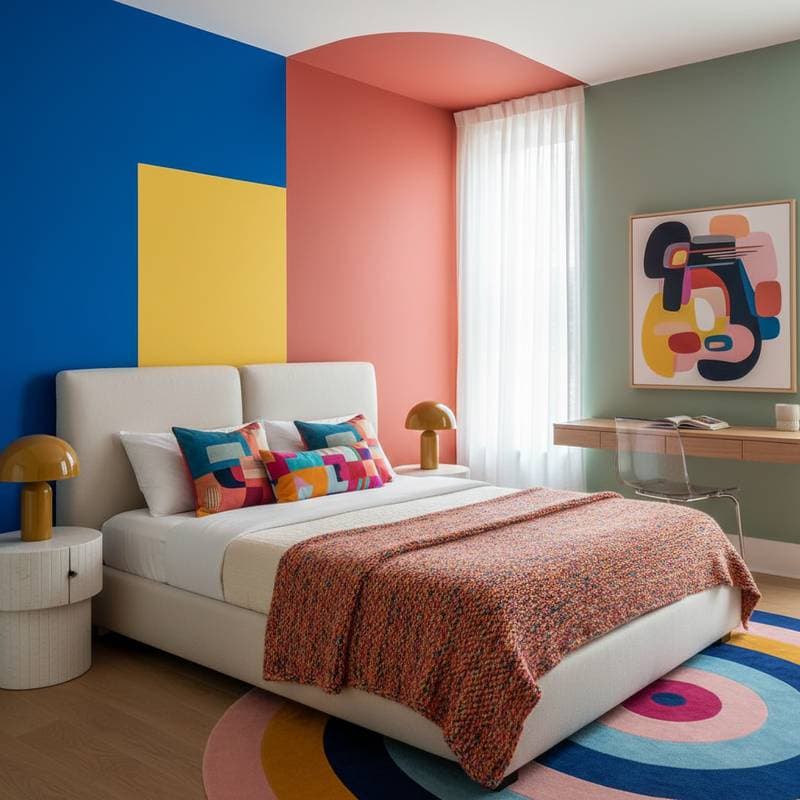
Subsequent trials involved a deep teal wall behind the headboard paired with a coral stripe extending around corners. The transformation delivered immediate vitality. The room became a welcoming place to start the day. Even my dog, typically drawn to the couch, chose to rest there more frequently. This confirmed the approach's potential.
Reasons Color-Blocking Excels in Bedroom Design
Bedrooms often receive less design focus than communal areas. Yet, as spaces for daily transitions, they deserve thoughtful enhancement. Color-blocking introduces structure and character without demanding elaborate furnishings.
Key advantages include:
- Visual zoning: A blocked wall serves as an integrated headboard or artwork backdrop.
- Mood customization: Assign serene blues to rest areas and energizing yellows to reading nooks.
- Affordable updates: Paint provides cost-effective change; alter hues as preferences evolve.
- Creative flexibility: Embrace asymmetry or irregular forms to infuse personal flair.
Practical Steps for Implementing Color-Blocking
Begin dopamine decor with color-blocking on a modest scale to avoid overwhelm. Enthusiasm can lead to disarray without preparation. The following strategies proved effective in my projects:
-
Select two or three favored colors. Prioritize personal preferences over trends. Maintain a collection of inspiring images from design sources. Repeated appearances of mustard yellow and deep teal in my saves guided my choices.
-
Plan placement in advance. Apply painter's tape to outline sections. Observe the layout for one or two days. A proposed diagonal band across my room, once taped, revealed an imbalance, prompting adjustment.
-
Account for lighting conditions. Daylight alters color perception significantly. My east-facing bedroom benefits from morning light that warms tones and sharpens cools. In low-light rooms, evaluate samples throughout the day.
-
Select appropriate paint finishes. Matte conceals minor flaws, while satin or eggshell enhances light reflection. Matte suits bold areas to emphasize color without distraction.
-
Opt for understated furniture. Allow walls to dominate. White linens or natural wood pieces provide equilibrium against intense hues.
Correcting Overly Bold Applications
My early dopamine decor attempt resembled an elementary schoolroom due to excessive colors and insufficient neutral areas. The result overwhelmed the senses. True dopamine design achieves balance via thoughtful contrasts, not random vibrancy.
To remedy chaos:
- Introduce white or neutral elements, such as a white duvet, linen drapes, or pale flooring, for visual respite.
- Limit to two primary colors plus one accent.
- Direct bright shades to key spots like the headboard or vanity.
Repainting a single area or adjusting accessories often suffices. Assess the room's emotional impact: energy and comfort signal success; tension requires refinement.
Innovative Color-Blocking Techniques to Explore
With familiarity, experiment freely. Consider these tested or upcoming ideas:
- Partial wall coverage: Color the lower half boldly, leaving the upper white for added perceived height and interest.
- Ceiling accents: Apply a contrasting shade overhead; pale pink over navy walls creates surprising coziness.
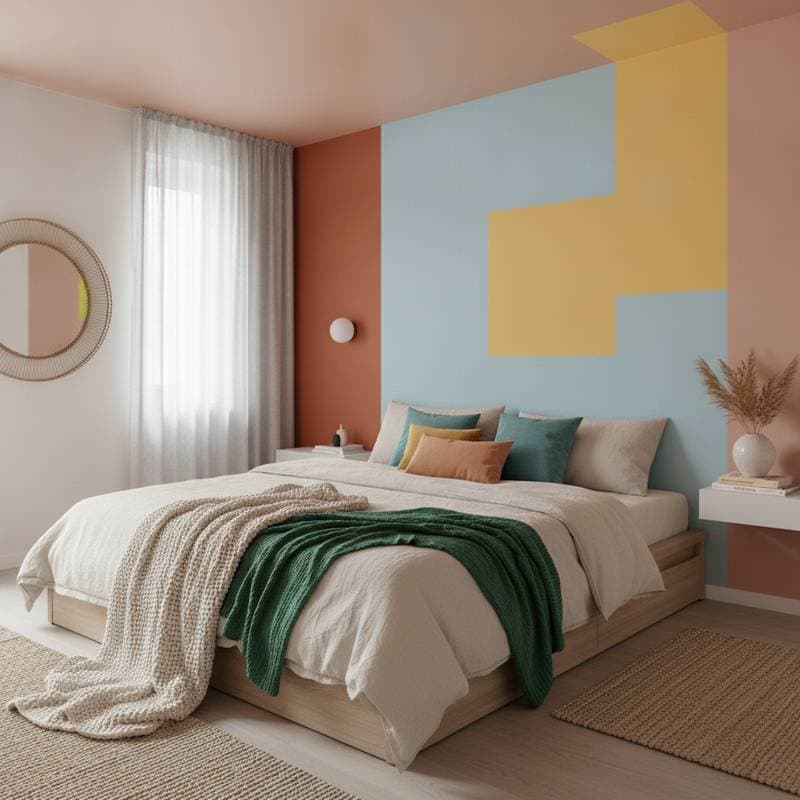
- Geometric patterns: Position large circles behind lighting or rectangles framing art for whimsical appeal.
- Bed-focused blocks: Frame the bed with a rectangular color field to simulate a headboard, ideal for rentals.
- Corner extensions: Carry color around edges or to neighboring walls for an enveloping atmosphere.
Adapt these to your style, from subtle tones to saturated boldness. Dopamine decor thrives on personal emotional resonance rather than rigid conventions.
Integrating Emotion into Home Design
Professional experience in home design underscores that spaces serve as emotional canvases. Aesthetic perfection often overshadows sensory comfort. Color-blocking reaffirms that joyful elements hold profound value and intimacy. My teal-and-coral bedroom greets me with quiet celebration each entry.
This shift inspires broader application. A hallway now features an ochre stripe for warmth. The office includes a blush zone by the window. Once initiated, color invites further exploration across the home.
Steps to Initiate Your Transformation
Neutral walls offer security, a position I once held. Color-blocking provides an accessible entry to dopamine decor without excess. Curiosity and experimentation suffice; professional expertise or large investments prove unnecessary. Begin with a single wall to experience the uplift, then expand as confidence grows.