Dopamine Colors: Uplifting Bedroom Trends for 2026
Imagine waking to sunlight filtering through linen curtains, with walls in a hue that offers a warm embrace. The heart lifts even before feet touch the floor. Designers term this immediate joy the dopamine effect in home decor, achieved through intentional color use to foster happiness, comfort, and optimism.
Bedrooms, traditionally focused on rest and neutral tones, now evolve into mood-enhancing sanctuaries with distinct personality. The dopamine color movement reshapes interiors, turning plain areas into vibrant embodiments of emotional well-being. These shades extend beyond aesthetics; they reflect desired feelings during waking, unwinding, and dreaming.
What Are Dopamine Colors?
Dopamine colors evoke positive emotional responses. Often bright and saturated, they infuse vitality, yet they need not dominate. The core of dopamine decor involves choosing hues that resonate personally, such as sunny yellow evoking a lemon grove or serene seafoam green suggesting calm.
Why Bedrooms Suit Dopamine Design
Bedrooms serve as intimate realms where mood and comfort dominate. Individuals recharge here emotionally, mentally, and physically, positioning these spaces ideally for dopamine experimentation. This method prioritizes self-expression over sterile trends.
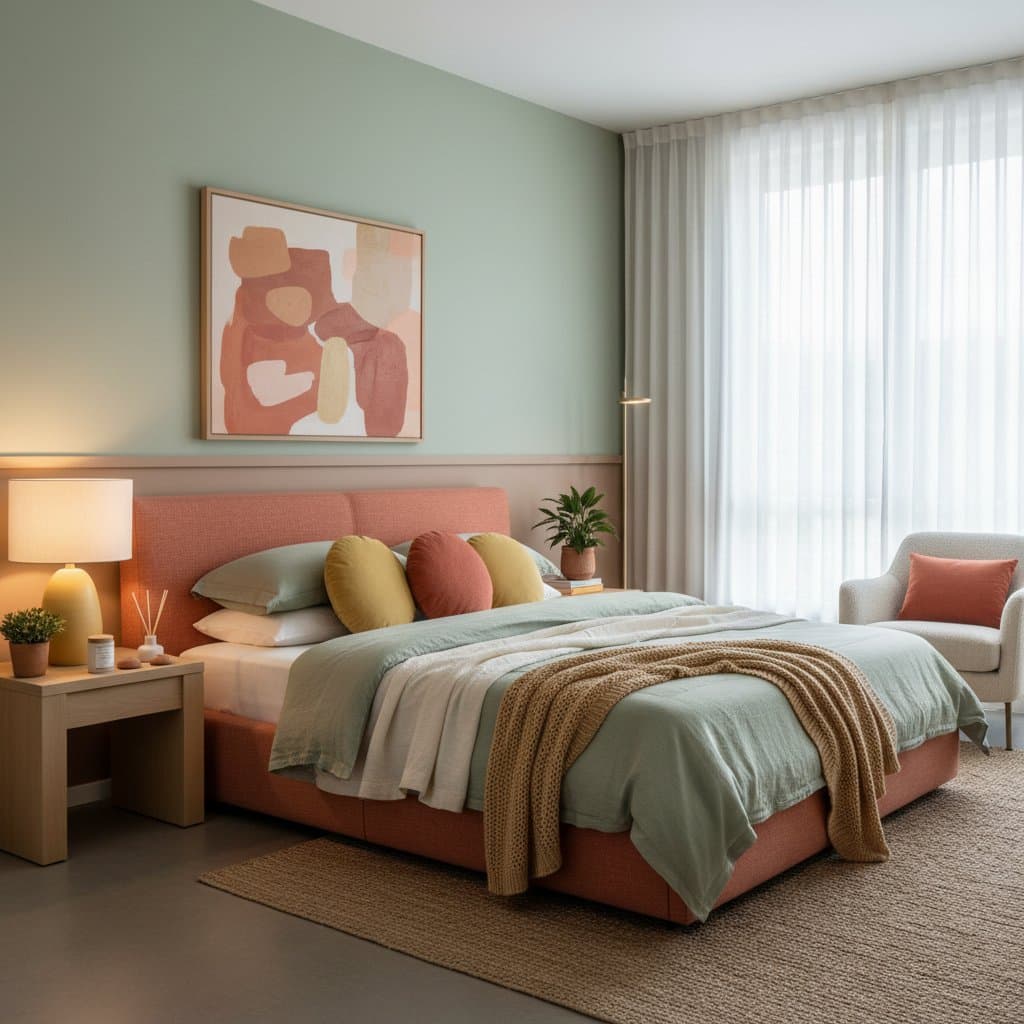
A dopamine bedroom embraces authenticity over flawlessness. Consider a coral accent wall with cream bedding or a jade headboard amid botanical prints. The aim is an invigorating yet soothing atmosphere, akin to a visual release after a demanding day.
Key Emotional Palettes for Bedrooms
Start every dopamine design by asking: What emotion should this room evoke upon entry? The following palettes convert feelings into purposeful color schemes, drawing from 2026 trends.
Joyful Energy: Citrus and Coral
Oranges, peaches, and yellows deliver optimism. These shades echo sunrise warmth, ideal for brighter mornings. Balance with white linens and wood textures; apply citrus on a feature wall and coral in upholstery for sustained energy without fatigue.
Calm Confidence: Seafoam and Sage
Softer greens ground and renew. Seafoam, sage, and mint soothe the mind while preserving vitality, suiting bedrooms through their calming effect. Incorporate woven baskets, linen throws, and potted herbs to amplify natural tranquility.
Romantic Radiance: Blush and Terracotta
Pinks and terracotta impart inviting warmth. They add subtle passion without excess sweetness. Select blush for velvet duvets or terracotta for clay lamps to shift the room's emotional tone effectively.
Playful Escape: Azure and Lemon
Bright blues paired with yellows inspire creativity and lightness. This duo evokes beachside freedom. Anchor with neutral furniture to highlight the colors, preventing sensory overload; use azure in curtains and lemon in accents for spontaneity.
Grounded Glow: Clay and Caramel
Earthy clay, caramel, and sand tones offer timeless modernity. They envelop spaces in comforting warmth, perfect for reflection. Integrate with greenery, linen, and ceramics; paint walls in clay for a stable base that enhances rest.
Enhancing with Natural Elements
Colors establish the foundation, but textures and materials deepen emotional impact. Sunlight on a woven rug or rattan lamp's diffused glow illustrates this synergy. Layer sensory elements to heighten the dopamine response.
- Select organic fabrics like cotton, linen, or bamboo for bedding to ensure breathability.
- Opt for light woods such as oak or ash to reflect light and sustain brightness.
- Introduce plants like fiddle leaf figs or pothos for air purification and organic color.
- Add handcrafted items, including ceramics or embroidered pillows, for personal warmth.
These combinations prevent artificiality, blending vibrancy with serenity for harmonious results.
Balancing with Neutrals
Joyful designs require visual respite. Neutrals provide pauses, letting bold hues shine without dominance. Favor creamy ivories, taupes, or warm grays over stark whites.
Contrast elevates dopamine bedrooms. Pair a coral wall with ivory bedding or a mint headboard with oatmeal curtains. Equilibrium allows colors to breathe, intensifying their emotional resonance.
Optimizing Lighting for Mood
Light shapes color perception and emotional response. Natural light complements dopamine schemes, while artificial sources refine them.
- Employ warm bulbs to accentuate cozy tones like terracotta or blush.
- Use cooler bulbs for ocean palettes to emphasize blues and greens' freshness.
- Layer with overhead, bedside, and accent lights for versatile daily ambiance.
Candles or salt lamps introduce soft glows, cocooning the bedroom in evening calm.
Sustainable Color Integration
Dopamine trends align with eco-conscious choices. Select low-VOC paints to minimize toxins and improve air quality, supporting holistic wellness.
For hands-on appeal, blend natural pigments into limewash or clay paints for textured, earthy finishes. Upcycle furniture, like refinishing a dresser in coral, to infuse color sustainably. This creative process boosts mood through tangible achievement.
Intentional Layering of Textiles and Accessories
With palettes defined, infuse personality via textiles and decor, building emotional depth like musical layers.
- Blend solid and patterned bedding in harmonious tones, such as coral duvets with cream pillows.
- Choose rugs echoing primary hues to unify the floor.
- Curate artwork evoking joy or memories to raise emotional warmth.
- Use flowing curtains and throws to add movement and catch light.
Embrace imperfection; dopamine decor thrives on spontaneity and uniqueness.
Understanding Color Psychology
Warm hues like orange and yellow energize and spark creativity. Cool tones such as blue and green foster calm and concentration. Balanced selections influence heart rate, alertness, and sleep.
Experts recommend aligning colors with personal energy: brighter shades motivate the reserved, while soothing ones aid the active. This equilibrium merges stimulation with peace.
Steps to Design Your Dopamine Bedroom
Achieve transformation without overhaul by proceeding incrementally.
- Define your emotional intent, whether energizing, calming, or comforting.
- Select a primary color that elevates mood immediately.
- Introduce complementary shades for balance.
- Incorporate textures via fabrics, wood, and plants.
- Adjust lighting to suit the palette.
- Add resonant accessories like meaningful art.
- Evolve the design gradually as feelings shift.
Begin modestly, with one wall or accessory, to spark broader inspiration.
Evolving Emotional Spaces
Dopamine colors adapt fluidly to life changes. A vibrant coral might soften to apricot; bold blue could deepen to teal. View the bedroom as a dynamic canvas mirroring growth.
Observe shifts in routines: refreshed awakenings, serene evenings, or inspired moments. Color psychology quietly harmonizes surroundings with well-being. This approach affirms that joy emerges from intentional design, turning bedrooms into enduring sanctuaries of comfort and creativity.