Why Mushroom Growing Stations Are Becoming Kitchen Staples
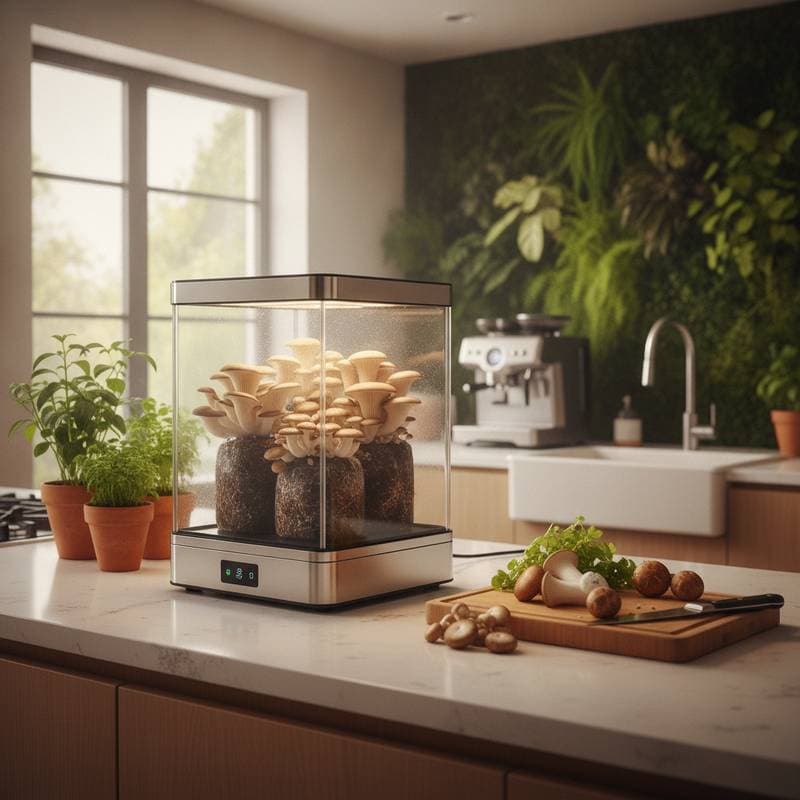
Compact mushroom growing stations now appear in many modern kitchens. These units turn limited counter space into reliable sources of fresh gourmet and medicinal mushrooms throughout the year.
How Mushrooms Grow Indoors
Mushrooms spread through spores and draw nutrients from organic material rather than sunlight. They thrive when conditions match the cool, moist forest floor. Indoor stations supply steady humidity, airflow, and filtered air to prevent mold and contamination.
Countertop models apply the same controls on a smaller scale. Misting systems, small fans, and sterile filters keep the environment stable without outdoor variables such as temperature swings or pests.
Choosing the Right Spot
Most edible species need temperatures between 60 and 75 degrees Fahrenheit and relative humidity of 85 to 95 percent. Areas near sinks often meet these ranges naturally. Place the unit away from direct sun and heat sources. A small USB fan improves airflow if the kitchen feels still.
Gathering Supplies
- Preassembled station or modular kit
- Sterile substrate such as sawdust, straw, or used coffee grounds
- Mushroom spawn
- Spray bottle or small humidifier
- Hygrometer and thermometer
- Gloves and alcohol wipes
Preassembled units offer automated controls. DIY versions cost less yet require daily checks.
Keeping the Process Clean
Disinfect surfaces and tools before each step. Wear gloves when handling spawn and seal containers promptly. Discard any batch that shows unusual color or odor to stop contamination.
Timing and Expected Results
Most varieties reach harvest in two to four weeks. Start new batches on a staggered schedule for steady supply. Oyster and lion's mane mushrooms suit beginners. Shiitake and maitake need longer incubation but deliver deeper flavor.
Step-by-Step Cultivation
Prepare the Substrate
- Dampen material until it feels like a wrung-out sponge.
- Pasteurize briefly with hot water or microwave to lower contaminants.
- Cool completely before adding spawn.
Inoculate and Incubate
- Mix spawn evenly through the substrate with gloved hands.
- Fill trays, leaving headspace for air.
- Cover with breathable lids.
- Keep near 70 degrees Fahrenheit in darkness until white threads cover the material.
Trigger Fruiting and Harvest
- Move colonized substrate into indirect light for several hours daily.
- Increase airflow and mist the surface.
- Cut mushrooms at the base with a clean knife once caps open fully.
- Continue misting to encourage additional flushes.
Checking Quality
Healthy mushrooms feel firm and carry an earthy scent. Remove any with black or green patches. Maintain humidity above 80 percent and replace filters on schedule.
Managing Ongoing Cycles
Compost spent substrate after several harvests. Clean containers between uses. Alternate mushroom types across two stations to keep production continuous while one rests.
Practical Benefits at Home
Starter kits cost less than many appliances and use little electricity. Substrates made from kitchen scraps cut packaging waste and transport emissions. The routine integrates easily with composting and herb growing to form a compact indoor food system.