How Mushroom Cleaners Work
Traditional bathroom cleaners depend on synthetic surfactants, strong acids, and chlorine disinfectants. These substances remove buildup yet irritate skin, corrode fixtures, and harm aquatic life after they enter wastewater. Mushroom based alternatives rely on enzymes , the root like network of fungi.
Enzymes such as laccases and peroxidases break complex organic molecules into simpler, non toxic compounds. The same enzymes degrade petroleum residues and dyes in environmental cleanup projects. In bathrooms they dissolve soap scum, mildew, and biofilms without leaving chemical traces.
This targeted action protects surfaces from unnecessary wear and reduces the need for heavy scrubbing.
Preparing Your Space
Bathrooms differ in materials, moisture, and ventilation, so a short evaluation improves results. Check surface types first. Ceramic, porcelain, and glass tolerate most formulas, while natural stone needs a pH neutral version.
Tools and Safety Steps
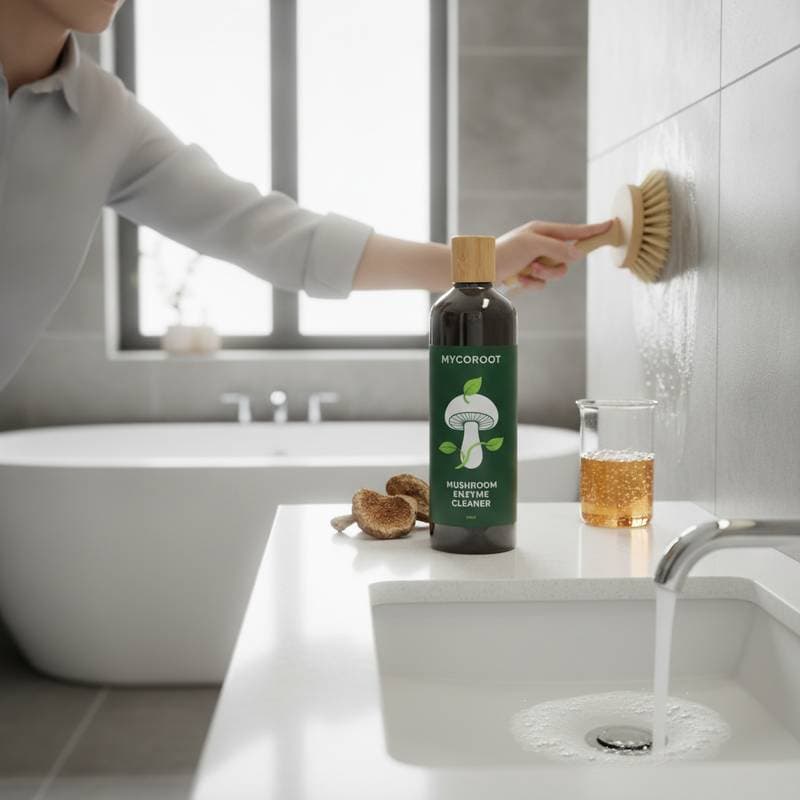
Gather a concentrated or ready to use mushroom cleaner, a soft brush, microfiber cloths, a measuring cup, a spray bottle, gloves, and warm water. Although the products are non toxic, enzymes remain biologically active. Avoid ingestion and extended contact with concentrates. Store the container in a cool, dark place with the lid sealed.
Cleaning Sequence
Work when the room can remain unused long enough for surfaces to dry. Begin at the top and move downward to avoid re soiling clean areas.
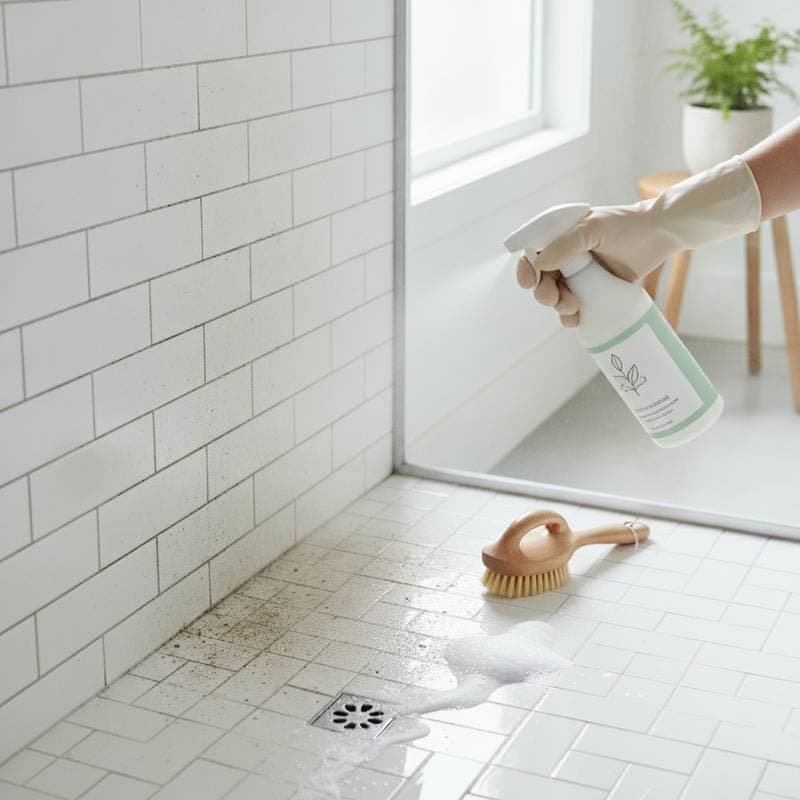
Mix concentrate at the recommended ratio, usually one part cleaner to ten parts warm water. Spray until a light film covers the target. Let the solution sit three to five minutes, then scrub gently. Rinse with clean water and wipe dry with a microfiber cloth.
For showers and drains, increase concentration slightly and extend dwell time to break down biofilm. A light mist after rinsing neutralizes odors through continued enzyme activity.
Checking Results and Storage
Look for clear surfaces, smooth finishes, and reduced odor. Reapply to stubborn spots with a longer dwell time if needed. Monitor the cleaner for changes in scent or texture. Discard any batch that develops unexpected mold or loses potency.
Ongoing Care
Weekly light applications keep residual enzymes active. Monthly treatment of grout and drains prevents buildup. Quarterly checks for mineral deposits and ventilation performance maintain long term results.
Environmental and Budget Notes
Production uses agricultural waste such as sawdust or corn husks, and many packages are refillable. The formulas extend fixture life because they lack corrosive ingredients. Over time the higher purchase price is offset by fewer repairs and reduced replacement needs.
Users can combine these cleaners with vinegar rinses or baking soda scrubs for a complete, low impact routine.
Addressing Common Problems
If enzymes appear inactive, confirm that mixing water was not too hot and that the bottle was not stored near heat. Streaks usually result from over application. Wipe more thoroughly and switch to distilled water for dilution. Persistent odors often trace to plumbing leaks or poor drainage. Fix these mechanical issues so the cleaner can maintain freshness.
Starting Your Transition
Test the cleaner on one fixture before replacing all conventional products. Record dilution ratios and dwell times to refine your method. Consistent use builds a self reinforcing system that keeps surfaces cleaner between deep sessions while lowering chemical output into local water systems.