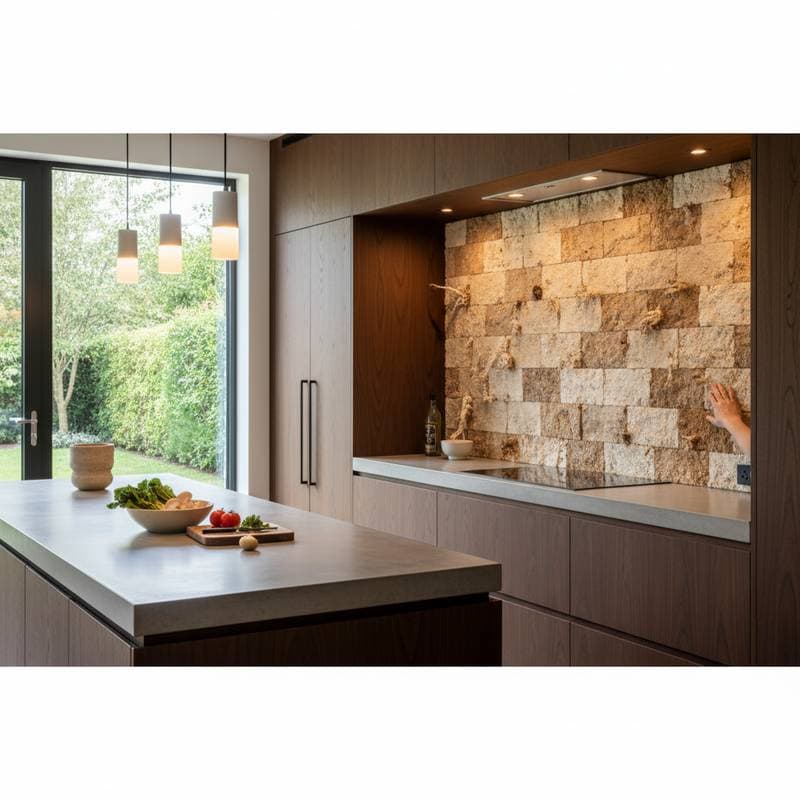
Understanding Mycelium Tiles
Mycelium tiles derive from the root-like structure of fungi. Producers grow this material in molds filled with agricultural byproducts, such as straw or sawdust. As the mycelium expands, it binds these elements into a cohesive form. After the growth phase, the tiles undergo drying and heat treatment to halt further development. The outcome yields lightweight, durable, and fully biodegradable panels suitable for contemporary kitchen applications.
Homeowners drawn to sustainable options find these tiles particularly appealing. They merge the textured warmth of organic substances with advancements in bio-engineered materials. Install them as backsplashes, accent walls, or low-traffic flooring to introduce depth and character absent in many factory-produced alternatives.
Project Overview
Deciding Between DIY and Professional Installation
Individuals experienced with tile work can manage a backsplash using mycelium tiles. The routine encompasses layout planning, adhesive application, grouting, and sealing. Yet, enlist professionals for zones adjacent to sinks, stoves, or intense moisture exposure. Inadequate sealing risks accelerated wear.
Opt for expert assistance on countertops or high-traffic floors. Although resilient, these tiles demand meticulous sealing and upkeep to ensure enduring results.
Required Materials and Tools
Materials:
- Mycelium tiles, dimensioned to fit the intended backsplash or wall space.
- Adhesive compatible with natural substrates.
- Grout formulated for environmental friendliness.
- Penetrating sealer that resists moisture and qualifies as food-safe.
- Painter's tape or spacers for alignment.
Tools:
- Level and measuring tape for precision.
- Notched trowel to apply adhesive uniformly.
- Rubber float for grouting.
- Sponge and bucket for cleanup.
- Fine-grit sandpaper to refine edges.
Select low-VOC adhesives and sealers to enhance the ecological profile of the installation.
Detailed Installation Steps
1. Plan the Layout
Measure the target wall or backsplash area with accuracy. Arrange tiles without adhesive to verify uniform spacing and harmonious design. Given natural variations in texture and hue, blend pieces to achieve an authentic, organic appearance.
2. Prepare the Surface
Remove all grease, dust, and residue from the surface through thorough cleaning. Apply leveling compound if irregularities exist, and permit complete drying. A pristine, arid base promotes strong adhesive adhesion.
3. Apply Adhesive
Distribute adhesive evenly with a notched trowel, focusing on manageable sections to avoid premature drying. Position each tile with firm, even pressure. Insert spacers to secure consistent joints for subsequent grouting.
4. Allow Setting Time
Permit the adhesive to cure for a minimum of 24 hours prior to grouting. This interval prevents misalignment from hasty manipulation, given the tiles' light weight.
5. Grout and Clean
Work eco-friendly grout into joints using a rubber float. Eliminate surplus material with a damp sponge, taking care not to oversaturate the tiles. After initial setting, buff away any residue with a dry cloth.
6. Seal for Protection
With grout fully cured, coat tiles and joints with penetrating sealer. This measure proves vital for repelling moisture. Choose food-safe variants near food preparation zones, and apply two layers with adequate drying intervals between them.
Ensuring Durability and Maintenance
Sealed mycelium surfaces withstand moisture and stains comparably to ceramics. Address spills immediately and eschew abrasive cleaners. Employ mild soap and water for everyday care.
Natural aging may introduce subtle color shifts or patina, enhancing the material's appeal. To preserve the initial appearance, refresh the sealer annually or biennially based on exposure levels.
Managing Costs Effectively
As an emerging material, mycelium tile prices fluctuate with supply and regional sourcing. Procure from local cultivators to minimize expenses and transport emissions. Though pricier than some synthetics, their environmental advantages offset initial outlays over time.
Budget-savvy designers might limit mycelium to accents, such as partial backsplashes or focal panels, to maximize impact with reduced quantity. Integrate with elements like salvaged wood shelves or unaltered stone counters for economical yet refined ensembles.
Safety Features and Ecological Benefits
Mycelium production bypasses energy-intensive kilns and toxic glazes typical of traditional tiles. The process consumes little power and generates no pollutants upon decomposition. These tiles biodegrade entirely, reintegrating into ecosystems without residue.
Their non-toxic nature eliminates risks from chemical-laden alternatives, promoting healthier indoor spaces.
Expert Recommendations
Store tiles in dry conditions pre-installation to avert unintended absorption. Sample the sealer on a test piece prior to full application. Pair with subdued, matte palettes to underscore natural aesthetics.
Steer clear of direct heat proximity unless tiles receive specialized treatment. Retain extra units for potential touch-ups, accounting for batch inconsistencies.
Advancing Sustainable Craftsmanship
Engaging with mycelium tiles elevates standard tiling skills through eco-conscious innovation. This approach harmonizes time-honored methods with forward-thinking materials, ideal for those committed to ethical construction.
Each installation underscores a dedication to planetary stewardship, fostering designs that endure both aesthetically and environmentally.