
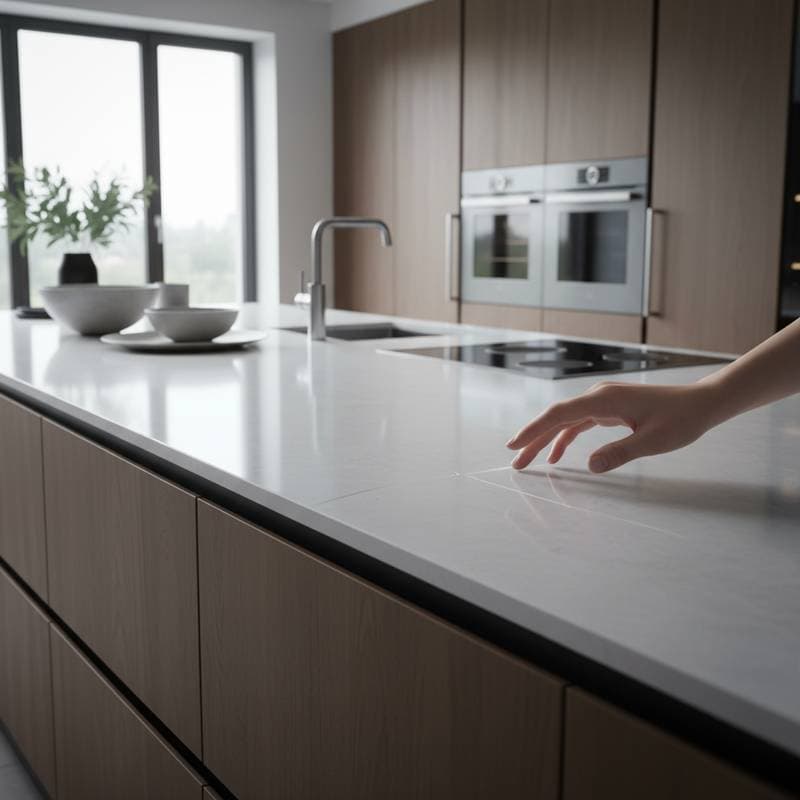
The Science of Self Healing Surfaces
Self healing countertops rely on advanced materials that respond to damage through built in mechanisms. These surfaces incorporate heat activated resins or microcapsules that contain repair agents. When a scratch forms, warmth from sunlight, a heated towel, or room temperature triggers the release of the resin. The liquid fills the abrasion and hardens to restore a smooth finish.
Some options use thermoplastic polymers that soften with gentle heat and then re solidify to erase imperfections. This process extends the surface lifespan and reduces the need for frequent replacements. Homeowners gain a durable finish that maintains its appearance over many years of daily use.
Benefits for Active Kitchen Spaces
Kitchens serve as central gathering points where counters face repeated contact from utensils, cookware, and spills. Self healing technology counters this wear with responsive properties that address minor damage automatically. Families benefit when children assist with meal preparation or schoolwork without leaving permanent marks.
Home cooks gain freedom to use metal tools and hot pans without constant worry. The surfaces also support property value by signaling modern design choices to potential buyers who seek low maintenance features.
Environmental Advantages
These countertops promote sustainability by lasting longer than traditional stone or laminate options. Reduced replacement cycles lower overall material waste and resource consumption. Certain products include recycled minerals or plant derived resins that decrease reliance on new synthetics.
Local production combined with fewer chemical sealants further aligns the materials with eco friendly renovation plans. Integration with temperature responsive home systems can enhance energy efficiency during daily operation.
Selecting the Right Material
Buyers evaluate several practical factors before purchase. Nano laminates provide an affordable and lightweight choice suited to smaller updates. Resin composites deliver strength with some flexibility for households that cook often.
Thermoplastic versions suit premium projects that require consistent appearance across large areas. Activation methods vary between direct warmth application and simple pressure response, so users review product guidelines to plan care routines.
Resistance levels differ as well. Some materials prioritize scratch recovery while others focus on stain prevention. Professional installation ensures proper bonding and temperature compatibility for best results.
Everyday Applications
A family installs a matte composite surface in their kitchen. A child later moves a toy across the counter and creates visible lines. Ambient warmth causes the marks to fade within a few hours.
A baker finishes rolling dough and notices light scratches from utensils. She applies a warm cloth for several minutes, allowing the resin to reflow and restore smoothness. A property manager selects the same material for a rental unit and observes that surfaces retain a fresh look after multiple tenant changes with only routine cleaning between occupants.
Integration with Modern Living
Self healing countertops participate in the broader shift toward responsive home environments. Materials that react to temperature or pressure complement other automated systems such as lighting or climate controls. This combination turns the kitchen into a space that adapts to daily activities rather than remaining a static surface.
The approach reflects changing expectations where owners value interactive products that support long term usability and reduced upkeep.
Planning Your Next Kitchen Update
Review material specifications and test samples in person to confirm repair performance matches household needs. Consult installation professionals who understand bonding requirements for each type. Consistent mild cleaning and periodic warmth application keep the surfaces in optimal condition for years of reliable service.