Unlock Effective Stain Removal with Enzyme Cleaners
Household stains often resist standard cleaning efforts, leading to prolonged frustration. Traditional chemical cleaners attempt to dissolve or bleach marks, yet they seldom eliminate the root cause. Enzyme cleaners target stains differently by breaking down organic components directly.
The Mechanism Behind Enzyme Cleaners
Enzyme cleaners utilize natural proteins to accelerate the decomposition of specific substances. These proteins function like specialized agents, each designed for particular stain types. Proteases handle protein-based residues, such as those from blood or dairy, while lipases address fats and oils.
Upon contact with compatible stains, enzymes dismantle molecular structures, allowing complete removal through wiping or rinsing. This approach explains their prevalence in professional settings, including commercial kitchens and healthcare facilities. The result is thorough cleaning without lingering residues.
Realistic Expectations for Enzyme Cleaners
Essential Preparation for Enzyme Cleaning
New users should familiarize themselves with basic requirements before proceeding.
Required tools and materials:
- Spray bottle or pump applicator
- Soft brush or microfiber cloth
- Warm water
- Absorbent towels or cloths
- Enzyme cleaner concentrate or ready-to-use formula
Key safety measures:
- Test on an inconspicuous area, particularly for fabrics or porous materials
- Refrain from combining with bleach or ammonia
- Store in a cool, dark location to maintain enzyme potency
These products generally qualify as biodegradable and non-toxic, suitable for environments with children or pets. Nonetheless, handle them cautiously, avoiding ingestion and ensuring thorough rinsing on food-contact surfaces.
Detailed Guide to Applying Enzyme Cleaners
1. Assess the Stain Category
Determine the stain composition to select appropriate enzymes. Protein stains, like those from eggs or grass, require proteases. Oil-based messes demand lipases. Review product labels for enzyme profiles in multi-purpose formulas.
2. Prepare the Surface
Absorb excess liquids or solids by blotting gently. Avoid rubbing, which may embed particles deeper. A brief warm water rinse removes loose surface dirt.
3. Saturate the Stain
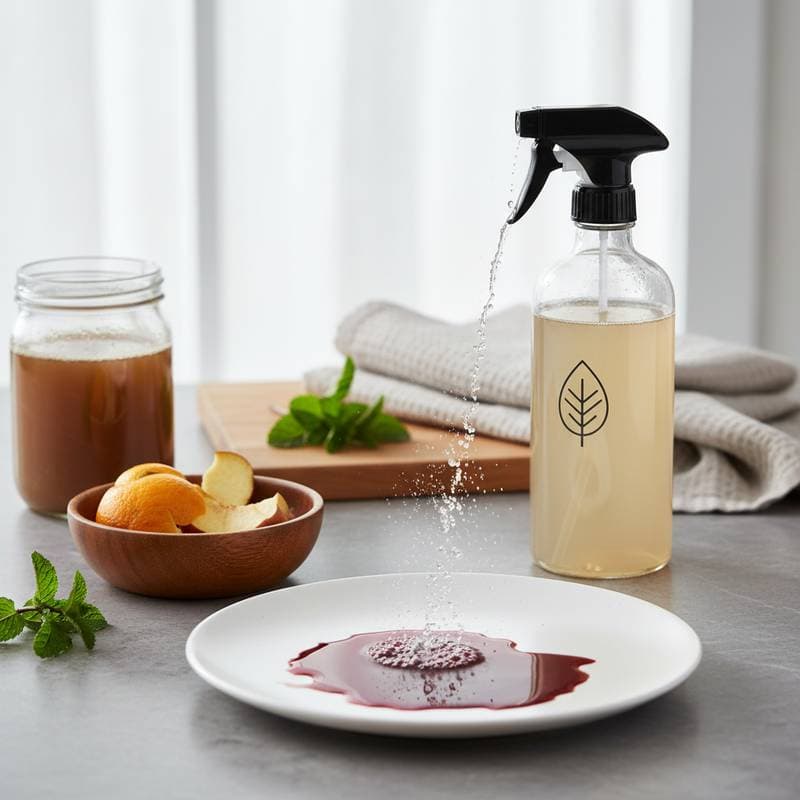
Apply sufficient enzyme solution to saturate the affected area. Full contact ensures enzymatic activity, so maintain wetness for 10 to 15 minutes minimum. For entrenched or extensive stains, reapply and extend soaking time.
4. Allow Sufficient Dwell Time
Enzymes require time to process materials, unlike rapid chemical reactions. Monitor for visible fading before proceeding. In laundry, incorporate pre-soaking prior to machine cycles.
5. Cleanse and Dry
After degradation, agitate lightly with a brush or cloth. Rinse with warm water and pat dry. Repeat applications if traces persist, as subsequent treatments often complete the process.
Resolving Frequent Challenges
Stain recurrence post-drying:
Insufficient penetration likely occurred. Reapply generously and extend dwell time. For carpets or upholstery, employ a wet vacuum for residue extraction.
Lingering odors:
Subsurface organic layers may remain. Saturate again, cover with a moist cloth, and allow overnight action to sustain enzyme function.
Reduced cleaner efficacy:
Improper storage, such as exposure to heat or light, deactivates enzymes. Ensure sealed containers in stable conditions.
Creating a Homemade Enzyme Cleaner
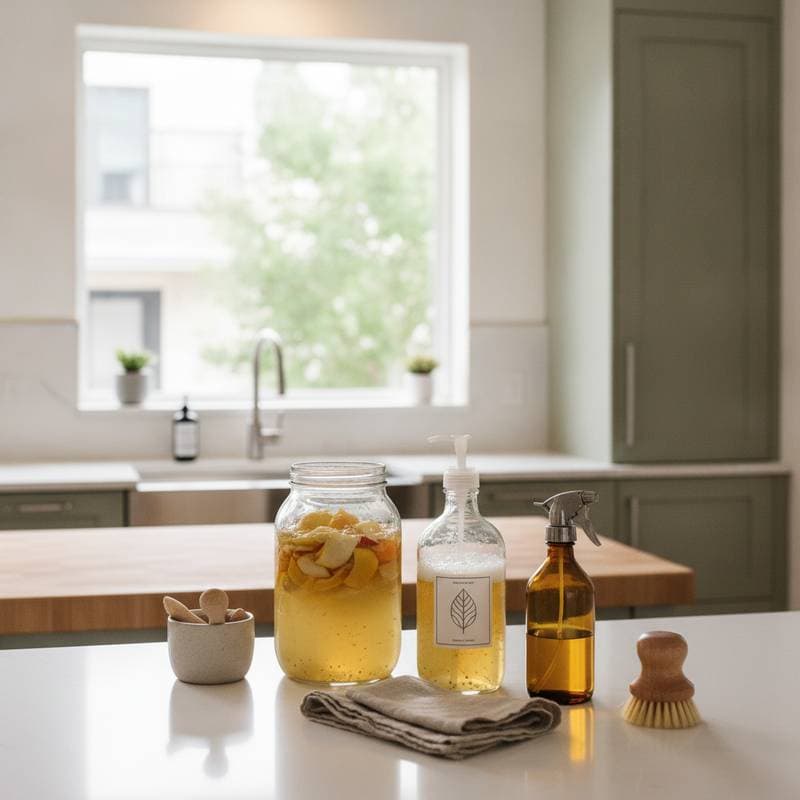
For a cost-effective natural option, prepare a basic enzyme solution at home. This yields milder results than commercial variants but suits routine tasks effectively.
Ingredients:
- 2 cups citrus peels, such as orange, lemon, or lime
- 4 tablespoons brown sugar
- 4 cups warm water
Mix in a large plastic container, leaving headspace for expansion. Secure the lid loosely to vent gases. Position in a dark area for two to three weeks, agitating periodically. Strain the fermented liquid into a spray bottle for use on counters, sinks, and tiles.
When to Engage Professionals
Address large-scale odor issues, severe carpet penetration, or biohazardous waste with expert services. Specialized equipment ensures complete extraction. Similarly, consult professionals for delicate materials like silk or stone, where tailored enzyme formulations prevent damage.
Integrating Enzyme Cleaners into Daily Routines
Homeowners increasingly favor natural methods to avoid chemical exposure. Enzyme cleaners provide robust performance without corrosive effects or septic system harm. They preserve surfaces, reducing long-term maintenance costs.
Advanced Techniques for Optimal Results
- Sustain moisture on treated areas to prolong enzyme activity
- Pre-soak laundry items with heavy organic soiling
- Alternate enzyme types based on stain diversity
- Rinse all food preparation zones post-treatment
- Clearly label containers to prevent mix-ups
Sustaining Cleanliness Through Regular Use
Incorporate enzyme cleaners routinely to inhibit residue accumulation. Apply weekly to kitchen hotspots, such as stovetops and handles. In bathrooms, target drain areas to disrupt bacterial films.
Enzyme-based cleaning represents a reliable, environmentally conscious strategy. It resolves persistent stains effectively, fostering a healthier home environment.