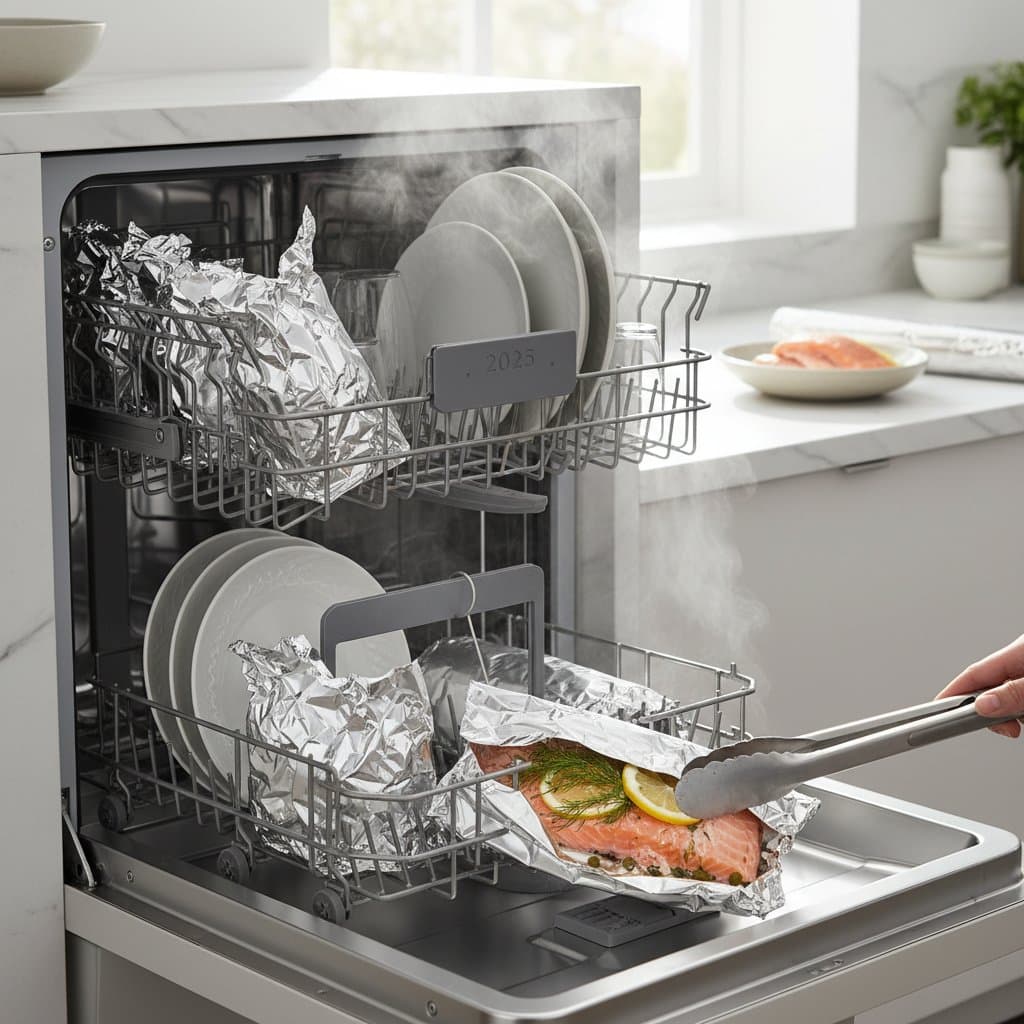
Understanding the Dishwasher Salmon Method
The dishwasher salmon technique involves sealing raw salmon fillets in foil and placing them in the appliance during a full wash cycle. Steam and heat from the cycle poach the fish gently, similar to stovetop or oven methods. Success depends on maintaining precise temperatures and ensuring an airtight seal to avoid contamination.
This approach surged in popularity via social media clips of salmon cooking amid dirty dishes. Although captivating, the method demands meticulous attention to detail to prevent foodborne risks. Experts view it as an occasional experiment rather than a daily staple, showcasing innovative appliance uses.
The Science Behind Dishwasher Cooking
Dishwashers produce humid heat, especially during the drying stage, which often reaches levels ideal for delicate proteins. This setup replicates poaching, where consistent low heat retains moisture and tenderness in salmon. Steam seeps through the foil, gradually elevating the fish's internal temperature through conduction.
Assessing Your Dishwasher for Compatibility
Determine if your dishwasher aligns with this method by reviewing the manual for cycle temperatures and drying features. Units equipped with sanitize or high-heat modes excel, sustaining over 140 degrees consistently. Skip models with leak issues or visible heating coils that might puncture foil.
Survey the dishwasher's interior to pinpoint secure spots. Place the foil packet on the upper rack, away from spray arms and soap dispensers, to reduce contact with uneven flows or residues. Opt for salmon fillets of even one-inch thickness to promote uniform doneness; thicker cuts may leave centers raw.
Choose robust heavy-duty foil to endure steam pressure without tearing. Before proceeding, confirm the appliance operates without glitches, such as erratic cycles or poor sealing doors.
Preparing the Dishwasher Salmon
Required Tools and Ingredients
- Heavy-duty aluminum foil or vacuum-seal bags rated for high heat
- Fresh, skinless salmon fillets cut to uniform portions
- Olive oil, lemon slices, fresh dill, and sea salt for seasoning
- Digital instant-read thermometer for precise checks
- Long tongs and heatproof gloves for safe handling
Detailed Preparation Steps
- Clean the dishwasher thoroughly using a vinegar-water mix to remove any lingering detergent.
- Dry the salmon fillets, coat lightly with olive oil, and top with lemon slices and dill sprigs for infused taste.
- Enclose each fillet in double-layered foil, crimping edges firmly to form a sealed pouch that blocks water ingress.
- Position the packet upright on the top rack, securing it against shifts during the cycle.
- Choose a complete wash cycle including heated dry; operate empty, without detergent or other loads.
Vital Safety Protocols
Isolate the cooking process from routine cleaning. Never introduce dishes or cleaning agents, as they could seep into the packet and taint the fish. Bypass eco or short cycles that deliver inadequate heat buildup. Post-cycle, always probe the salmon's thickest part with a thermometer to affirm it hits 145 degrees Fahrenheit.
Running the Cooking Cycle
Start the full cycle and let it finish, incorporating the drying segment for optimal heat. The sealed environment allows steam to build slowly, poaching the salmon indirectly. Listen for odd sounds or shakes that suggest the packet has moved.
After completion, halt the machine and extract the packet immediately with tongs to prevent overexposure to residual heat. Let it rest one to two minutes, then open in a ventilated space to release steam safely. Check temperature promptly; if under 145 degrees, finish in a 350-degree oven for five to ten minutes or pan-sear briefly.
Achieving Reliable Results
Outcome hinges on steady cycle heat, full runtime, and secure wrapping. Uneven temperatures create raw spots, while imperfect seals yield waterlogged fish. If problems occur, log your model's traits and tweak by opting for longer cycles or extra foil layers.
Well-executed dishwasher salmon boasts a juicy core with layers that part effortlessly. Flavors from herbs and citrus permeate via steam, amplifying the fish's essence. If texture turns firm, dial back the dry phase next time to avoid excess drying.
Begin with single fillets to fine-tune your process. Track heat peaks and timings in a notebook for consistent replication. This systematic testing elevates the novelty into a dependable technique.
Practical Uses and Key Takeaways
Beyond its quirky appeal, dishwasher salmon illustrates effective heat control in home appliances. Extend these insights to tasks like warming platters uniformly or rising bread dough in mild warmth. For regular meals, stick to standard tools for superior control and simplicity.
Safe trials build confidence in kitchen innovation while upholding hygiene standards. Source premium salmon and monitor closely to craft memorable, secure dishes. Mastered properly, this method yields poached salmon that impresses with its subtle sophistication.