Hidden Appliances: Redefining 2026 Kitchen Remodels
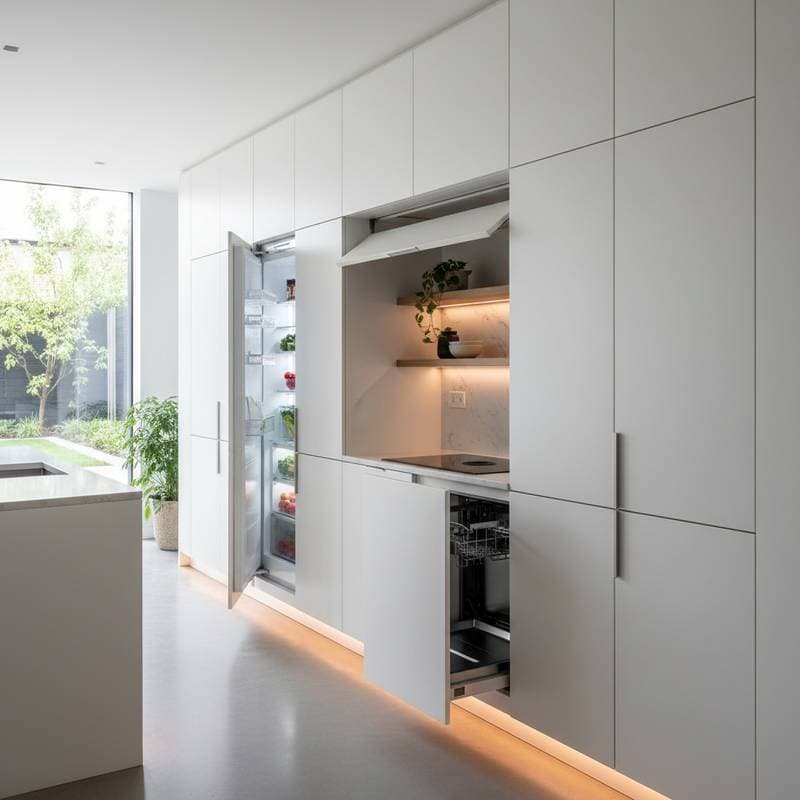
Homeowners increasingly seek kitchens that blend seamlessly into living spaces, free from the visual clutter of exposed appliances. This trend toward hidden appliances offers a sophisticated alternative, yet it presents significant hurdles for DIY enthusiasts. The core challenge lies in concealing functional equipment while preserving essential operational needs such as airflow, power access, and user efficiency.
Concealing appliances requires more than aesthetic choices; it demands a thorough grasp of kitchen dynamics. Professionals emphasize that overlooked details often transform an ambitious project into a source of ongoing frustration. By addressing these elements upfront, individuals can create environments that prioritize both form and utility.
The Essential Elements of Integration
- Custom-fabricated fronts or pre-engineered panels that align with existing cabinetry finishes
- Dedicated ventilation systems, including rear exhaust fans for ovens and side vents for dishwashers
- Modified electrical outlets and plumbing routes to support flush-mounted installations
- Reinforced framing to accommodate the weight of integrated units like double-wall ovens
Novices often underestimate the precision involved in aligning these features. Accurate templating and iterative adjustments ensure smooth operation without compromising the design's clean lines.
Assessing Feasibility Before Starting
Begin by reviewing current appliances for compatibility with hidden configurations. Panel-ready models feature standardized frames for attaching custom overlays and allow for deeper recessing into cabinetry. Retrofitting standard units typically proves impractical due to safety and alignment issues.
Consider daily usage patterns next. A fully concealed layout enhances visual appeal but may hinder quick access during meal preparation. Experts suggest a hybrid approach: integrate less frequently used items like secondary microwaves while keeping primary tools, such as mixers or cutting boards, in reachable positions.
This evaluation prevents costly revisions and aligns the design with practical needs.
Detailed Planning Process
- Conduct precise measurements of the entire kitchen footprint, factoring in appliance dimensions, door clearance radii, and minimum ventilation gaps as specified by manufacturers.
- Map out electrical and plumbing modifications, potentially involving circuit upgrades for high-draw items like induction ranges.
- Source panel materials well in advance, coordinating with fabricators for exact shade matching and thickness compatibility.
- Incorporate discreet ventilation solutions, such as perforated toe-kick panels or integrated grille inserts, to maintain airflow without visual disruption.
- Secure panels to appliances and perform functionality tests, verifying that doors articulate freely and internal temperatures remain stable.
Following this sequence minimizes errors and streamlines installation.
Pitfalls to Sidestep
Many projects falter by prioritizing visuals over technical specifications. For instance, solid cabinet enclosures can restrict airflow, causing refrigerators to cycle excessively and increasing energy costs. Adhere strictly to clearance guidelines, even if it requires subtle design tweaks like added spacers.
Hinge and alignment issues rank as another frequent problem. Doors on integrated units must pivot without binding against neighboring surfaces, demanding meticulous hardware calibration. Invest time in shimming and leveling to achieve uniform gaps, typically under one-eighth inch.
Addressing these proactively preserves both appliance longevity and user satisfaction.
Engaging Experts for Complex Installations
Projects incorporating advanced features, such as column refrigerators or steam ovens, benefit from professional oversight. These elements often necessitate custom ducting for exhaust and compliance with local building codes for electrical work. Certified installers bring tools and knowledge to handle these intricacies efficiently.
Strategies for Optimal Results
Successful integrations combine elegance with practicality. Opt for soft-closing mechanisms on cabinet doors to safeguard delicate panels from impacts. Embed task lighting within concealed zones to illuminate work areas effectively.
Select matte or textured finishes for panels to minimize visible fingerprints and wear. Throughout the process, prioritize maintenance access by incorporating removable sections or service hatches in strategic locations.
Achieving a Functional Seamless Kitchen
Hidden appliances elevate kitchens into cohesive, serene environments that resemble bespoke cabinetry rather than utilitarian zones. Success hinges on meticulous attention to the infrastructure supporting these features. With thoughtful execution, homeowners gain spaces that enhance daily routines while delivering enduring visual harmony.