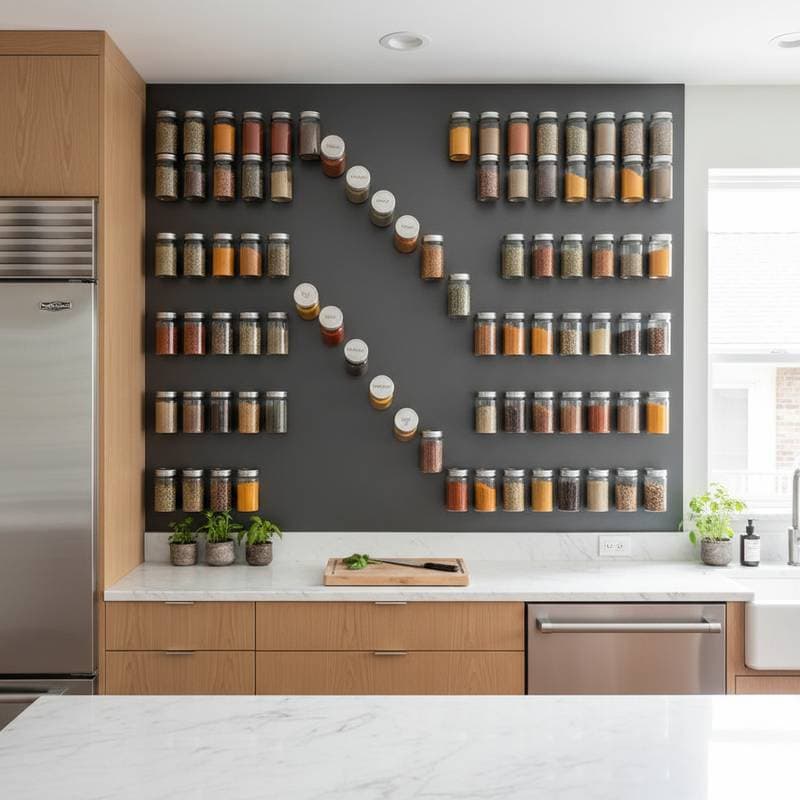
Transform Your Kitchen Storage with Magnetic Spice Walls
Home cooks frequently encounter frustration when hunting for spices in overcrowded cabinets, particularly while a meal cooks on the stove. Spice jars consume surprising amounts of space, and traditional racks or drawers seldom hold them without creating chaos. This disorder not only delays food preparation but also prompts purchases of duplicate spices.
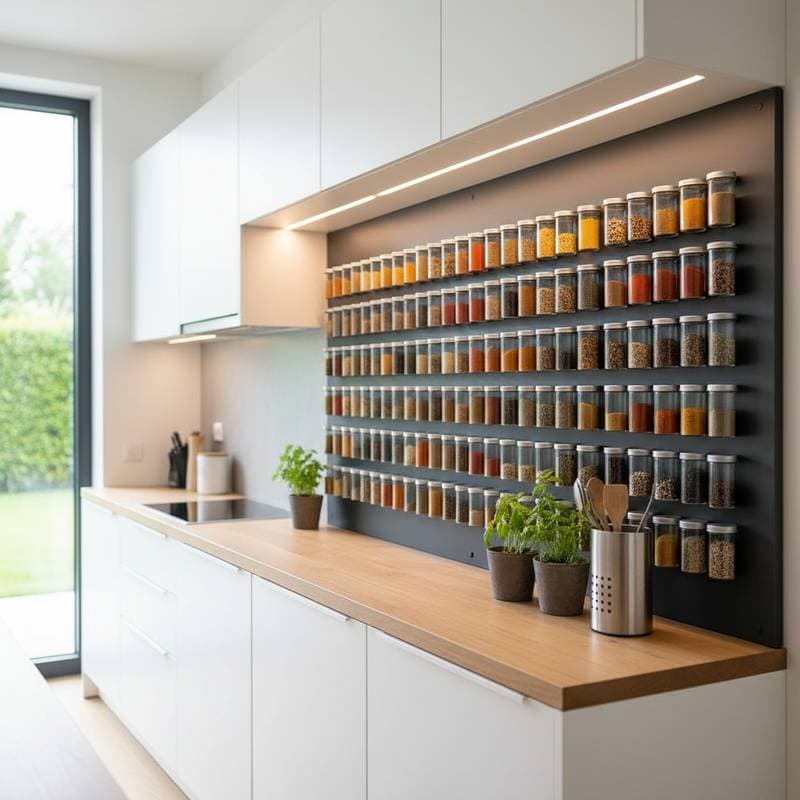
Kitchens often lack specific areas for these small containers. The jars do not stack well, disappear into deep shelves, and get buried behind larger items. Magnetic spice walls overcome these issues by transforming underutilized vertical surfaces, like empty walls or the sides of refrigerators, into organized storage options.
Based on experience with multiple kitchen remodels and custom designs, magnetic spice walls emerge as a smart, cost-effective improvement. They tackle everyday problems without requiring major renovations and fit various kitchen configurations and skill levels.
What You Will Need Before You Begin
Basic Materials
- Magnetic board or sheet metal: Choose stainless steel or galvanized panels designed for indoor environments. A size of 18 by 24 inches works well for typical home kitchens.
- Magnetic spice jars: Pick jars with strong neodymium magnets and airtight lids. As an option, glue magnets to the lids of Mason jars using industrial adhesive, but purpose-built jars provide more convenience.
- Mounting hardware: Collect screws, wall anchors, or heavy-duty adhesive strips depending on your wall material.
- Labeling supplies: Use a label maker or adhesive stickers for clear spice identification.
Recommended Tools
- Tape measure to take accurate measurements
- Stud finder to identify solid mounting points
- Level to ensure straight installation
- Drill with screwdriver bits for secure fastening
- Safety glasses to protect your eyes
- Pencil for marking positions
If you need to cut the metal sheet to size, wear protective gloves and employ tin snips. Many hardware stores offer cutting services for oversized sheets.
Common Problems and How to Solve Them
Home projects such as this one sometimes present hurdles. The following sections outline typical issues from real installations, paired with practical fixes.
Problem: Jars Sliding or Falling
Weak magnets often lead to jars detaching during everyday use. Budget jars use inferior magnets that lose grip quickly. Switch to jars with neodymium magnets for reliable adhesion. For current jars, add extra magnet discs using adhesive backing to increase holding power.
Problem: Spices Losing Freshness
Exposure to light and heat speeds up spice spoilage. Place the wall out of direct sunlight by avoiding windows, or select jars with tinted glass. Keep the setup distant from ovens and dishwashers to limit temperature changes.
Problem: Panel Rusting or Staining
Humidity encourages rust on low-quality metals. Use stainless steel or coated panels made for kitchen conditions. Wipe the surface regularly with a soft cloth, mild soap, and thorough drying to maintain its condition.
Problem: Adhesive Panel Falling Off
Oil buildup or poor application can weaken adhesive mounts. Clean the wall surface completely before applying heavy-duty strips rated for metal. For permanent hold, opt for screws or anchors instead.
When to Call a Professional
The majority of magnetic spice wall installations qualify as simple DIY projects with low risk. Some situations, however, call for professional help.
Experts handle integrations like placing panels into custom backsplashes, adjusting electrical outlets, or attaching to tricky surfaces such as tile or glass. They bring tools to work around obstacles without causing harm and ensure adherence to local building codes.
Consult a specialist for uneven walls or fragile plaster finishes. Professionals reinforce mounting points to protect the wall's structure.
Pro Tips for Success
Lessons from numerous installations highlight methods that improve results.
- Choose jars in uniform sizes and shapes to create a cohesive look and ease inventory management.
- Add a narrow wooden frame around the panel to guard jars against bumps.
- Focus on clear, large labels rather than decorative ones for fast reading while cooking.
- Check and replenish spices often, as their potency fades faster than many realize.
- Apply the magnetic concept to small tools or gadgets outside the kitchen for added versatility.
Strategic lighting boosts both function and style. Position under-cabinet lights to highlight the spices while minimizing glare from the metal surface.
Expanding the Idea Beyond Spices
Magnetic systems offer flexibility for other uses. Mount additional panels inside pantry doors to store measuring cups or cooking utensils neatly.
In full kitchen renovations, integrate steel sheets beneath backsplash tiles for a seamless magnetic area. Renters might prefer removable options, like stick-on panels or fridge magnets, which allow easy relocation.
Maintaining Your Investment
Keep the system performing well with consistent maintenance. Wipe the panel weekly using a microfiber cloth to remove dust. Rearrange jars every three months to use older spices first and remove any that have expired.
Examine magnets and hardware twice a year for signs of deterioration, and replace faulty parts right away. Such care guarantees durability and upholds the organized setup that eases cooking tasks.
Achieve Lasting Kitchen Efficiency
A magnetic spice wall brings quick improvements in access and tidiness. Users note shorter search times and fewer misplaced items, which support efficient meal making. This addition streamlines daily habits while adding contemporary utility suited to long-term use.