5. Under-Bed Drawers or Lift Systems
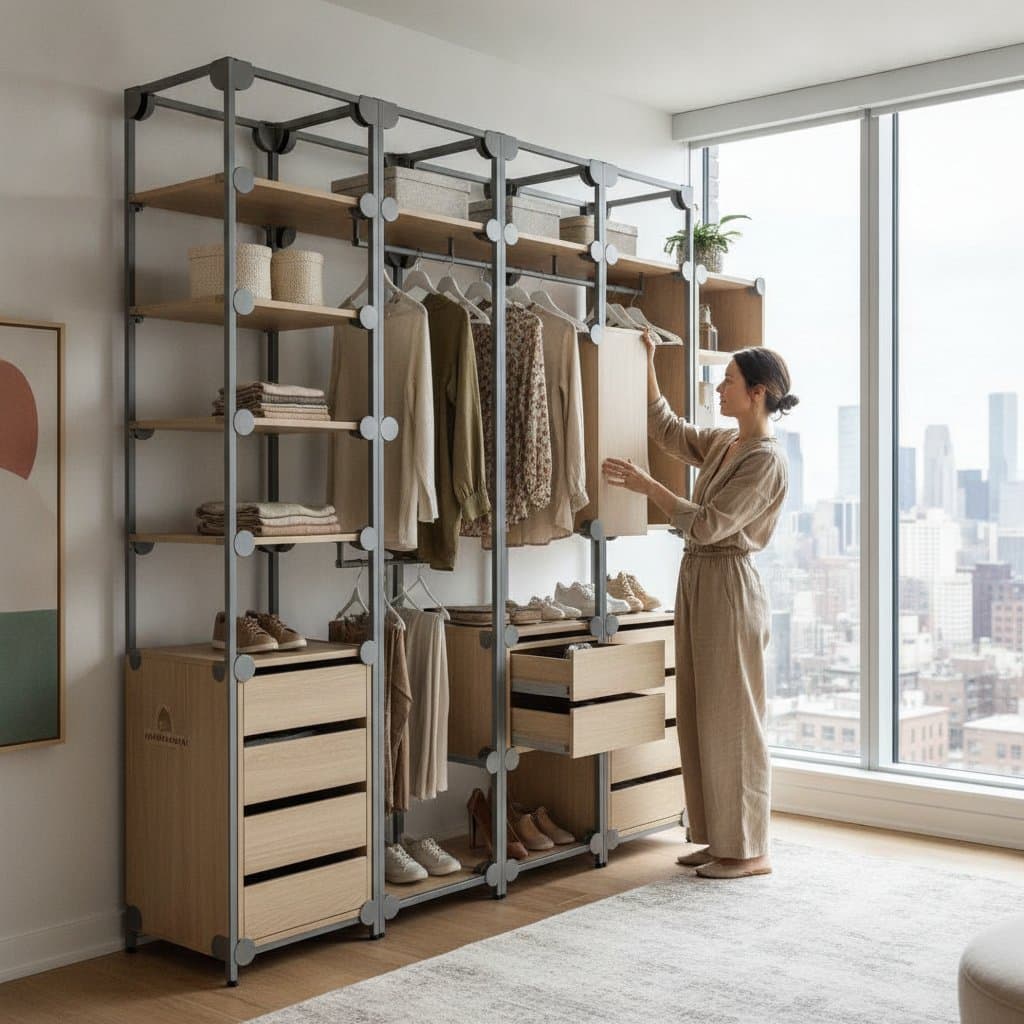
Beds occupy significant floor space, but the area beneath them frequently remains underutilized. Install rolling drawers or a lift-up mattress platform equipped with gas struts to access substantial storage volume effortlessly. These options suit seasonal clothing, linens, or bulky items that require occasional retrieval.
For those new to woodworking, wooden crates fitted with casters provide a straightforward alternative. Select crates that fit the bed's dimensions, then apply paint or stain to align with the frame's finish. This approach creates a custom appearance without advanced skills or tools.
Consider the bed's height when planning; low-profile beds may require slim drawers to avoid scraping the floor. Proper alignment ensures smooth operation and prevents dust accumulation in hard-to-reach areas.
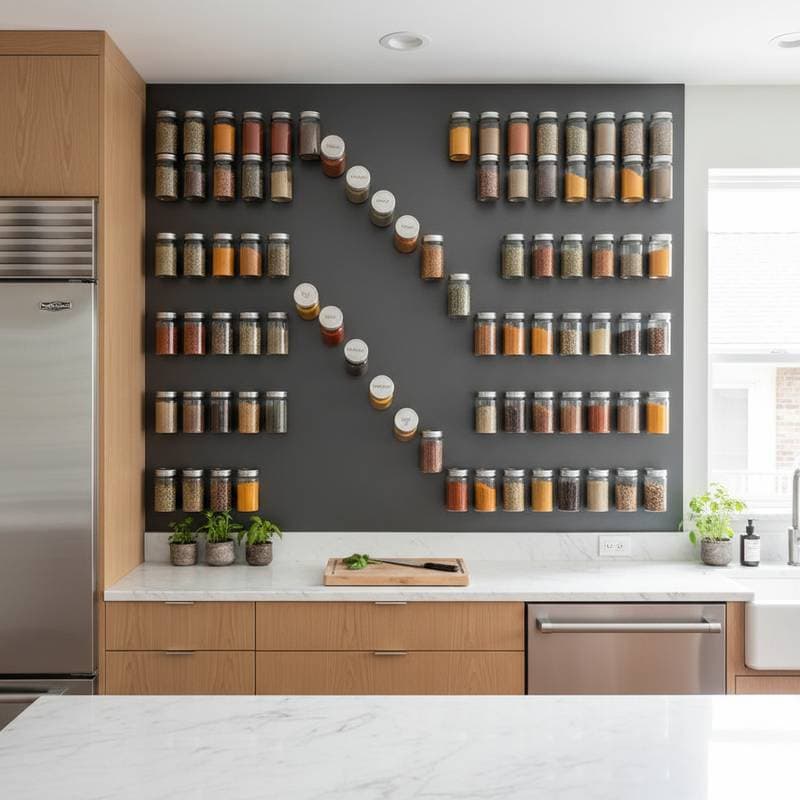
6. Hidden Wall Panels
7. Secret Pantry Pullouts
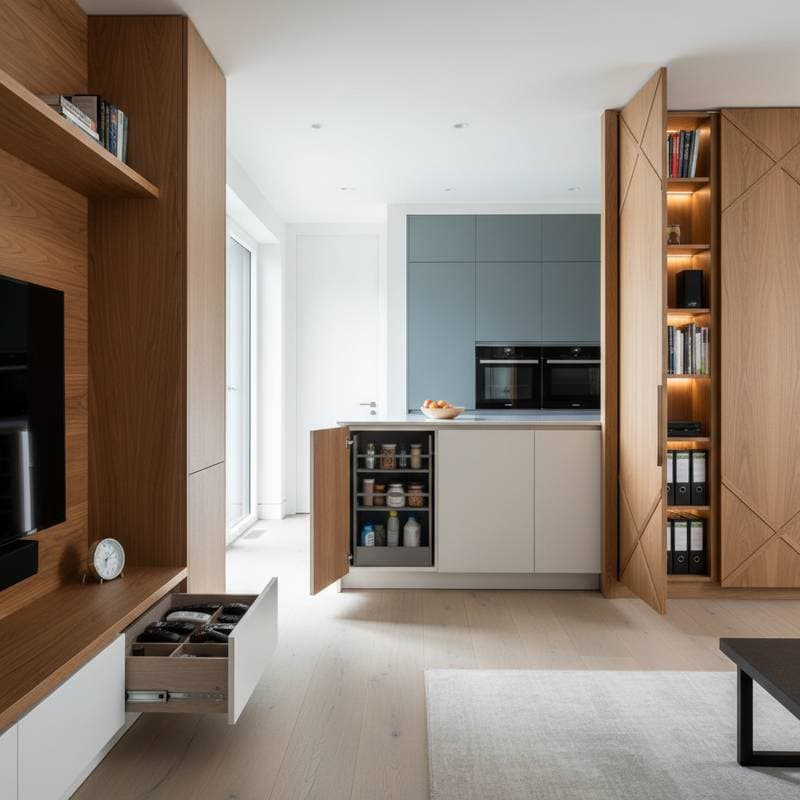
Kitchen layouts often include unused corners or filler strips between cabinets, which lend themselves to transformation into pullout pantries. These narrow units slide outward like oversized drawers, accommodating spices, canned products, or household cleaners in an organized manner.
Precise measurements prove essential to avoid conflicts with neighboring cabinetry. Even a slight half-inch discrepancy can lead to sticking or irregular motion, complicating daily access.
Select durable slides rated for the anticipated weight, and line the interiors with non-slip mats to secure contents during extension. This addition not only maximizes vertical space but also streamlines meal preparation by keeping essentials within reach.
8. Floor Compartments
Older residences typically feature a small gap between the subfloor and the finished surface, offering potential for shallow storage solutions. Install custom boxes in these voids to store emergency kits, important documents, or valuables discreetly.
Caution: Avoid any alterations to structural joists or support beams. Inspect the underside of the floor if accessible, and steer clear of locations with embedded wiring or plumbing to prevent hazards.
Use weather-resistant materials for the compartments to guard against moisture, and include secure lids that blend with the flooring material. Regular checks ensure items remain dry and intact over time.
9. Sofa Arm and Cushion Storage
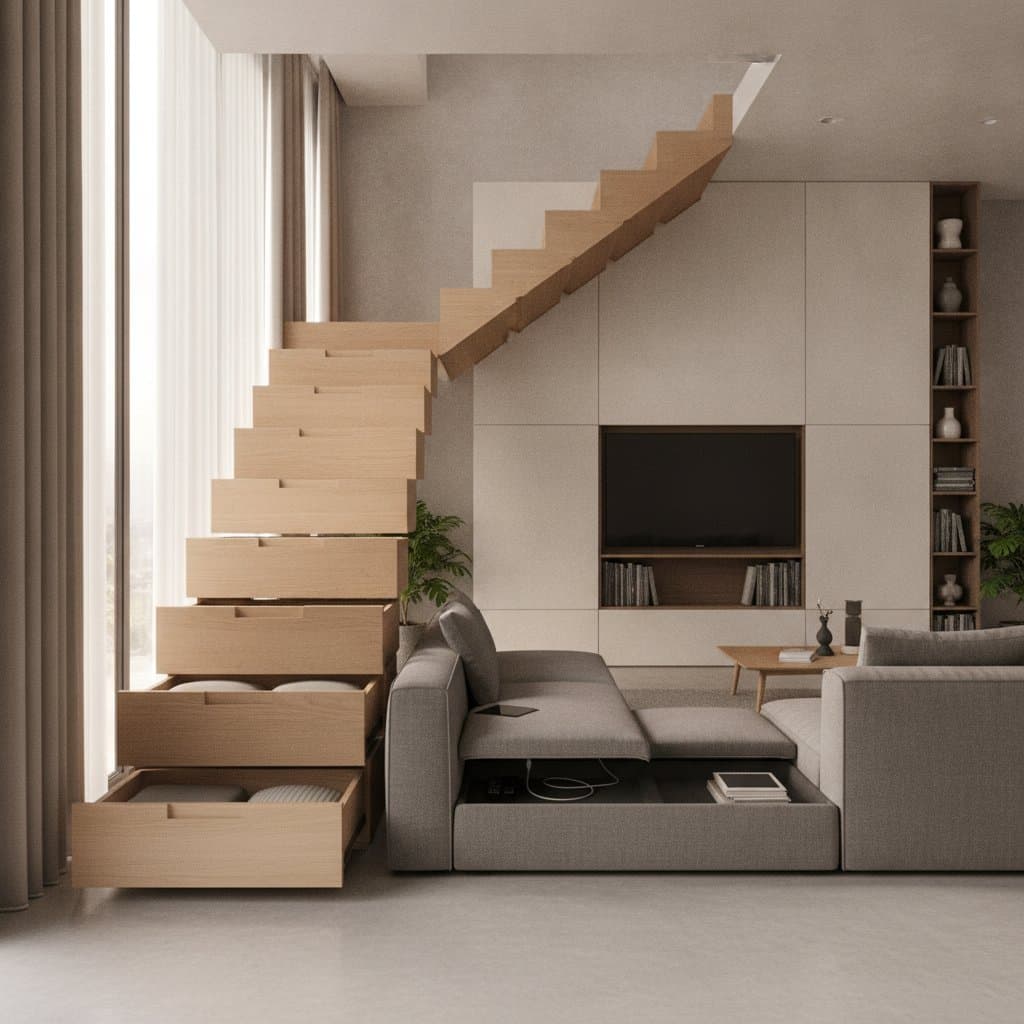
Contemporary furniture increasingly incorporates built-in storage, with compartments hidden beneath cushions or within armrests. For existing pieces lacking this feature, retrofit a hinged plywood base under the seating area to create accessible storage.
Professionals have constructed these modifications for clients seeking enhanced organization without replacing furnishings. The spaces accommodate remotes, charging devices, and periodicals, reducing surface clutter on side tables.
Ensure the hinges support the cushion's weight and align properly for a level seat. Fabric covers or padding maintain comfort while preserving the sofa's original appearance.
10. Hidden Office Nooks
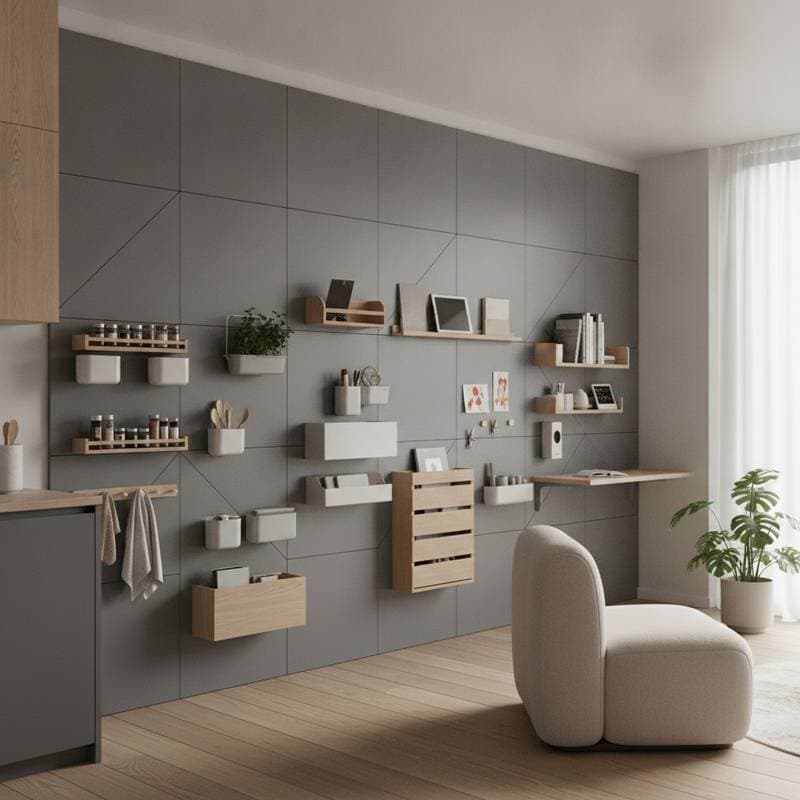
Space constraints call for innovative workspaces, such as a wall-mounted desk that folds into a cabinet for concealment. When closed, it resembles a decorative wall element or artwork; when open, it reveals shelves, a power outlet, and cable organizers.
This project demands basic carpentry abilities but delivers versatile functionality. Secure the unit firmly to wall studs, as the load from equipment and user interaction can loosen improper fastenings in drywall.
Incorporate adjustable shelving to adapt to different needs, and add soft-close mechanisms for quiet operation. Such nooks support remote work while preserving room aesthetics during off-hours.
Essential Strategies for Implementation
-
Plan Thoroughly: Measure dimensions accurately and draft a detailed sketch before any modifications. This step prevents errors and ensures compatibility with existing structures.
-
Align Finishes Precisely: Seamless integration requires matching paint, stain, and hardware to adjacent elements. Test samples in natural light to confirm visual harmony.
-
Address Ventilation Needs: Enclosed areas risk moisture buildup; incorporate small vents for items like electronics or textiles to promote air circulation.
-
Incorporate Magnetic Closures: These provide a handle-free, elegant solution superior to exposed latches, facilitating discreet and effortless access.
-
Prioritize Safety Regulations: Maintain clear paths to electrical panels, water valves, and air vents. Consult local codes if structural changes are involved to uphold building standards.
Steps to Integrate Hidden Storage
Begin by assessing your home's layout to identify underused zones, then select solutions that align with your skill level and budget. Gather materials suited to the project's demands, and proceed methodically to avoid disruptions. These enhancements not only organize possessions but also elevate daily living through thoughtful design.