How Hidden Appliances Foster Serenity in Modern Kitchens
Kitchens serve as the heart of the home, yet they often accumulate visual distractions from stainless steel surfaces, tangled cords, protruding handles, and scattered devices. The blender resting on the countertop, the mismatched toaster, and the imposing refrigerator contribute to a sense of disorder. Hidden appliances disrupt this pattern entirely. They reshape the kitchen's appearance and atmosphere, ultimately enhancing daily experiences within the space.
The Allure of Seamless Integration
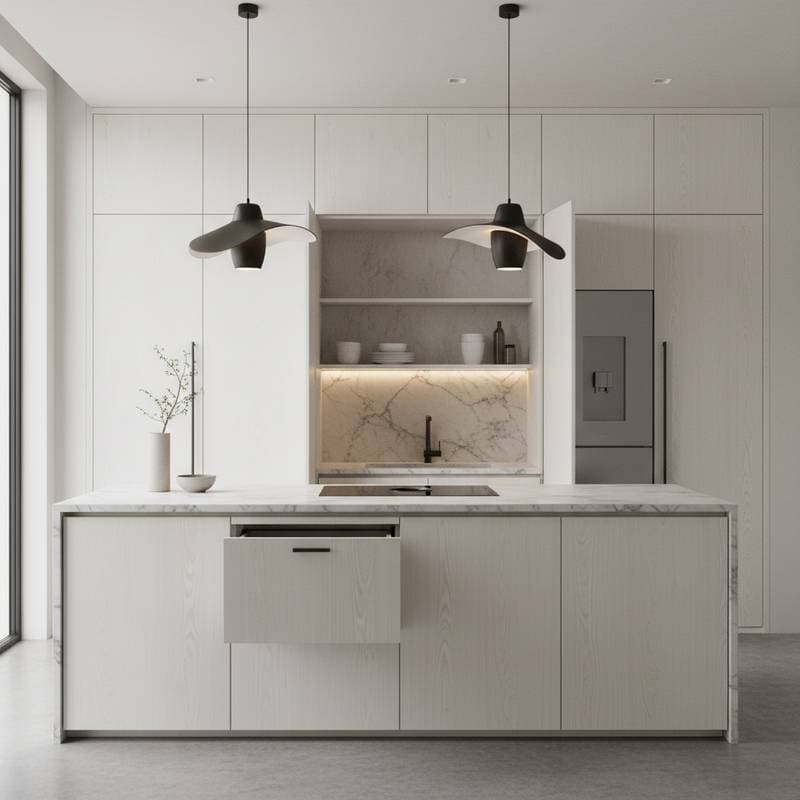
Seamless integration defines the invisible kitchen, where appliances recede into cabinetry or panels to promote harmony and composure. Carla Nguyen, designer at Modern Nest Interiors, observes, "When appliances blend in rather than compete, the kitchen instantly feels more elevated and less chaotic."
Transforming Daily Routines Through Concealment
Concealed appliances subtly alter habits. With unobstructed counters and a refrigerator that merges with walls, the area projects expansiveness and purpose. Individuals tend to maintain tidiness when the design reinforces such practices.
Marco Ellis, designer at The Kitchen Studio, notes, "A clean visual field encourages a clean workflow. You are more likely to wipe down a counter or store a mixer when those actions preserve the invested aesthetic."
This evolution links form to utility. An integrated kitchen appears contemporary while accommodating authentic cooking and social activities. Mornings unfold with poise, as coffee preparation and meal assembly occur amid tranquility.
Fundamental Guidelines for Concealed Designs
Successful concealment demands deliberate planning. Professionals prioritize natural integration that enhances usability rather than arbitrary hiding.
Key guidelines include:
- Uniform Cabinetry Finishes: Match appliance panels to adjacent cabinets for a unified surface that binds the room visually.
- Subtle Hardware Choices: Opt for push-to-open mechanisms or narrow handles to preserve uninterrupted lines of sight.
- Strategic Appliance Placement: Position concealed units proximate to workstations, such as a dishwasher adjacent to the sink or a refrigerator near preparation zones.
- Balanced Proportions: Offset hidden features with prominent elements like open shelves or patterned backsplashes.
Exemplary concealed kitchens retain vitality through fabrics, illumination, and textures, avoiding sterility while minimizing disarray.
Appliances Suited for Effortless Concealment
Certain appliances adapt readily to integration, guiding effective planning.
Refrigerators and Freezers
Panel-ready refrigerators form the foundation of concealed designs. These units accommodate bespoke fronts aligning with cabinetry, rendering the appliance indistinguishable from built-in walls.
In compact areas, under-counter models liberate vertical space and sustain sleek profiles. Select energy-efficient variants with adjustable shelving for optimal organization.
Dishwashers
Contemporary dishwashers facilitate customization with matching fronts from leading manufacturers. Upon closure, they vanish entirely, exposing only a subtle control interface along the door's upper rim.
Prioritize quiet-operation models to minimize disturbances during family gatherings.
Range Hoods
Conventional hoods often overwhelm walls, yet integrated alternatives redirect attention to finer details. Embed them within overhead cabinets or employ downdraft systems that emerge from counters solely during use.
Ensure compatibility with cooking styles, such as high-CFM units for frequent frying.
Small Appliances
Devices like coffee makers, toasters, and blenders generate substantial clutter. Appliance garages, featuring roll-up or pocket doors, provide convenient storage. Nicole Reed, designer at Haven Interiors, states, "Appliance garages are the unsung heroes of modern kitchens. They make everyday life easier without sacrificing the look you worked so hard for."
Incorporate electrical outlets inside these enclosures for immediate access.
Incorporating Laundry in Multifunctional Zones
In compact residences, kitchens may incorporate laundry functions. Enclose washer-dryer stacks behind cabinetry or folding doors to support dual-purpose utility without aesthetic compromise.
Ventilation and moisture-resistant materials prove essential for longevity.
Materials Enhancing Seamless Aesthetics
Continuity in materials underpins concealed designs, amplifying the fluid impression.
- Matte Surfaces: These soften light reflection and resist smudges, sustaining composure.
- Wood Veneers: Earthy hues introduce warmth, countering the crispness of integrated lines.
- Stone or Composite Counters: Extend these materials into backsplashes for unbroken continuity.
- Embedded Lighting: Install under-cabinet and baseboard fixtures to accentuate textures and delineate spaces discreetly.
Aria Lopez, designer at Studio AL, emphasizes, "The materials carry the design, not the appliances. When finishes connect from floor to ceiling, the kitchen feels intentional and refined."
Select durable, low-maintenance options aligned with usage patterns.
Practical Implementation Across Budgets
Concealment appears indulgent, yet it accommodates diverse financial and spatial constraints. Focus efforts on high-impact areas for maximum effect.
During renovations, allocate resources to panel-ready refrigerators and dishwashers, which yield prominent transformations. For non-committal adjustments, renters or budget-conscious individuals can:
- Employ decorative trays to consolidate small appliances on counters.
- Invest in space-saving essentials, such as portable espresso machines or collapsible air fryers.
- Introduce standalone pantries to obscure items like microwaves.
Invisibility hinges on strategic organization, cohesive palettes, and pristine upkeep. Incremental refinements accumulate into profound serenity.
Pitfalls to Sidestep in Integrated Kitchens
Flawless exteriors falter without functional integrity. Avoid these common errors:
- Excessive Concealment of Necessities: Ovens require airflow and accessibility; overly restrictive hiding invites servicing challenges.
- Neglecting Ergonomics: Verify that panels and doors operate smoothly, accommodating varied user heights.
- Overdiversifying Materials: Repetition fosters cohesion; clashing elements fragment the design.
- Overlooking Ventilation Needs: Integrated hoods and refrigerators demand unobstructed air paths; incorporate them during planning.
- Diminishing Illumination: Minimalism risks chilliness; layer ambient, task, and highlight lights for inviting depth.
Marco Ellis advises, "Integration should support how you live, not complicate it. When done right, hidden appliances make your kitchen more intuitive, not less."
The Psychological Benefits of Uncluttered Spaces
Concealment transcends visuals, nurturing emotional equilibrium. A tranquil kitchen softens interactions, distancing users from task reminders and mess.
Homeowners frequently report heightened relaxation and motivation in such environments. Unveiling a tailored appliance evokes quiet accomplishment, a private reveal shared selectively.
This resonance elevates hidden appliances beyond trends. They address contemporary demands for equilibrium amid routines, fostering supportive backdrops for nourishment and connection.
Infusing Character into Restrained Designs
Minimalism need not equate to monotony. Redirect expression toward surfaces, artwork, and accents rather than accumulation. Consider a tactile backsplash, artisanal pendants, or distinctive seating.
Carla Nguyen suggests, "If everything is hidden, the eye needs somewhere to rest. A handcrafted tile or a beautiful wood grain can become that focal point."
Optimal outcomes blend refinement with habitability, encouraging culinary pursuits, extended stays, and communal meals in poised settings.
Sustaining and Evolving Your Integrated Kitchen
Post-installation, upkeep ensures enduring appeal. Clean panel surfaces with mild, non-abrasive solutions to safeguard finishes. Lubricate mechanisms periodically and monitor airflow routes.
Future updates, such as hardware swaps or palette shifts, integrate seamlessly due to the timeless framework. The design's adaptability accommodates evolving needs, from dietary changes to household growth.
Ultimately, concealed appliances deliver lasting flexibility, anchoring calm amid life's fluctuations.
Steps to Integrate Concealment at Home
To adopt this philosophy, evaluate your existing setup. Identify dominant appliances and viable hiding spots, then align choices with finances and routines. Consult professionals for custom solutions, ensuring ventilation, accessibility, and material harmony guide the process. The result: a kitchen that nurtures serenity and efficiency daily.