Why Invisible Kitchens Are Gaining Popularity
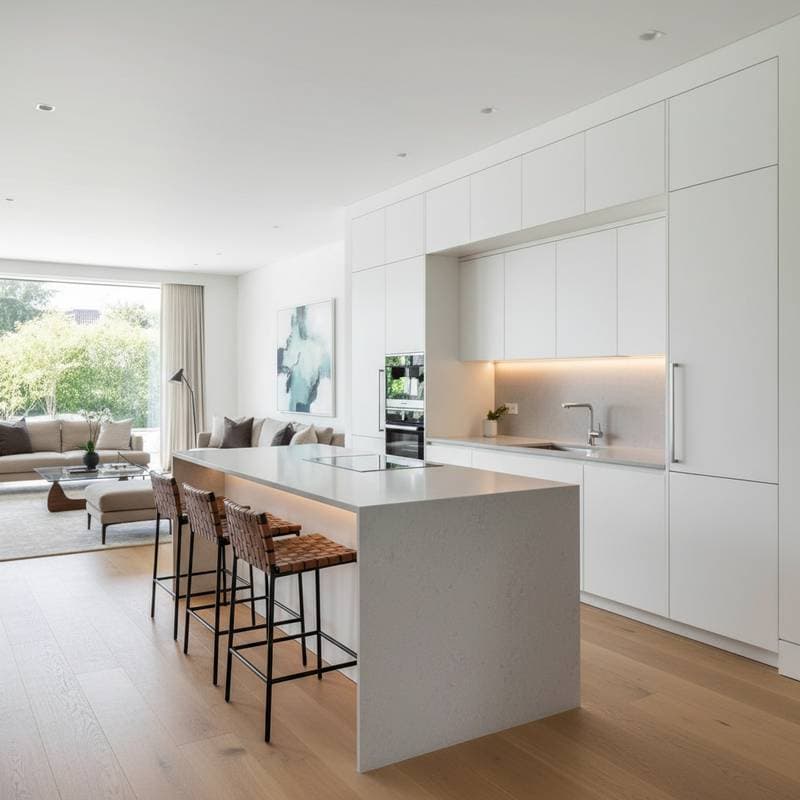
The concept of an invisible kitchen emerges from a desire to integrate cooking spaces into broader living environments. Homeowners increasingly seek designs where refrigerators, dishwashers, and cabinetry recede behind uniform panels, eliminating visual clutter. This approach creates a tranquil atmosphere that supports both culinary tasks and social gatherings.
Traditional kitchens often feature exposed hardware and prominent fixtures, which can dominate open floor plans. In contrast, invisible designs prioritize subtlety, aligning with preferences for minimalism and order. When executed with care, these kitchens maintain full operational efficiency while appearing as extensions of adjacent rooms.
Project Overview
Working Time: Four to six days for basic cabinet concealment; extend for appliance integration.
Total Time: One to two weeks, based on project scope.
Skill Level: Intermediate to advanced.
Estimated Cost: Moderate to high, influenced by materials and appliances.
When to DIY and When to Hire Help
Confident DIY enthusiasts can handle concealing existing appliances by swapping doors and panels. Install panel-ready dishwashers, fine-tune hinges, and ensure cabinet alignment through measured steps. These tasks demand accuracy but avoid regulatory hurdles.
Professional involvement becomes essential for plumbing relocations, electrical updates, or ventilation overhauls. Integrated range hoods necessitate compliant ducting and safety clearances to adhere to codes. Neglecting expert guidance in these domains risks hazards and future expenses.
Materials and Tools
Materials:
- Cabinet-grade plywood or medium-density fiberboard panels.
- Concealed hinges and touch-latch mechanisms.
- Panel-ready appliances or custom cover kits.
- Edge banding and matching veneer.
- Paint or stain for unified finishes.
Tools:
- Circular saw or table saw.
- Drill and driver set.
- Level and straightedge.
- Clamps and measuring tape.
- Paint sprayer or precision brushes.
Opt for pre-finished panel systems from kitchen suppliers to control costs. These install over current frames after precise measurements, simulating bespoke results.
Step-by-Step Process
-
Evaluate the Space: Record dimensions of cabinets, appliances, and clearances. Determine which elements conceal easily without system alterations.
-
Choose the Design Style: Select full-panel walls or combined upper and lower units with integrated storage.
-
Install Concealed Hardware: Incorporate touch-latch or push mechanisms to eliminate visible pulls, achieving flush surfaces.
-
Apply Panels and Trim: Match materials across appliance fronts and cabinets, aligning grain patterns and colors for continuity.
-
Adjust and Align: Precision defines success; use shims and hinges to eliminate gaps or distortions.
-
Add Lighting: Integrate under-cabinet strips or recessed fixtures to support function without compromising minimalism.
Quality Control and Craftsmanship
Success in invisible kitchens hinges on meticulous execution. Verify alignments with a straightedge throughout assembly. Distribute adhesives and fasteners uniformly to avoid panel distortion.
Select durable hardware for repeated use, favoring robust hinges over inexpensive alternatives. Apply finishes in light layers, sanding between coats for smoothness. These practices ensure longevity and visual coherence.
Maintenance and Long-Term Care
Invisible kitchens demand consistent care akin to conventional setups, with adaptations for enclosed elements. Maintain clear airflow by inspecting vents and filters periodically. Lubricate hinges and latches yearly to preserve smooth operation.
Store cleaning tools in discreet drawers or panels to uphold the design. During refinishing, detach hardware to safeguard alignments. These habits sustain both appearance and performance over time.
Realizing Seamless Integration
Invisible kitchens embody a shift toward harmonious home environments, where functionality recedes to amplify living quality. This design invites hands-on creators to apply woodworking skills alongside contemporary restraint. The outcome elevates everyday routines into refined experiences, proving that subtlety enhances rather than conceals.