Hidden Appliances Reshape Modern Kitchen Remodels
The kitchen reveals much about a home's character. During a renovation in London, after time in New York apartments and the French countryside, the dominance of appliances became evident. Stainless steel units, flashing lights, and protruding handles often overwhelm even fine cabinetry. The rise of hidden appliances addresses this issue. This approach creates calmer, more spacious environments that align with family lifestyles, prioritizing both aesthetics and practicality.
Key Takeaways
- Hidden appliances deliver seamless designs that expand perceived space and reduce visual clutter
- Integrated panels, smart storage, and versatile units suit kitchens of all sizes
- European principles blend efficiency with elegance in this trend
- Concealment boosts resale value and streamlines daily tasks
Renters can incorporate elements through affordable, adaptable methods
Rethinking Visible Elements
Kitchen counters often accumulate devices like toasters, blenders, kettles, and coffee makers. Such setups provide utility but generate persistent visual distraction. European designers, especially from Scandinavia and France, emphasize the power of absence. What remains unseen contributes as much to harmony as what appears.
This mindset now influences global designs. Interior designer Amelia Grant of Grant Studio Interiors notes that clients seek kitchens resembling living rooms. "People want their kitchens to blend with the rest of their home," she explains. "They tire of the industrial aesthetic and desire calm, unified areas." Hidden appliances elevate cabinetry as the focal point.
Innovations Driving the Trend
Engineering advances enable this shift to subtle kitchens. Manufacturers offer slimmer forms, adaptable exteriors, and near-silent operations to meet integration needs.
Integrated Panels
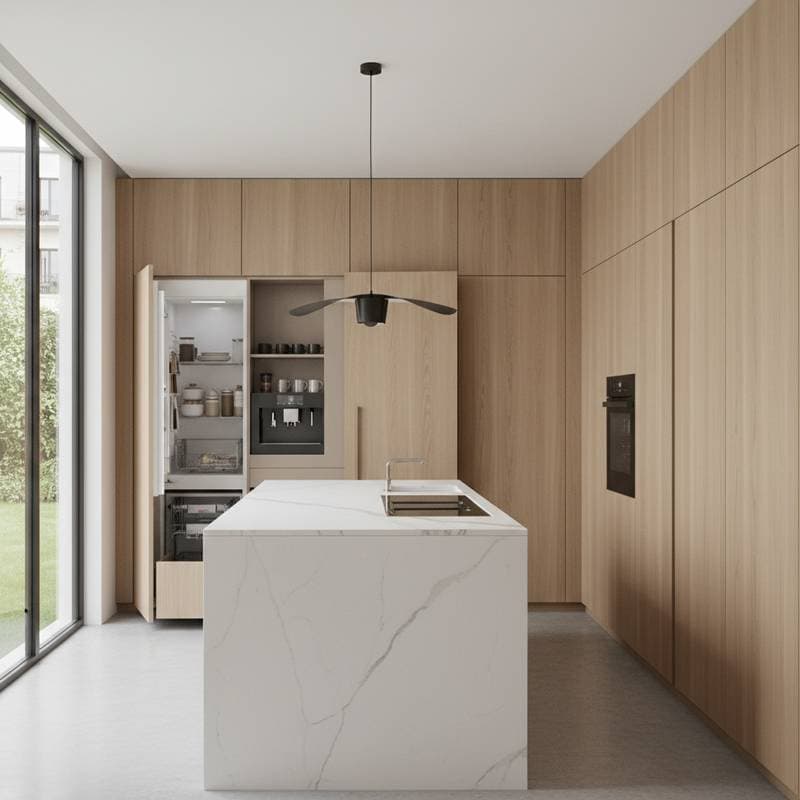
Panel-ready appliances simplify concealment. Cabinet fronts attach directly to dishwashers, refrigerators, and freezers for flawless integration. In a Cotswolds project, a full-height refrigerator mimicked a pantry with uniform wood finishes. This technique enlarges the room visually and maintains material consistency.
Slide and Pocket Doors
Pocket door systems hide prep zones or beverage stations behind gliding panels. Designer Leo Phillips, expert in minimalist urban kitchens, highlights their appeal in open layouts. "You cook, clean, and conceal in moments," he states. "This provides versatility without sacrificing elegance."
Multi-Function Appliances
Versatile units enhance hidden setups. Oven-steam combinations, induction surfaces with built-in vents, and drawer dishwashers optimize layouts. European brands developed these for compact dwellings, yet they gain worldwide adoption for their streamlined efficiency.
Concealment for Psychological Calm
An uncluttered kitchen offers mental relief. Smooth surfaces greet users after demanding days, altering the room's emotional impact. Hidden appliances amplify this tranquility.
In open-plan configurations, where kitchens adjoin living areas, concealment prevents gadget walls from intruding on relaxation. The result supports dialogue and unity. Designer Sophie Lemaire, based in Paris and London, observes that clients treat kitchens as extensions of lounges. "We demand lounge-level polish," she says. "Hidden elements achieve that balance."
Efficiency in Compact Urban Spaces
Urban apartments demand clever space use. Hidden appliances prove essential for both small homes and rentals, maximizing every area.
Foldaway and Under-Counter Choices
Units that retract under counters or into cabinets reclaim surfaces. A washer-dryer behind a door liberates adjacent rooms. In a London residence, a retractable induction cooktop restored counter freedom, transforming usability.
Portable and Modular Fixes
Renters benefit from non-permanent options. Store portable induction plates when idle; cover mini-fridges with fabric or panels. These adjustments yield visual serenity akin to full installations.
Global Roots of Seamless Aesthetics
Time in rural France revealed kitchens that integrate modern tools into historic shells. Appliances nestle behind traditional fronts, honoring heritage while enabling contemporary routines.
Japanese designs apply similar logic amid tight quarters. Modular walls hide rice cookers and microwaves, yielding peaceful, adaptable zones. These traditions underscore intentionality over extravagance, merging tech with timeless forms.
Planning a Hidden Kitchen: Expert Guidance
Successful integration demands early strategy. Appliance specs guide cabinet construction from the outset.
Designer Recommendations
- Position appliances first to align with cabinet frameworks.
- Select uniform materials that harmonize with surrounding decor.
- Account for ventilation and servicing to avoid future issues.
- Design for efficient movement in cooking and cleaning paths.
Builder Perspectives
Contractor Nathan Ellis, focused on kitchen overhauls, stresses accuracy. "Even slight mismeasurements disrupt the outcome," he warns. "Coordination among fabricators, electricians, and suppliers proves vital."
Harmonizing Style and Utility
Total invisibility suits some, yet selective visibility adds character. Prioritize hiding bulky items like refrigerators while showcasing artisanal pieces.
Blending Exposed and Concealed Features
A vibrant enamel range serves as a highlight, with minor tools stored away. In one setup, an oven accents a marble surround, while a microwave and toaster reside in a retractable unit. This combination preserves cleanliness and personalization.
Budgeting for Hidden Designs
Integration elevates initial costs through custom work and fittings. Designers contend the expense yields enduring joy and market advantages.
Affordable Adaptations
- Apply faux panels to existing units
- Install garages with doors to corral counterside items
- Match small appliance colors to cabinet hues
- Use curtains or screens to enclose work areas
These tweaks foster unity on a modest scale.
Enhancing Family Dynamics
Hidden setups simplify parenting. Reduced exposed controls deter child interference. Quieter operations suit mealtimes and study sessions.
Designer Rachel Tan, specializing in family kitchens, praises organizational benefits. "Closed storage promotes habits," she notes. "It aids balance amid work, education, and household duties."
Ties to Sustainable Practices
This trend aligns with minimalism and eco-consciousness. Less visible clutter curbs impulse purchases and excess.
Cabinet access encourages deliberate use. Modern hidden units incorporate efficient tech like inverter systems and better insulation, lowering energy demands. Kitchens emerge as serene, effective, and earth-friendly.
Embracing the Everyday Shift
Post-renovation, hidden appliances redefine routines. Mornings proceed softly, evenings unwind gently, and gatherings transition smoothly.
Visitors to a Cotswolds home marvel at disguised storage. Pointing to a cabinet as the refrigerator elicits delight. Such subtlety defines effective design: presence felt, not seen.
Steps to Implement Your Vision
Evaluate appliances for concealment potential without routine disruption. Consult designers on panel options and adaptable cabinetry to future-proof your space.