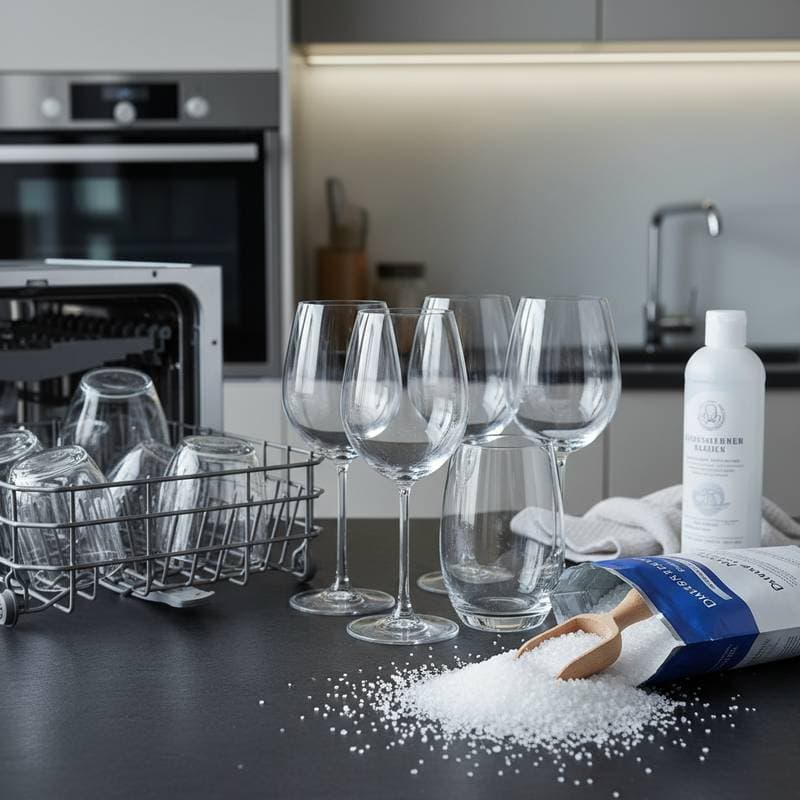
Viral Salt Hack Delivers Spotless, Sparkling Glasses
If you have ever opened your dishwasher expecting crystal-clear glassware only to find cloudy streaks and dull finishes, you are not alone. That chalky film represents one of the most common complaints from homeowners. The viral salt hack circulating online promises a fix so simple it sounds too good to be true: add salt. As someone who has spent decades maintaining kitchens and troubleshooting appliances, I confirm there is real science behind this trick, along with important caveats.
Before you pour table salt into your dishwasher and start the cycle, consider what occurs inside that machine. Understand why glassware becomes cloudy in the first place. Learn how this salt method assists when applied correctly.
What the Dishwasher Salt Hack Actually Does
Step-by-Step: Using the Salt Hack Safely
To try the viral hack, proceed with the correct method. This approach draws from real-world appliance maintenance experience.
- Choose the right salt. Select coarse dishwasher salt, not table salt or rock salt. Avoid iodized salt, as additives can cause streaks or harm the machine.
- Prepare the dishwasher. Clear existing buildup by running an empty cycle with a cup of white vinegar on the top rack. This step removes mineral film and soap residue.
- Add your salt.
- If your dishwasher includes a salt compartment, fill it completely, then run a short rinse cycle to distribute the salt.
- If your dishwasher lacks one, position a small, dishwasher-safe bowl containing about half a cup of salt on the bottom rack.
- Load glassware properly. Prevent overcrowding. Ensure each glass has sufficient space for water circulation.
- Run the cycle on normal or eco mode. Hotter settings dissolve minerals effectively but can contribute to etching over time. Maintain balance in your choices.
- Inspect after washing. Clearer glasses indicate the salt softened the water sufficiently to reduce deposits. Persistent cloudiness suggests issues elsewhere, such as a blocked spray arm or worn-out filter.
Professional Insight: What the Pros Actually Do
Professional kitchen maintenance relies on water softeners and routine descaling rather than quick fixes. Commercial dishwashers connect to dedicated softening systems that regenerate with salt automatically. This setup explains the sparkle achieved in restaurants.
For homeowners, a whole-house water softener offers a permanent solution if water hardness proves extreme. It safeguards glassware, plumbing fixtures, faucets, and appliances. Although the initial investment appears substantial, it reduces long-term costs by prolonging the lifespan of water-dependent items.
If uncertainty surrounds installation, consult a licensed plumber or water treatment specialist for an evaluation. They test water hardness and recommend an appropriate system size.
Achieving Lasting Clarity in Your Glassware
The viral salt hack contains validity, yet it lacks magic. It functions by imitating true water softening systems, albeit on a smaller scale. For mild hard water without a built-in softener, adding a bowl of dishwasher salt reduces residue temporarily.
Begin by examining your dishwasher's filter, spray arms, and salt compartment. Test water hardness and select detergent accordingly. From experience with diverse cloudy glass issues, simple, correct steps outperform flashy tricks. Maintain a clean dishwasher and use appropriate products to secure the spotless, sparkling glasses promised in viral videos.