Why Enzyme Cleaners Work Differently
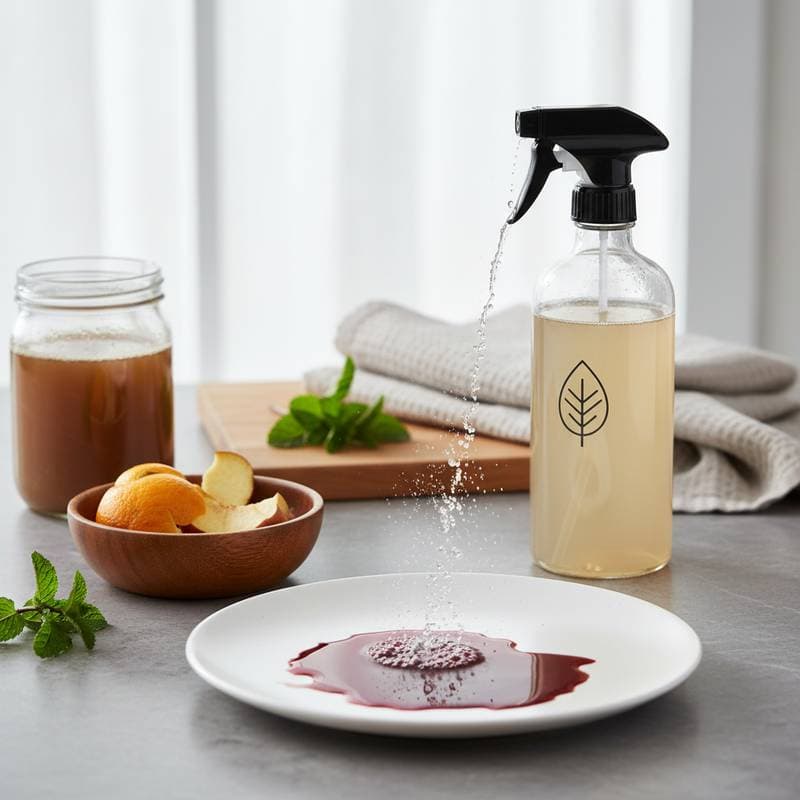
Enzyme cleaners rely on biological reactions to break down kitchen residues. Enzymes act as proteins that accelerate the natural decomposition of grease, proteins, and starches. They digest these substances at a molecular level rather than spreading them or leaving residues behind.
Traditional cleaners often contain surfactants that can leave films on surfaces. Enzyme formulas complete their action and rinse away cleanly. This quality makes them suitable for food preparation areas.
Microbiologist Dr. Tasha Lin said, "An enzyme cleaner does not just remove stains; it neutralizes them. That is why you can use it safely near cutting boards and sinks where chemical residue would otherwise be a concern."
The absence of volatile organic compounds also supports improved air quality indoors.
Types of Enzymes and Their Uses
Storage Practices That Preserve Effectiveness
Enzyme performance depends on controlled conditions. Keep solutions away from high heat and extreme pH levels. Glass or stainless steel containers maintain stability better than plastic.
Refrigerate small batches of homemade cleaners and use them within three months. Commercial versions contain stabilizers that extend usability while remaining safe for septic systems.
Insights from Cleaning and Environmental Experts
Home organization consultant Mara Ellis said, "When clients commit to zero waste cleaning, the biggest hurdle is mindset. They assume natural means weaker. Once they see an enzyme cleaner cut through stovetop grease as well as a commercial spray, they are converted."
Environmental scientist Leo Carmichael explained, "The environmental benefit of enzyme cleaners compounds over time. You are reducing chemical discharge into waterways while cutting packaging waste. It is one of those small household changes with measurable ecological value."
Users often extend the approach to laundry, bathrooms, and pet areas after seeing results in the kitchen.
Steps to Introduce Enzyme Cleaning
Begin by replacing one commercial product with an enzyme alternative. Observe performance on your most common kitchen messes. Track results for two weeks before adding further changes.
Save citrus peels or pineapple cores to start a monthly fermentation jar. Transfer the finished liquid into glass spray bottles for daily use. These steps reduce both waste and recurring purchases.
Building Consistent Kitchen Habits
Incorporate enzyme cleaning into existing routines such as post meal wipe downs. The process turns food scraps into a resource rather than disposal. Over time the approach lowers overall chemical exposure and packaging volume.
Users report fresher air and surfaces that require less frequent deep cleaning. The method demonstrates that practical sustainability can integrate directly into daily food preparation and maintenance tasks.