Acoustic Panels: Blending Function and Design for Better Sound
Homeowners often invest in beautiful interiors, yet persistent echoes from bare walls can disrupt relaxation and conversations. A room with striking visuals loses its appeal when poor acoustics create fatigue during daily activities. Acoustic panels address this by combining noise absorption with elegant design, allowing walls to control sound without sacrificing aesthetics.
The author, with years of experience in residential renovations, has seen how overlooked sound issues detract from even the most luxurious spaces. People focus on surfaces like marble counters or custom lighting, but neglect auditory comfort. Effective acoustic treatment provides a level of refinement similar to high-end finishes, turning panels into functional art that elevates the entire living environment.
Common Causes of Poor Room Acoustics
How Acoustic Panels Work
These panels feature absorptive materials like dense foam, mineral wool, or fiberglass wrapped in breathable fabric. They primarily target mid- and high-frequency sounds that reflect off walls and ceilings, reducing echoes and improving overall tonal clarity. The result is a more natural sound environment where conversations and media playback feel effortless.
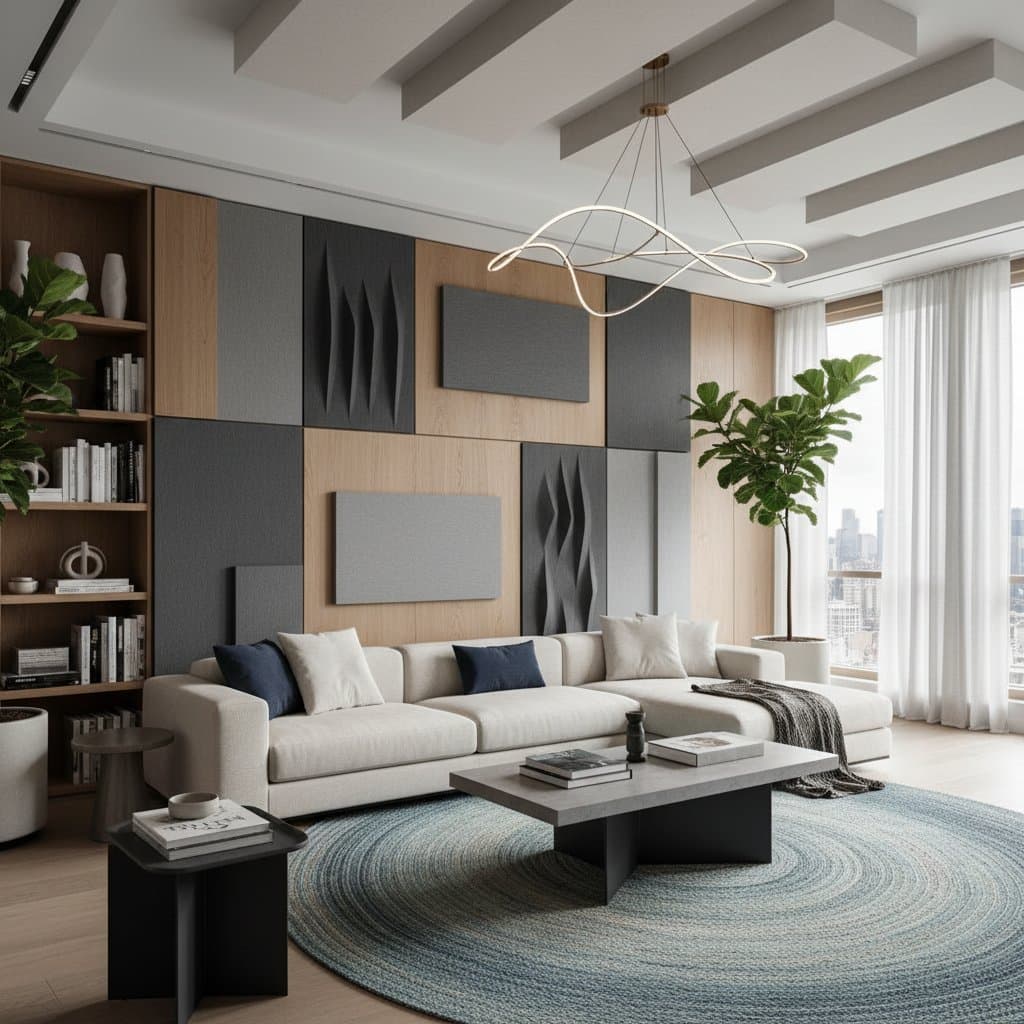
Many assume panels belong only in recording studios or theaters, but contemporary designs fit seamlessly into homes. Options now include living room wall art, office dividers, and bedroom accents, available in various colors, shapes, and textures to match any decor. Manufacturers offer customizable finishes, from subtle neutrals to bold patterns, ensuring panels enhance rather than detract from interior style.
Early home installations used plain, industrial-looking rectangles, but innovation has changed that landscape. Current choices range from framed canvas prints to wooden slat panels that mimic architectural elements. Homeowners achieve both acoustic improvement and visual harmony without compromise.
Planning a Practical Acoustic Project
Installing panels requires basic preparation rather than advanced skills, though thoughtful planning prevents common pitfalls. Randomly placing a few panels often yields limited results, as sound behaves like waves needing even distribution. Prioritize quality materials alongside strategic coverage for optimal performance.
Start by evaluating your room's size, layout, and existing furnishings to calculate needs. In a typical 200-square-foot living room, aim for 20 to 30 percent of wall or ceiling surface covered. This coverage might seem extensive, but creative arrangements like gallery walls or geometric patterns integrate panels without overwhelming the space.
Gather tools such as a stud finder, level, measuring tape, pencil, and drill. Most panels come with mounting hardware; consult product instructions before starting. Lightweight options use adhesive hooks, while heavier ones require wall anchors or brackets for secure installation.
Step-by-Step Assessment and Planning
Begin by pinpointing noise hotspots in your home, such as open-plan areas, kitchens with stone counters, or bare-walled home offices. Enter the space, clap your hands, and listen for echoes or decay time. Areas with strong reflections deserve first attention.
Choose a design approach: group panels for a statement feature or spread them for subtle diffusion. Target opposite walls to minimize side-to-side sound bounce. In rooms with limited wall space, consider ceiling panels or hanging clouds as versatile alternatives.
Measure the selected areas and sketch a layout plan. Focus on visualizing coverage rather than perfect measurements. Many suppliers provide online calculators to estimate the number of panels required based on room dimensions.
Installation Guide
1. Marking Positions
Use a level and measuring tape to outline panel locations on the wall. Align placements with the room's symmetry to maintain visual balance. For grid or patterned setups, keep spacing consistent to create a professional finish.
2. Locating Support
Strong mounting ensures longevity and prevents panels from shifting. Use a stud finder to identify framing behind the drywall. If no studs align, install drywall anchors rated for the panel's weight. Steer clear of weak options like plain nails or temporary tapes.
3. Preparing Hardware
Follow the manufacturer's guidelines for attachment methods, which might include keyhole hangers, Z-clips, or magnetic systems. Check that all hardware sits level before proceeding.
4. Hanging and Adjusting Panels
Mount panels one by one, starting from the center outward. Step back frequently to assess alignment from different views. Make small adjustments to ensure the arrangement feels cohesive, especially with mixed designs.
5. Testing Results
After installation, test the space by talking, playing music, or turning on the TV. Sound should feel clearer and less strained. If echoes persist in certain spots, add more panels or soft elements like curtains to fine-tune the acoustics.
Overcoming Common Installation Hurdles
Insufficient coverage leads to underwhelming changes; treat the process like tuning an instrument for full effect. Partial applications soften noise but rarely eliminate it entirely. Commit to adequate surface area for noticeable improvement.
Placing panels too high reduces their impact, since most reflections occur at listening height. Position them 3 to 4 feet from the floor in seating areas. For rooms with tall ceilings, add overhead elements to address upper-level sound paths.
Avoid decorative items labeled as acoustic with thin padding; check for a Noise Reduction Coefficient (NRC) rating above 0.7 to confirm effective absorption. Genuine panels deliver measurable results in everyday use.
When to Consult Professionals
DIY wall installations work well for standard rooms, but larger spaces or dedicated media rooms benefit from expert input. Acousticians use specialized tools to measure reflections and recommend precise layouts. They often integrate treatments during construction for invisible, high-performance results.
For complete sound isolation, such as in home theaters, advanced methods like adding mass-loaded barriers or decoupling walls come into play. These projects require specialists familiar with building codes and structural modifications.
Creative Ways to Incorporate Panels
Modern panel designs open doors to artistic expression. Choose from luxurious fabric-wrapped options, photo-printed panels, or sculptural forms that double as decor. Modular systems allow easy rearrangement, much like updating wall tiles.
Wooden slat panels add warmth and depth to minimalist interiors, while colorful felt versions bring energy to playrooms or creative offices. In budget projects, build custom panels using fiberglass cores, wooden frames, and acoustically transparent fabrics. Ensure the covering allows sound to reach the absorber; avoid impermeable materials like plastic or foil.
Key Tips from Experts
- Start small by treating one wall and evaluate the difference before expanding.
- Combine absorption panels with diffusers to prevent a deadened sound; diffusers scatter waves for natural liveliness.
- Add complementary soft goods like rugs, heavy drapes, and upholstered furniture for layered noise control.
- Focus on first reflection points from sound sources, such as speaker paths, for the biggest impact.
- Match panels to your scheme by selecting colors and textures that feel intentional, not added on.
Maintaining Your Panels
Keep installed panels in top condition with gentle cleaning. Vacuum lightly with a soft brush attachment or wipe with a dry cloth to remove dust. For stains, use a mild soap solution applied sparingly, then air dry.
Avoid harsh chemicals or scrubbing that could damage the fabric. Regular care preserves both appearance and acoustic performance over time.
Achieving Everyday Serenity at Home
Once panels transform your space, routine moments become more enjoyable. Discussions proceed without raising voices, entertainment captivates without distortion, and background hums recede. This investment refines not just sound but the overall quality of home life, where beauty and comfort coexist seamlessly.