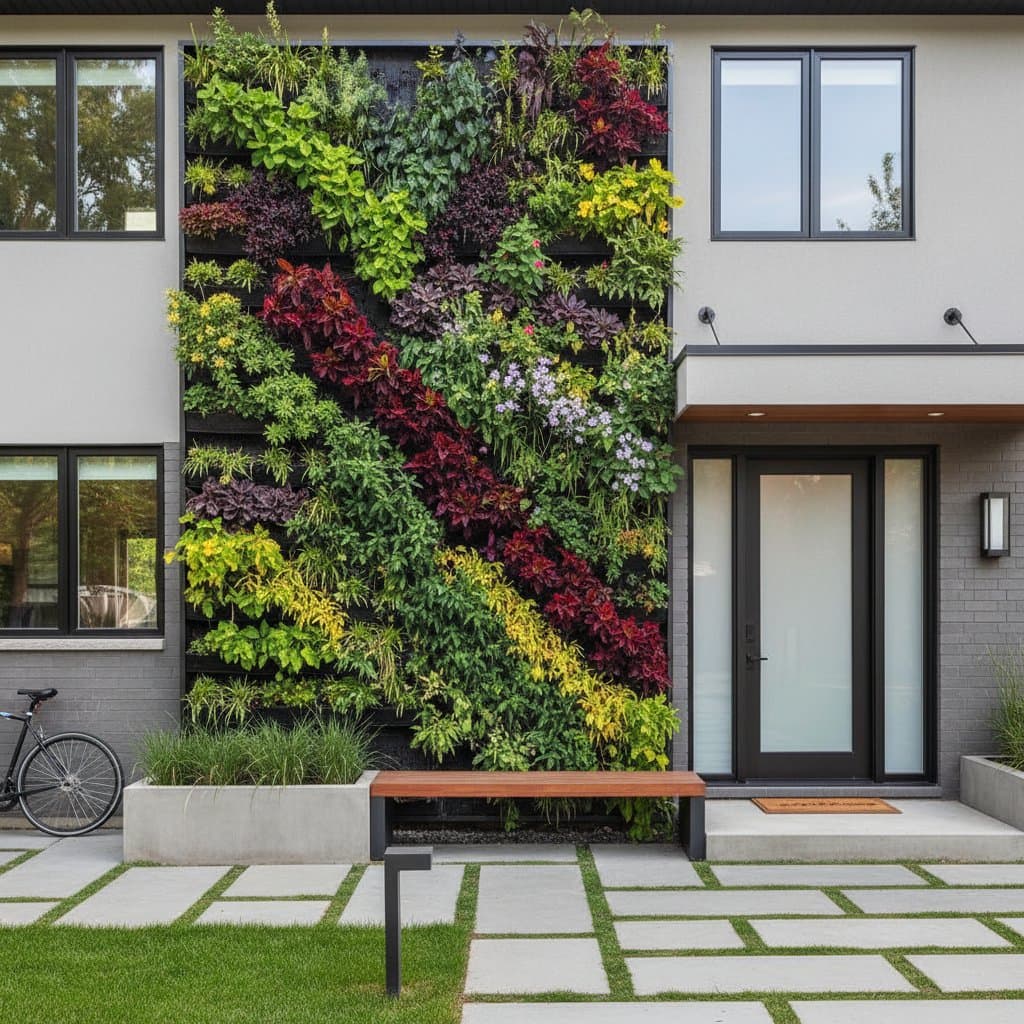
Front Yards Flourish: The Appeal of Vertical Living Walls
Homeowners often gaze at their front yards and sense an untapped potential. Limited space and budgets frequently hinder comprehensive landscaping efforts. Traditional lawns and beds provide limited options in constrained areas. Vertical gardens, also known as living walls, address these challenges by reimagining front yards as verdant, artistic installations that blend functionality with elegance.
Reasons Homeowners Embrace Vertical Gardens
Space efficiency stands as the primary draw for vertical gardens. Urban and suburban front yards typically feature slim soil strips or modest grass patches, insufficient for expansive planting. Vertical designs shift growth upward, unlocking new possibilities without encroaching on ground area.
Visual transformation ranks as another key factor. A thoughtfully crafted living wall elevates a mundane facade to a captivating centerpiece. It commands attention akin to a renovated porch or pathway, yet introduces dynamic elements of motion and vitality. Approaching a residence adorned with a greenery-clad wall evokes sensations of freshness and welcome.
Essential Elements of a Vertical Garden Project
Preparation: Tools, Materials, and Site Evaluation
Evaluate your chosen wall surface first—whether brick, wood, stucco, or vinyl—to determine suitability. Each material presents unique demands. For instance:
- Brick or masonry withstands substantial loads yet requires robust anchors.
- Wood siding benefits from protective backer boards to avert water-induced harm.
- Vinyl, being lightweight, suits freestanding frames over heavy wall mounts.
Gather these fundamental tools and supplies:
- Drill equipped with appropriate masonry or wood bits
- Level and measuring tape for precision
- Waterproof membrane to shield underlying structures
- Mounting brackets or a complete frame assembly
- Irrigation tubing or a drip setup
- Plant trays or modular panels
- Potting mix tailored for vertical applications
This endeavor suits those with moderate to advanced skills in mounting, plumbing, and horticulture. Engage experts for any electrical integrations involving pumps or illumination.
Step-by-Step Guide to Constructing a Durable Living Wall
- Identify the optimal site. Select a wall receiving a minimum of four hours of sunlight daily. Excessive direct rays may strain vegetation, whereas inadequate light fosters leggy development.
- Apply a waterproof layer. Safeguard the wall or framework with a durable membrane, fastened securely to block moisture penetration.
- Secure the frame. Employ rust-resistant anchors and verify alignment with a level. The structure must bear the combined mass of saturated soil and mature plants.
- Install irrigation components. Opt for a timer-controlled drip system to deliver uniform moisture and minimize waste.
- Incorporate soil holders or panels. Beginners find modular panels straightforward, while felt pockets allow customizable plant arrangements.
- Position plants thoughtfully. Group species sharing comparable hydration and illumination preferences. Station cascading types at the summit, mid-sized growers centrally, and compact varieties basally.
- Conduct system trials. Activate watering to detect leaks, imbalances, or instability; refine as needed prior to full planting.
- Implement routine care. Prune excesses, substitute failing specimens, and flush irrigation lines quarterly to avoid blockages.
Selecting Suitable Plants for Success
Plant choice determines a vertical garden's longevity and allure. Align selections with local climate and site conditions. Sun-drenched walls thrive with succulents, herbs, or resilient perennials such as lavender and thyme. Shadier locales accommodate ferns, ivy, or diminutive tropical foliage.
Blend varying textures and hues for enhanced dimension. A combination of creeping thyme, sedum, and cascading ivy yields a multifaceted appearance. Steer clear of aggressive climbers that might dominate the setup. Prioritize compact, gradual growers for sustained manageability and aesthetic consistency.
Troubleshooting Common Challenges
Inconsistent moisture distribution: Sections drying faster than others signal emitter misalignment; recalibrate or rearrange flora accordingly.
Vegetation loss: Subpar drainage or intense sunlight often culprits; introduce tougher alternatives to replace delicate types.
Fungal growth or decay: Water accumulation behind panels indicates barrier failure; inspect seals and promote ventilation.
Frame instability: Weight miscalculations cause detachment; bolster supports or incorporate extra fixings.
Prompt detection allows resolution of these hurdles. View the living wall as an ongoing commitment, akin to routine exterior upkeep rather than a singular task.
Engaging Professionals for Complex Installations
Large-scale designs incorporating integrated watering or lighting warrant a specialist's involvement. Landscape professionals versed in living walls manage load assessments and ensure dependable hydration. They offer guidance on species harmony and establish care protocols. Many opt for expert installation paired with personal maintenance to optimize results.
Realizing the Full Potential
A vertical garden evolves alongside its owner, transitioning from installation to integral home feature. The shift proves profound, extending beyond aesthetics to practical gains like purified entryway air, diminished heat retention, and supplementary insulation.
Commence modestly if hesitation lingers—a single panel imparts foundational knowledge for future growth. Vertical gardens demonstrate that impactful beauty ascends rather than sprawls, freeing front yards from lawn dependency.