Key Points
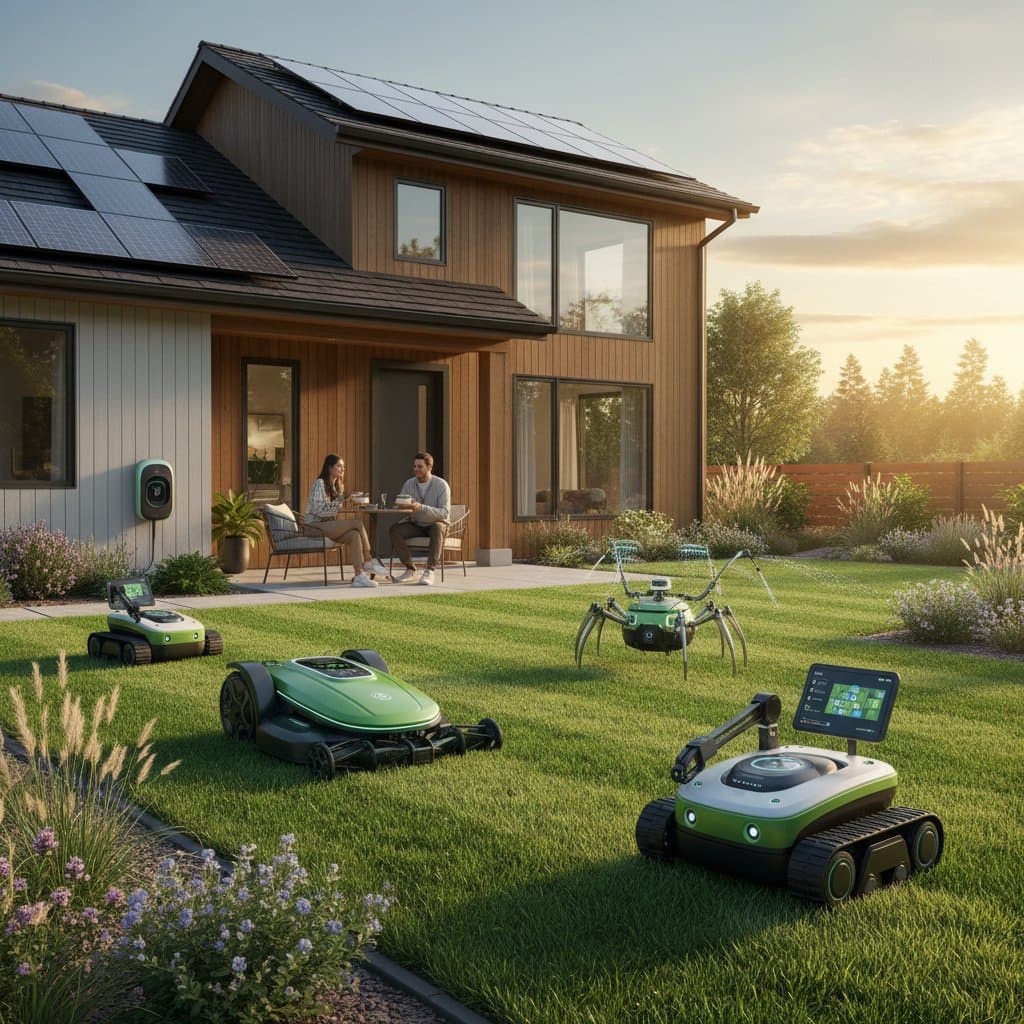
- Smart AI robots integrate precision mowing, soil monitoring, and adaptive watering to streamline front yard maintenance.
- Advanced sensors, GPS mapping, and machine learning enable autonomous operation that minimizes water and fertilizer use.
- Homeowners achieve reliable results with little effort, provided they focus on thorough setup, calibration, and ongoing maintenance.
- Effective planning includes safety measures, boundary definitions, and compatibility with current irrigation setups.
- These AI systems represent smart investments that enhance lawn vitality, promote sustainability, and eliminate daily chores.
The Technical Foundation of Smart Yard Robots
Conventional lawn care relies on manual mowing, basic irrigation timers, and occasional visual checks for issues like dry patches or compacted soil. Such approaches frequently lead to excess water and energy consumption due to rigid schedules that ignore current conditions. Smart AI robots shift this paradigm by incorporating environmental sensors, GPS guidance, and predictive algorithms for data-driven lawn management.
Evaluating Your Yard's Readiness
Prior to deploying AI robots, assess your front yard to pinpoint factors influencing system effectiveness.
- Terrain Analysis: Inspect slopes, soil irregularities, and water flow. AI mowers perform optimally on slopes under 20 degrees.
- Potential Obstacles: Note trees, gardens, walkways, and ornaments. Boundary sensors or virtual fences must navigate these safely.
- Lawn Condition: Look for thin areas, hard-packed soil, or pests. Robots sustain healthy lawns but require upfront fixes for existing problems.
- Watering Setup: Review if your sprinkler system supports smart integration for automated adjustments.
- Power Availability: Confirm proximity to a weatherproof outlet for the charging station.
Record these details to select a suitable robot and facilitate seamless setup.
Preparation: Essential Tools, Materials, and Planning
Transitioning to AI-assisted yard care demands organized preparation, treating the process as a structured project with technical and practical elements.
Required Tools and Materials
- AI-equipped robotic mower with GPS capabilities
- Charging station with protective cover
- Perimeter wire or virtual boundary tools
- Additional soil probes or irrigation adapters, if needed
- Wireless connection for mobile app management
- Wire anchors, joints, and protective covering
- Digging tools for wire installation
- Tools for leveling and measuring the dock site
Placement and Safety Guidelines
Position the charging dock on level, shaded ground, distant from water sources or erosion-prone areas. Ensure the mower's route to the dock avoids roads or loose surfaces. Route boundary wires clear of buried lines, and adhere to local codes for any electrical additions.
Timing and Weather Considerations
Choose a dry, temperate period for installation to ease soil handling and boundary setup. Steer clear of rainy or hot spells, which can hinder calibration and drain batteries. Dedicate time for initial configuration and mapping, then observe operations for several days as the system adapts.
Step-by-Step Installation and System Integration
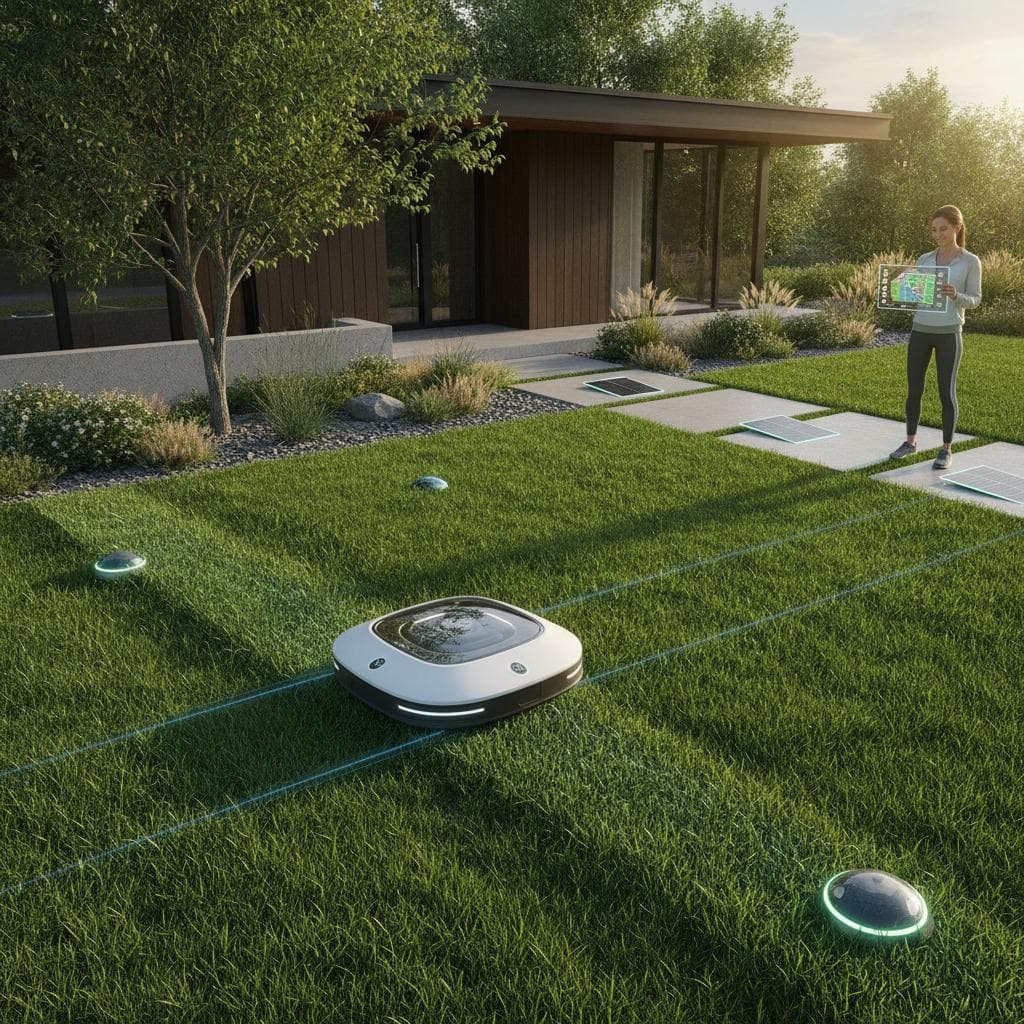
- Define Boundaries: Employ physical wire or app-based mapping to outline the yard and no-go areas. For wires, bury them 1-2 inches deep around edges and obstacles.
- Set Up the Charging Station: Place it on firm soil with secure, dry power access. Test the robot's unobstructed return path.
- Install Sensors: Position moisture and light detectors in typical yard spots, avoiding outliers like full shade or constant sun.
- Set Up Controls: Enter details via the app, including yard size, grass type, and desired cut height.
- Initiate Mapping: Let the robot scan the area to build a digital model, essential for precise movement and obstacle avoidance.
- Adjust Mowing Routes: Opt for random patterns to prevent wear lines or systematic ones for even coverage on spacious lawns.
- Link Irrigation Features: Connect if available, allowing AI to sync watering with weather, soil data, and forecasts.
- Initial Monitoring: Observe early runs, tweaking edge detection or height settings to handle irregularities.
This sequence promotes accurate deployment and fosters the robot's learning of your yard's layout.
Verifying Performance and Quality
After activation, test the system against specific benchmarks to confirm reliability and spot issues promptly.
Critical Checks
- Trim Uniformity: Ensure even cuts without debris buildup or bald spots.
- Path Precision: Confirm docking returns and zone adherence without deviations.
- Sensor Functionality: Validate that moisture levels prompt timely watering.
- Power Management: Monitor operation duration and recharge needs; short cycles signal possible issues.
- Operational Noise: Keep levels at or below rated decibels to avoid neighborhood concerns.
Address anomalies by remapping, sharpening blades, or updating software. Regular app checks maintain peak efficiency.
Financial Analysis and Long-Term Benefits
Initial costs for smart yard robots are notable, yet they yield substantial returns through reduced expenses. Traditional methods incur ongoing fuel, repairs, and hiring fees. AI alternatives cut these while boosting lawn resilience via targeted care.
Benefits include 30-50% less water use, precise nutrient dosing, and durable components that lower replacement needs. Electric operation slashes fuel bills and emissions. Factor in scalable add-ons like extra sensors to spread investments.
Ensuring Safety and Regulatory Adherence
Built-in safeguards halt blades upon lift or tilt detection. Homeowners should define operational limits, particularly with families or animals present.
- Confine the robot to marked areas.
- Examine blades weekly for sharpness and integrity.
- Pause use in wet conditions unless rated for weather resistance.
- Review local rules on noise and automated devices.
- Secure storage in controlled environments during off-seasons.
These practices support safe use and prolong equipment durability.
Ongoing Maintenance and Issue Resolution
AI robots demand minimal oversight but benefit from regular care akin to other yard tools.
Standard Procedures
- Blade Maintenance: Clear clippings weekly; swap blades every 1-3 months based on usage.
- Battery Upkeep: Wipe contacts monthly; replace units showing 20% capacity loss.
- Firmware Management: Install app-delivered updates for enhanced features.
- Sensor Tuning: Verify accuracy every three months.
- Station Checks: Inspect wiring for wear or moisture quarterly.
For halts, consult app diagnostics. Frequent triggers involve blockages, power faults, or sensor glitches.
Expert Strategies for Optimal Results
- Integrate Components: Link mowing with automated watering and nutrient trackers for comprehensive care.
- Phase Implementation: Test on a single zone in intricate yards to refine interactions before full rollout.
- Analyze Logs: Use app data to fine-tune schedules for peak efficiency.
- Boundary Vigilance: Check wires or signals yearly against shifts from growth or settling.
- Seasonal Prep: Thoroughly clean and shelter the unit before winter to safeguard electronics.
Adopting these approaches sustains performance year-round.
Achieving a Thriving, Effortless Lawn
Smart AI robots empower homeowners to maintain vibrant front yards with precision and ease. By investing in proper evaluation, installation, and care, you secure not only a lush landscape but also environmental gains and time savings. Embrace this technology to cultivate a sustainable outdoor space that enhances your home's appeal.