The Cultural Shift Toward Automated Yard Care
Home automation extends well beyond thermostats and lighting systems. Consumers increasingly rely on devices that anticipate needs, positioning the yard as the next domain for innovation. Lawn robots embody a broader redefinition of home maintenance.
Earlier robotic mowers served as specialized devices hampered by simple programming and limited battery duration. Current models incorporate advanced AI, GPS mapping, and sensor data to generate comprehensive yard profiles. These systems evolve through use, refining mowing heights and patterns according to grass vitality, soil hydration, and seasonal variations.
This method delivers tailored lawn care akin to professional services, functioning seamlessly without constant supervision.
How AI Makes the Difference
Machine learning integration marks the primary advancement. Previous robotic mowers depended on boundary wires and haphazard navigation. Contemporary AI versions utilize vision sensors and predictive algorithms to spot obstacles, plan optimal paths, and retain yard configurations.
Dr. Maya Chen, an engineer focused on smart robotics, explains, "These machines now grasp context. If a lawn features shaded zones with slower growth or parched soil, the robot modifies schedules on its own. It represents adaptation beyond mere automation."
Adaptation also enhances safety and resilience. Recent models identify pets, toys, or debris and react promptly to prevent harm. Certain units interface with smart irrigation, alerting systems to activate sprinklers solely during low moisture periods.
Sustainability as a Silent Co-Star
AI lawn robots advance eco-conscious home practices beyond mere convenience. Conventional gas mowers generate emissions and noise. Electric robots operate quietly with high energy efficiency. Numerous designs incorporate solar charging or connect to renewable home power sources.
Precise mapping minimizes energy waste. By targeting only necessary areas, robots avoid excess mowing, fostering robust grass development and extended maintenance cycles.
Environmental researcher Carlos Vega observes, "AI yard care strikes an ideal balance between human guidance and mechanical accuracy. It collaborates with the land rather than overtaxing it."
Inside the Technology: Sensors, Data, and Learning
Consider the technology as a blend of satellite mapping and responsive software. Standard AI lawn robots include:
- Multi-directional sensors to detect objects and terrain shifts.
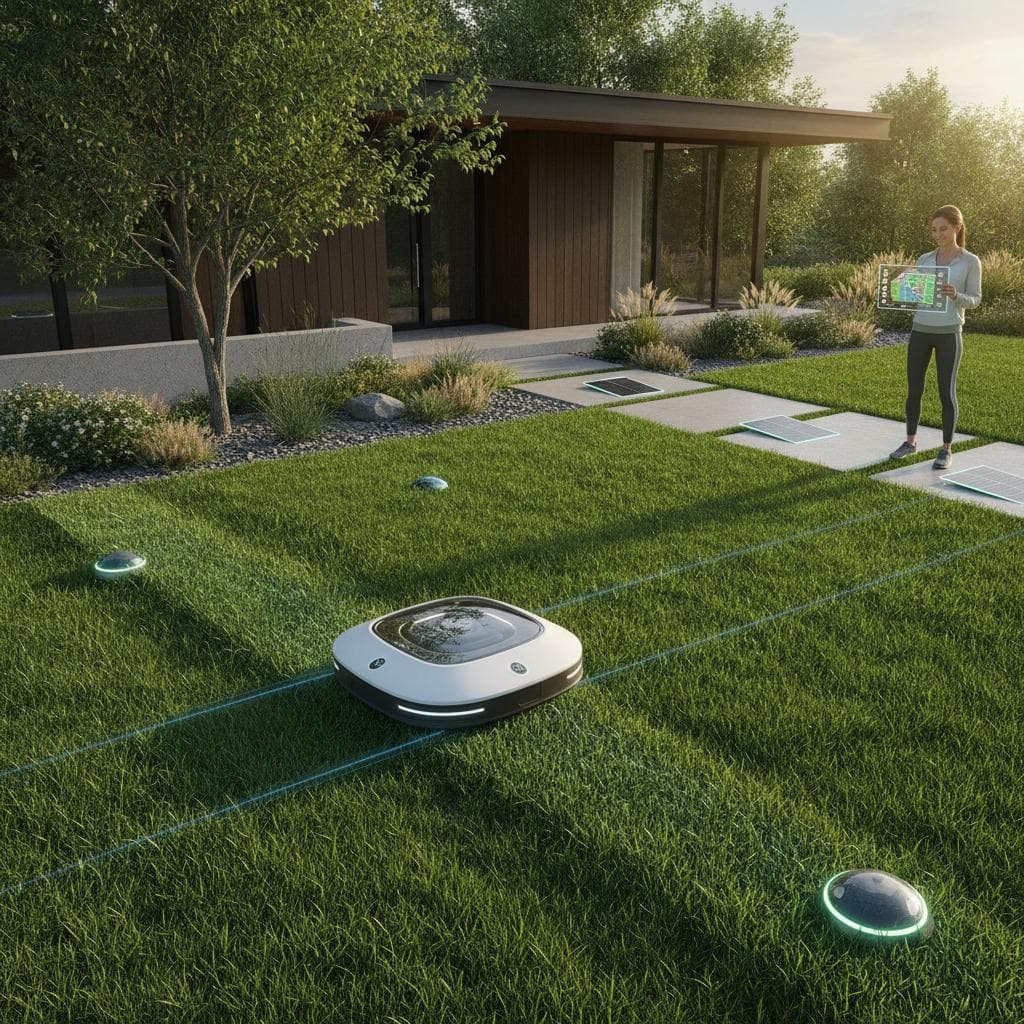
- GPS and visual mapping for accurate path optimization.
- Machine learning algorithms to evaluate grass growth and refine patterns.
- Weather integration to suspend operations during forecasted rain.
- App-based controls for live monitoring and manual adjustments.
These elements form a feedback system. With repeated use, the robot gains deeper insight into the property, accounting for slopes and localized climates.
The Celebrity Effect and Lifestyle Appeal
Cultural endorsements propel AI lawn robot adoption. Celebrities and social media influencers share footage of robots crafting elaborate patterns or achieving uniform trims.
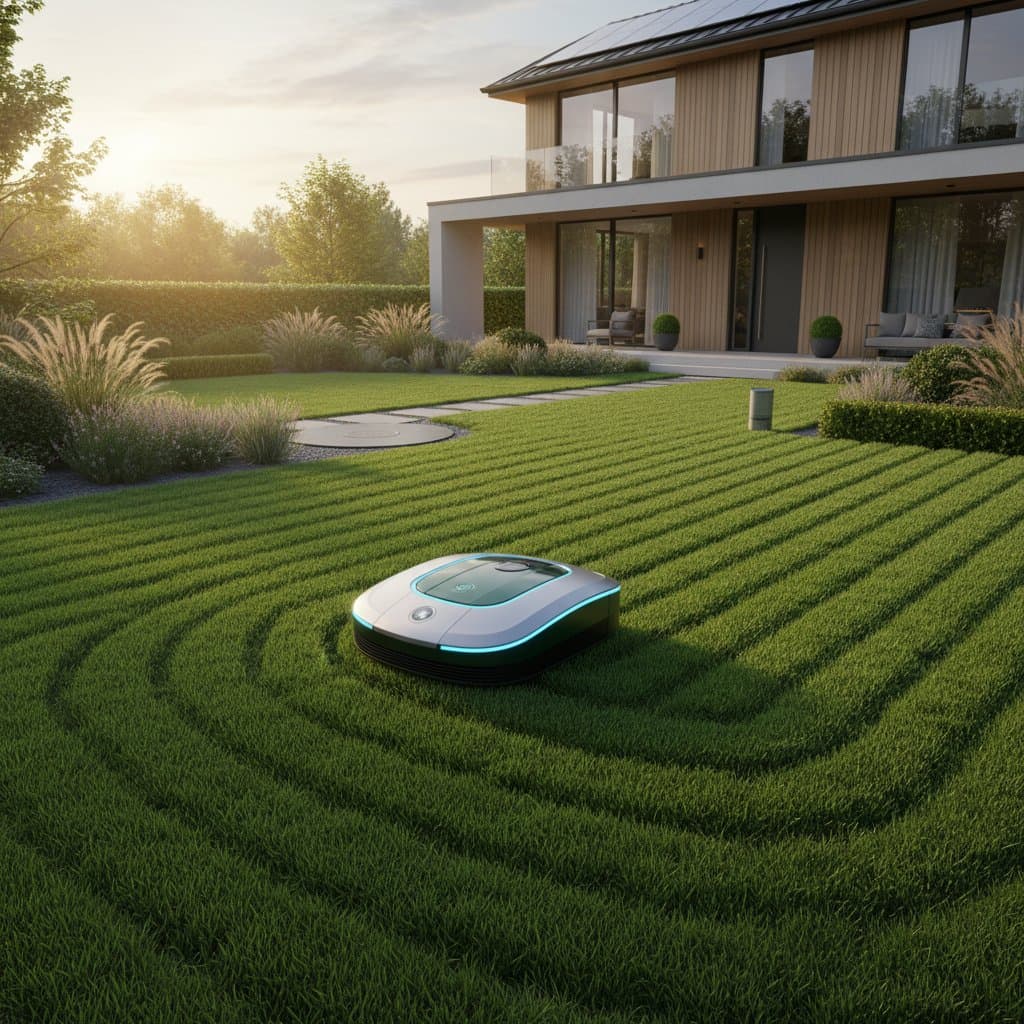
The aesthetic draws attention. Silent operation, geometric accuracy, and modern design evoke serene futurism. Brands capitalize on this by offering custom colors and ecosystem-compatible apps, transforming the device from utility to emblem.
Practical benefits sustain interest. Professionals and families appreciate reclaiming weekends previously devoted to mowing, edging, and debris removal.
The Economics of Smart Yards
Upfront costs for AI lawn robots remain substantial, yet long-term savings appeal to many. Benefits include diminished routine upkeep, reduced professional services, and lower energy use.
Analysts report declining prices due to scaled production and rivalry. Subscription updates enhance capabilities without hardware replacement, similar to smartphone progression.
This approach fosters enduring innovation and user value.
Challenges and Concerns
Critics highlight limitations despite enthusiasm. Reliability concerns persist for uneven terrain or expansive lots. Data privacy issues arise from cloud-stored mapping data.
Manufacturers address these through enhanced encryption, on-site storage choices, and support networks for maintenance.
Perception poses another hurdle. Some prefer hands-on involvement in lawn care. Adoption rates rise as users experience reliable outcomes, converting doubters.
Expert Insights on the Future of AI Landscaping
Specialists anticipate expansions beyond mowing. Prototypes for seeding, hedge trimming, and soil analysis emerge.
Dr. Chen envisions integrated systems. "A connected network of tools, including mowers, irrigation, and sensors, will exchange data for optimal yard balance."
Homeowners shift to oversight roles, defining goals while devices handle operations.
Real-World Scenarios: Homeowners on the Front Line
Adopters report liberation and intrigue. One likened the robot to "a diligent pet that never tires." Another noted newfound awareness of prior mowing inconsistencies after observing striped perfection.
Benefits transcend visuals. Time freed from sun-exposed labor supports family time, pursuits, or relaxation, representing true indulgence.
Steps to Integrate an AI Lawn Robot
Prospective buyers should evaluate yard specifics: size, incline, and barriers. Select models matching these traits, prioritizing adaptive learning, app connectivity, and safety features.
Prepare by removing debris, pruning overgrowth, and positioning the charging station in shade with easy access.
Allow the robot autonomy post-setup; it refines performance through observation. View this as a partnership between technology and landscape, yielding synchronized harmony.
AI lawn robots reshape home stewardship. The subtle glide of an electric unit across grass heralds a refreshed era for suburban routines, where timeless chores align with intelligent progress.