Key Points
- Homeowners increasingly replace conventional lawns with edible front yard gardens to achieve sustainability, financial savings, and enhanced aesthetics.
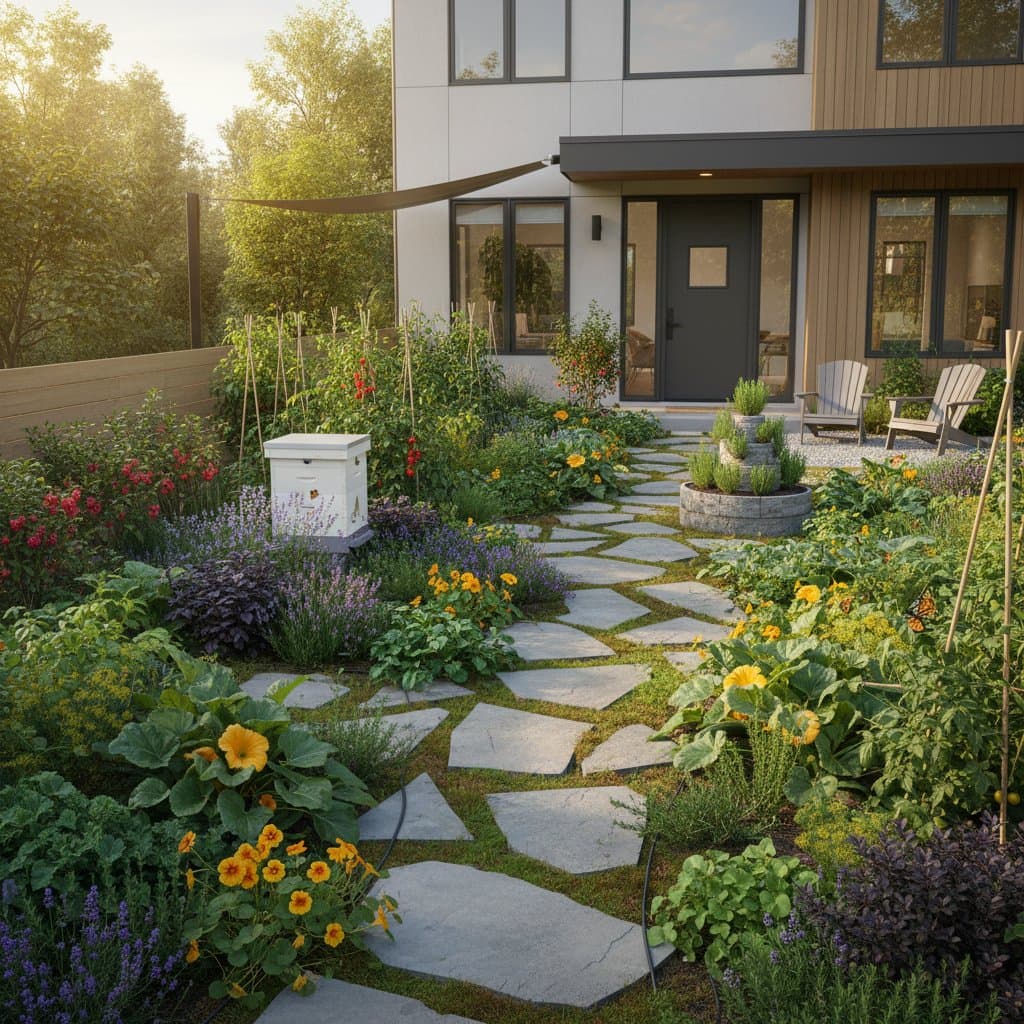
- Foodscaping integrates edible plants into decorative landscapes, creating productive spaces that bolster local biodiversity.
- Effective planning requires precise layout design, strategic plant choices, and thorough soil preparation for enduring results.
- Community rules and local laws shape design options, though many areas now embrace these environmentally sound approaches.
- A thoughtfully executed edible front yard conserves water, decreases food purchases, attracts pollinators, and increases real estate appeal.
Assessment: Evaluating Your Current Yard
Conduct a thorough evaluation of your yard before removing any grass. Start with a detailed site analysis covering these essential factors.
- Sun exposure – Observe and record areas that get at least six hours of direct sunlight daily. Select fruit-bearing vegetables and herbs for full-sun spots, and place leafy greens or root vegetables in partial shade where they thrive.
- Soil composition – Gather samples from multiple locations and analyze pH levels, nutrient content, and texture. Edible plants generally favor soil that is slightly acidic to neutral with excellent drainage properties.
- Water management – Map out slopes and low areas that affect water flow. Integrate rain gardens or swales to collect rainwater and direct it efficiently to plant roots.
- Existing vegetation – Identify invasive plants or established trees that might compete for resources like water or light, potentially hindering new edible plantings.
- Local ordinances – Examine municipal and neighborhood rules regarding front-yard features. Certain areas limit plant heights or mandate distances from pathways to maintain safety and uniformity.
This methodical review aligns your edible yard design with the site's natural attributes, promoting healthier growth and fewer adjustments later.
Implementation: Step-by-Step Conversion Process
Transform your lawn into an edible front yard through a structured sequence of steps. Each phase builds on the previous one to create a resilient garden.
1. Remove or Suppress Existing Grass
For expansive areas, employ a sod cutter to lift the turf efficiently. In smaller sections, apply sheet mulching by covering the ground with overlapping layers of cardboard or newspaper, then add a thick layer of compost and organic mulch to block light and decompose the grass beneath while nourishing the soil.
2. Prepare the Soil
Address soil compaction with gentle tilling using a garden fork, taking care not to disturb the underlying soil layers excessively. Mix in aged compost to boost nutrient availability and water-holding capacity. Correct pH imbalances by incorporating lime to raise acidity or sulfur to lower it, guided by your earlier test results.
3. Build Structural Elements
Construct raised beds from untreated wood or stone for contained planting zones, add trellises for vertical support of vining crops, and install edging to delineate paths. Verify that every element sits level and is firmly anchored to withstand soil settling from irrigation or precipitation.
4. Install Irrigation
Opt for a drip irrigation system to minimize evaporation and target water delivery to plant bases. Place emitters strategically beside each planting and run a test cycle to confirm uniform distribution. Connect the system to a programmable timer that activates based on monitored soil moisture, adjusting for seasonal changes.
5. Lay Out Plantings
Adhere closely to your sketched garden plan. Arrange taller specimens, such as corn or sunflowers, along the northern edge to prevent them from casting shadows over compact varieties. Allocate space based on each plant's full-grown dimensions to allow air circulation and avoid competition. Intersperse edible flowers like nasturtiums or borage to draw pollinators and enhance visual diversity.
6. Mulch and Label
Spread a 3-inch layer of bark chips, straw, or shredded leaves around the base of plants to inhibit weed emergence and moderate soil temperatures. Use weather-resistant markers or stakes to identify varieties and note anticipated harvest timelines, facilitating rotation and care routines.
7. Monitor Growth and Adjust
Perform weekly inspections to spot early indicators of issues, such as yellowing leaves signaling nutrient shortages or unusual spots indicating pests. Respond promptly with organic remedies: brew compost tea for fertilization, fine-tune irrigation schedules, or plant companion species like marigolds to repel insects naturally.
Maintenance: Sustaining Productivity and Beauty
Consistent upkeep forms the foundation of a thriving edible front yard. Establish a regular routine akin to routine inspections in property care to preempt problems and maximize yields.
- Watering – Probe the soil with your finger to gauge moisture depth before adding water. Excess irrigation fosters weak root systems and invites root rot or mildew.
- Weeding – Pull emerging weeds by hand prior to seed formation. Thick mulch coverage and close plant spacing naturally curb weed invasions.
- Pruning and harvesting – Snip herb tips frequently to encourage bushier development. Gather ripe produce at peak freshness to avoid waste and discourage foraging pests.
- Fertilization – Introduce compost or natural fertilizers like fish emulsion in spring and fall, steering clear of chemical alternatives that harm soil life.
- Crop rotation – Shift plant types across beds each year to disrupt pest cycles and preserve soil fertility through varied nutrient demands.
- Winter preparation – Sow cover crops such as clover or rye to shield bare soil, or apply extra mulch to insulate roots against freezing temperatures.
Incorporate seasonal tasks, like dividing perennials in fall, to keep the garden vigorous year-round.
Pro Tips for Success
- Begin with modest projects if a complete overhaul seems daunting. Introduce one or two raised beds filled with easy growers like strawberries, then scale up as confidence builds.
- Combine aesthetics and utility by selecting ornamental edibles: espalier fruit trees against fences or weave grapevines through artistic arbors for dual-purpose elegance.
- Foster community ties by offering surplus produce to neighbors or hosting informal garden walkthroughs. Visible success in neat, bountiful plots often sways skeptics toward approval.
- Document production quantities and expense savings meticulously. Track metrics like water bills and harvest weights to quantify returns, revealing how setup investments pay off within one or two seasons.
- Research zoning specifics proactively. Adhere to requirements for buffer zones or maximum heights by incorporating low-growing borders or pathway clearances from the outset.
Long-Term Benefits
Edible front yards mature into self-sustaining habitats that benefit ecology and finances alike. Layered plantings foster biodiversity, prevent erosion, and diminish reliance on external inputs like store-bought produce or municipal water.
Viewed through a development lens, these gardens mirror efficient projects with defined blueprints, vigilant oversight, and adaptive care. The unique payoff arrives fresh from the soil, season after season, blending nourishment with natural splendor.