AI Apps for Effortless Home Decluttering
Clutter accumulates rapidly in busy households. Work demands, family schedules, and children's activities contribute to the chaos. Digital tools powered by artificial intelligence offer practical solutions that integrate seamlessly into daily life. These applications adapt to individual habits, maintaining order in physical and digital spaces without requiring extensive time commitments.
Essential Insights
- AI organizing applications develop customized systems based on user behavior and preferences.
- Tools for digital decluttering manage photographs, documents, and emails efficiently.
- Inventory and donation applications streamline decisions on retaining or redistributing items.
- Voice assistants combined with sensors automate maintenance tasks.
- Adaptive digital aids promote sustained habits tailored to family dynamics.
Understanding Contemporary Clutter
Urban apartments demand meticulous space utilization. Rural homes present challenges with dispersed storage. In both settings, time constraints exacerbate disorganization. Physical mess frequently parallels digital overload, evident in crowded wardrobes and overflowing device storage.
AI-driven applications tackle this interconnected issue. They analyze usage patterns and provide timely prompts. This technology functions as a dedicated organizer attuned to personal and family routines.
Practical Applications for Daily Organization
Wardrobe Management with AI
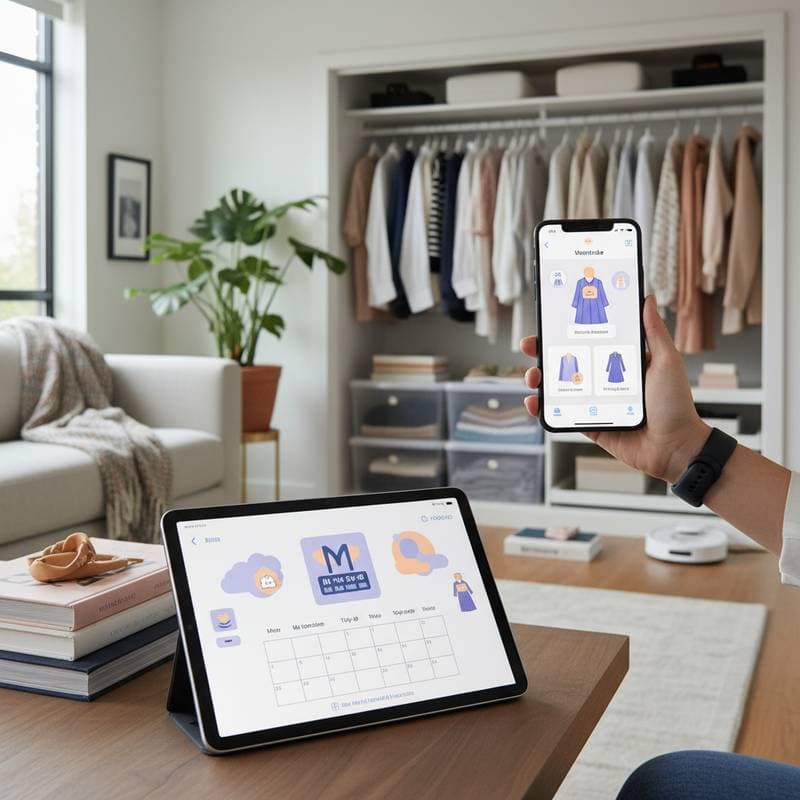
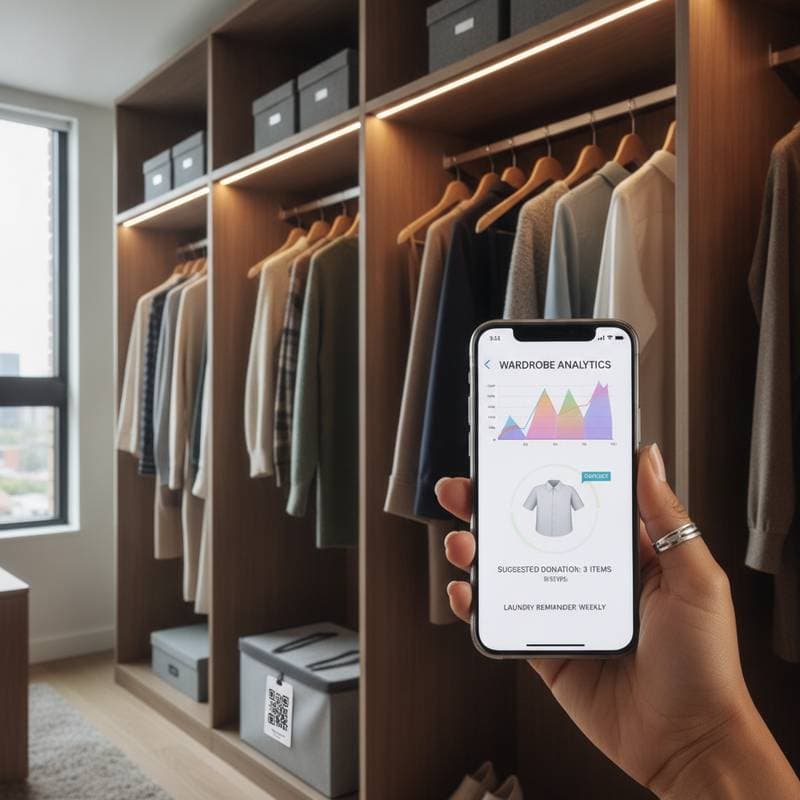
Applications such as Smart Closet and Whering employ image recognition to inventory clothing. Users capture photographs of garments, which the software sorts by attributes like color, season, and purpose. The system evolves by tracking style preferences and proposing novel outfit assemblies.
Before a recent family vacation, one user relied on such an application to avoid excess baggage. The virtual catalog revealed existing options, curbing unnecessary acquisitions. Interior stylist Amelia Hart, specializing in sustainable practices, notes that clients frequently identify suitable items within their collections once visualized digitally. She states, "AI helps people visualize their wardrobes like a boutique. It reduces impulse shopping and clutter."
Streamlining Digital Spaces
Devices often reach storage limits due to accumulated files. AI tools like Gemini Photos and Cleanfox identify duplicates, obsolete screenshots, and superfluous emails for removal. Scheduling weekly scans ensures ongoing maintenance without manual effort.
Professional organizer Harriet Doyle highlights the psychological impact of digital excess. She explains, "When your devices are overloaded, it subconsciously adds to the sense of chaos. Clearing it creates mental space that carries into your home."
Inventory Tracking and Sustainable Giving
Households with children face ongoing influxes of toys and apparel. Applications like Sortly and Encircle enable detailed logging with images, classifications, and location tags. Predictive features alert users to replacement needs or rediscover hidden items.
For redistribution, platforms such as Good On You and Olio facilitate connections to local recipients or charities. This approach enhances efficiency and environmental responsibility. In one family decluttering session, children participated enthusiastically, viewing the process as an act of sharing that fostered positive values.
Intelligent Scheduling for Routines
Neglected maintenance allows clutter to persist. AI planners like Motion and Notion AI observe behavioral patterns to insert tasks into available slots. This method transforms overwhelming lists into manageable actions, such as allocating time for laundry or pantry reorganization.
Interior designer Marcus Lin advocates these tools for clients seeking reliability. He comments, "It is not about perfection. It is about keeping momentum. AI helps break big goals into small achievable steps."
Automation Through Voice and Sensors
Voice assistants like Alexa and Google Home, when paired with AI systems, issue contextual reminders for tasks such as recycling or restocking essentials. Sensors monitor inventory in areas like refrigerators or supply closets, alerting users proactively.
In compact living spaces, these integrations prove invaluable. Family members, including children, utilize voice commands for personal responsibilities like homework or pet care. This setup cultivates autonomy while ensuring household harmony.
Worldwide Approaches to Organized Living
AI decluttering resonates across diverse locales. Parisian households employ collaborative digital lists for meal planning. Tokyo residents optimize tiny spaces with apps that recommend item placements. In the English countryside, these tools minimize waste by monitoring provisions.
Cultural variations in technology application underscore a shared goal: reclaiming time for meaningful pursuits over administrative burdens.
Steps to Implement AI Decluttering
Select a single problematic area, such as clothing storage or digital media. Install one relevant application and commit to a trial period of seven days. Monitor the impact on daily stress levels and adjust based on observed benefits.
Progressive adoption yields enduring results. Families report reduced overwhelm and enhanced focus on priorities. Ultimately, these tools foster serene environments that support well-being.