Moss Lawns: The Sustainable Alternative to Traditional Turf
One often observes a neighbor transforming a struggling lawn into a soft, verdant expanse reminiscent of an enchanted woodland. Soon, others adopt the same approach. The question arises: Is this feasible for one's own property?
That inviting, resilient surface is moss, which gains favor among environmentally aware and aesthetically minded homeowners. Moss lawns deliver beauty, practicality, and simplicity in care. For those envisioning a peaceful yard free from relentless upkeep, participation in this growing trend may appeal.
Reasons Homeowners Choose Moss Over Grass
Traditional lawns demand significant effort. Mowing, watering, fertilizing, and weed control create an ongoing burden. Many recognize that the ideal green expanse imposes hidden costs, including resource consumption, chemical use, and poor performance in shaded or irregular terrain.
Biology Behind Moss's Success
Moss differs fundamentally from grass, a distinction that underscores its advantages. As a non-vascular plant, moss draws water and nutrients through its leaves rather than roots. This adaptation enables growth on minimal soil depth, including compacted earth, stone, or urban surfaces.
Diverse moss species offer varied appearances and habits. Certain types build plush, pillow-like cushions, while others form airy, branching layers. For a smooth carpet effect, consider Hypnum or Thuidium species. Those seeking a more upright, architectural quality may select Dicranum.
Selection hinges on regional climate and site illumination. Moss favors damp, shaded locales, yet cultivation in brighter spots succeeds with moisture-holding amendments and initial hydration. Consult local extension services for compatible varieties that align with precipitation patterns and temperature ranges.
Aesthetic Integration in Landscape Design
A moss-covered area evokes profound relaxation. It appears rooted in history while aligning with contemporary tastes. Landscape professionals term this outdoor elegance as subtle sophistication.
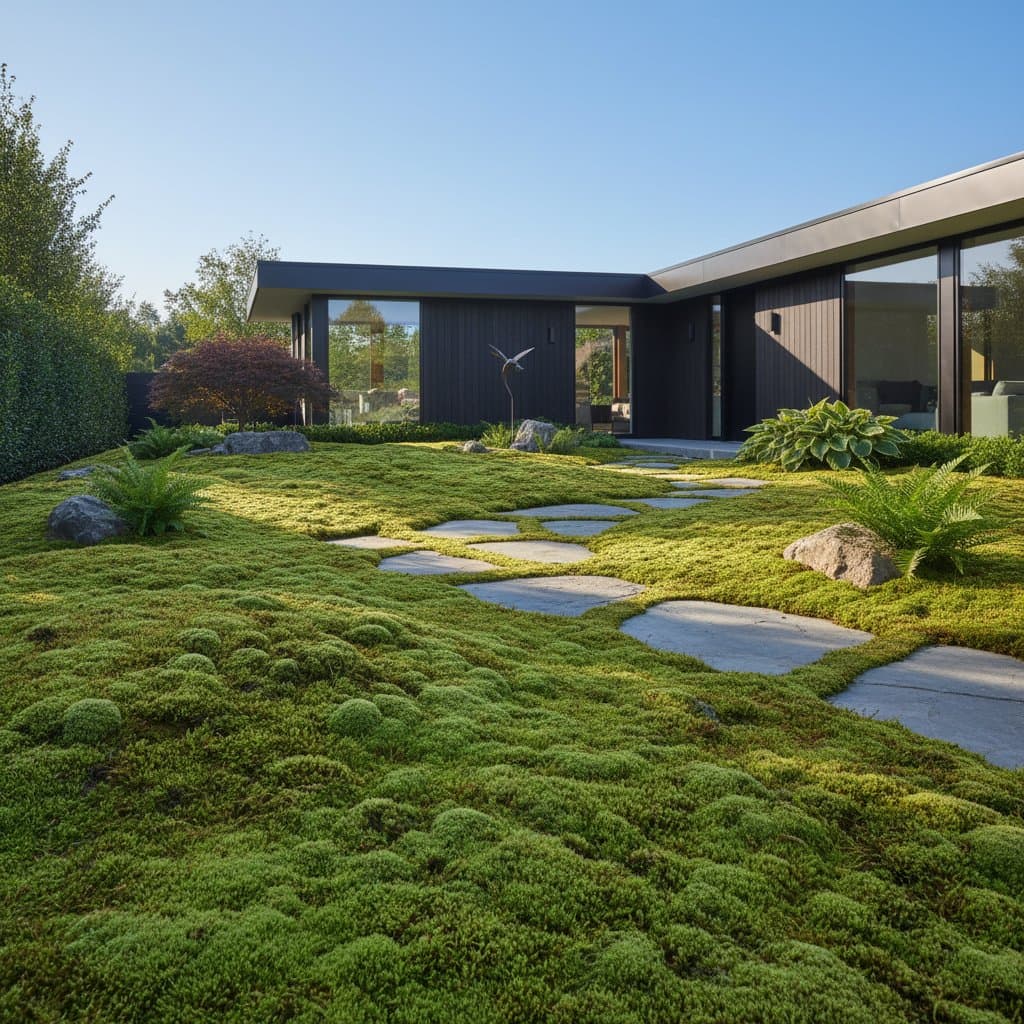
Moss complements elemental materials such as flagstone, timber, and reflective pools. Picture flagstones bordered by yielding moss that softens pathway margins, or a gentle incline beneath tree cover where turf would wither. It tempers stark edges and revitalizes challenging zones with vitality.
Moss promotes mindful garden interaction. Its unhurried expansion mirrors environmental cues, encouraging appreciation over intervention. In an era valuing genuineness and repose, this dynamic suits modern lifestyles.
Guide to Establishing a Moss Lawn
Establishing moss demands preparation and time, yet remains accessible. Follow these steps for success:
-
Assess the location. Moss requires partial shade, consistent dampness, and slightly acidic soil with a pH of 5.0 to 6.0. Measure pH levels; amend higher readings with elemental sulfur or pine needle mulch applied at one pound per 100 square feet.
-
Prepare the ground. Eliminate existing vegetation using a sod cutter or natural smothering method with cardboard and mulch. Rake smooth to ensure even moss adhesion.
-
Select appropriate moss. Purchase from certified nurseries to avoid ecological harm. Verify species compatibility, such as Sphagnum for wetter sites or Leucobryum for drier shades.
-
Install the moss. Transplant in sheets for quick coverage or scatter fragments and press firmly into soil with a board. For fragments, use a slurry of blended moss, buttermilk, and water applied via spray bottle for propagation.
-
Maintain moisture initially. Water lightly twice daily for two to four weeks until roots form. Reduce to occasional deep soaks during prolonged dry spells.
-
Avoid amendments. Fertilizers disrupt moss balance; rely on natural decomposition for nutrients.
Begin with a test plot of 100 square feet to gauge results before scaling up. Track growth rates, which vary from two to six inches annually depending on conditions.
Cost Analysis and Upkeep Realities
Initial investment in moss may deter some, with costs ranging from $5 to $15 per square foot for live material. However, long-term economics favor moss through reduced water use (up to 50 percent less than grass) and elimination of fuel-based mowing.
Ongoing care proves straightforward. Clear debris seasonally with a flexible rake or leaf blower set to gentle airflow. Aerate compacted spots annually using a garden fork spaced six inches apart. These minimal tasks preserve health without specialized tools.
Moss resists common pests like aphids or fungal issues due to its structure. This trait eliminates chemical needs, enhancing safety for families, animals, and beneficial insects while supporting cleaner waterways.
Ecological Advantages of Moss
Moss contributes meaningfully to environmental health. It sequesters carbon at rates comparable to small forests and stabilizes local humidity levels. The foliage captures particulates, improving air quality in populated areas.
By forgoing mechanical and chemical inputs, moss lawns minimize greenhouse gases and prevent pollutant runoff. In residential zones, this shift bolsters watershed integrity and soil retention during storms.
Moss fosters habitat diversity, sheltering microbes, invertebrates, and fungi. Such micro-ecosystems enhance pollination and nutrient cycling, rendering the yard a subtle ally in conservation efforts.
Situations Where Moss May Not Suit
Moss suits not every yard. Full sun exposure or arid conditions challenge its survival, as does frequent trampling from play or pathways. In such scenarios, hybrid approaches with drought-tolerant sedges or native bunchgrasses provide resilience.
Establishment spans months, not days, demanding commitment. Varieties like Atrichum may cover faster in ideal settings, but expect phased development. Those preferring rapid gratification might integrate moss accents amid faster-growing elements.
Embracing Moss in Daily Life
A thriving moss lawn enriches routine experiences. Its cushioning tread and temperate feel invite barefoot strolls year-round. Owners often cite it as their sanctuary's most restorative feature.
Freed from mechanical chores, one engages the space more intimately. Reflections deepen amid its subtle shifts with weather and seasons. This fosters a profound connection to the outdoors.
For design enthusiasts, moss enables creative expression. Outline borders with reclaimed brick, incorporate into rain gardens, or allow spillover onto retaining walls. It harmonizes across styles, from sleek modernism to cozy cottage motifs.
Steps to Introduce Moss Today
Commence modestly in overlooked areas like north-facing borders or under decks. Sample multiple species to discover preferences in texture and hue. Monitor daily light patterns and post-rain vibrancy to refine placements.
Moss lawns affirm that elegance arises from simplicity. Drawing on nature's inherent balance, they elevate living spaces with enduring grace and minimal demands.