Rain Gardens: Transforming Flooding into Thriving Landscape Features
Heavy rainfall often transforms yards into temporary wetlands, leaving persistent puddles, eroded soil, and frustrated homeowners. Grass dies in saturated areas, and excess water strains municipal systems. A rain garden offers a solution by capturing and utilizing this runoff, converting potential problems into an attractive, functional element of your property.
This design not only mitigates flooding but also enhances biodiversity and visual appeal. Property owners gain a resilient landscape that requires minimal upkeep once established. Consider it an investment in both environmental health and property value.
Understanding the Function of a Rain Garden
A rain garden consists of a depressed, vegetated basin that intercepts stormwater from impervious surfaces such as roofs and paved areas. Water enters the garden, where it infiltrates the soil gradually rather than flowing directly to sewers. This process reduces peak flows during storms and prevents downstream erosion.
Selecting an Optimal Location
Identify a site in a natural depression where water naturally accumulates, ensuring it sits at least ten feet away from building foundations to avoid structural damage. Steer clear of utility lines, septic fields, and mature tree root zones, as excavation could cause complications.
Test drainage by observing the area after rain; ideal spots hold water briefly before absorbing it within 48 hours. If drainage proves inadequate, consult a soil test to determine amendments like adding organic matter.
Landscape architect Rachel King recommends, "Observe water patterns during storms to guide placement. Existing swales or low points often indicate prime locations for maximum impact with minimal alteration."
Constructing a Solid Base
Outline the garden's perimeter using a flexible hose to create organic shapes like ovals or teardrops, which promote even water distribution. Dig to a depth of six to eight inches, forming subtle inward slopes of two to four percent on the sides to guide inflow.
Prepare the soil by blending two parts native loam with one part compost and one part sand, fostering infiltration without compaction. Compact the base lightly to ensure stability, then install a shallow berm around the edges if needed to contain water.
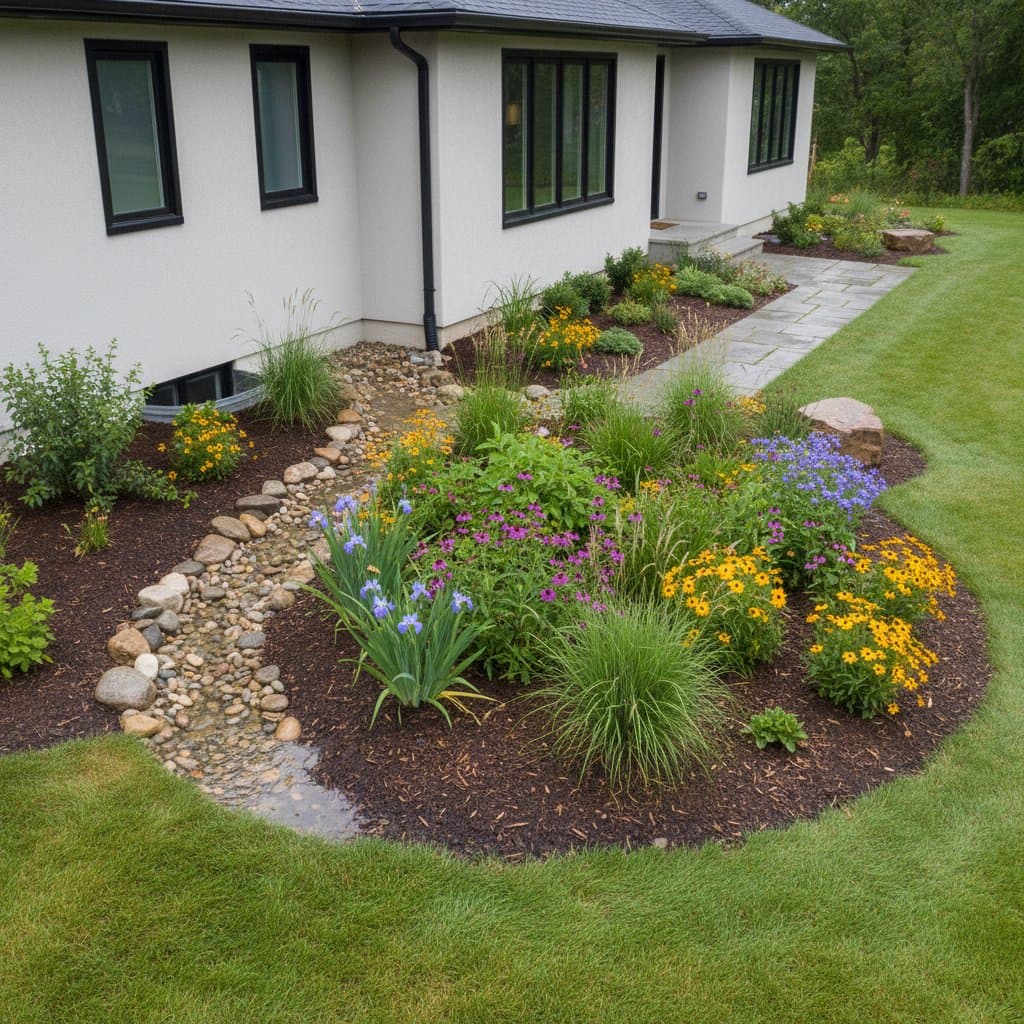
To manage entry points, incorporate a gravel or stone inlet to dissipate energy and reduce scouring. For downspout integration, route extensions underground or via surface channels lined with river rock, directing flow gently into the basin.
Selecting and Planting for Dual Purpose
Plant selection drives the rain garden's success, emphasizing species resilient to periodic inundation and drought. Focus on natives to minimize water and care needs while maximizing ecological benefits.
In the deeper center, opt for wetland-tolerant options such as blue flag iris (Iris versicolor) for striking blooms, swamp milkweed (Asclepias incarnata) to attract monarch butterflies, or river oats (Chasmanthium latifolium) for graceful texture. Transition to the perimeter with drought-resistant choices like purple coneflower (Echinacea purpurea), black-eyed Susan (Rudbeckia hirta), or little bluestem grass (Schizachyrium scoparium) for year-round interest.
Garden designer Tania Holmes advises layering for depth: "Position tall, upright plants centrally to intercept and slow water, then surround with mid-height perennials and low groundcovers. This creates a seamless transition to surrounding turf and ensures visual balance across seasons."
Apply two to three inches of organic mulch, such as shredded leaves or bark fines, to suppress weeds, conserve soil moisture, and prevent erosion. Replant annually if gaps appear, prioritizing diversity to sustain pollinator populations.
Step-by-Step Planting Guide
- Prepare the soil mix and fill the basin, allowing it to settle for a week before planting.
- Space plants according to mature size, ensuring denser coverage in wet zones.
- Water thoroughly post-planting to encourage root establishment, then monitor during the first growing season.
- Introduce pollinator-friendly companions like bee balm or asters to enhance habitat value.
Maintenance Strategies for Longevity
Initial establishment demands attention: irrigate during dry periods and remove competing weeds promptly to allow desired plants to dominate. By the second year, native adaptations reduce interventions to seasonal tasks.
Prune spent foliage in late winter to refresh growth, and top-dress with compost annually to maintain soil health. Inspect for sediment buildup after major storms and redistribute as necessary to preserve infiltration capacity.
Rain gardens excel in pollutant removal, trapping sediments, nutrients, and chemicals before they reach waterways. Homeowners often report increased wildlife activity, including birds and beneficial insects, alongside moderated yard temperatures due to evaporative cooling.
Realizing the Full Potential
As your rain garden matures, it integrates seamlessly into the landscape, responding to seasonal shifts with evolving colors and forms. Deeper root systems improve soil structure over time, enhancing overall yard resilience.
This approach addresses flooding at its source, yielding a sustainable yard that demands little while delivering substantial returns. Begin by mapping your site's hydrology, then scale the project to fit your space for enduring environmental and aesthetic gains.