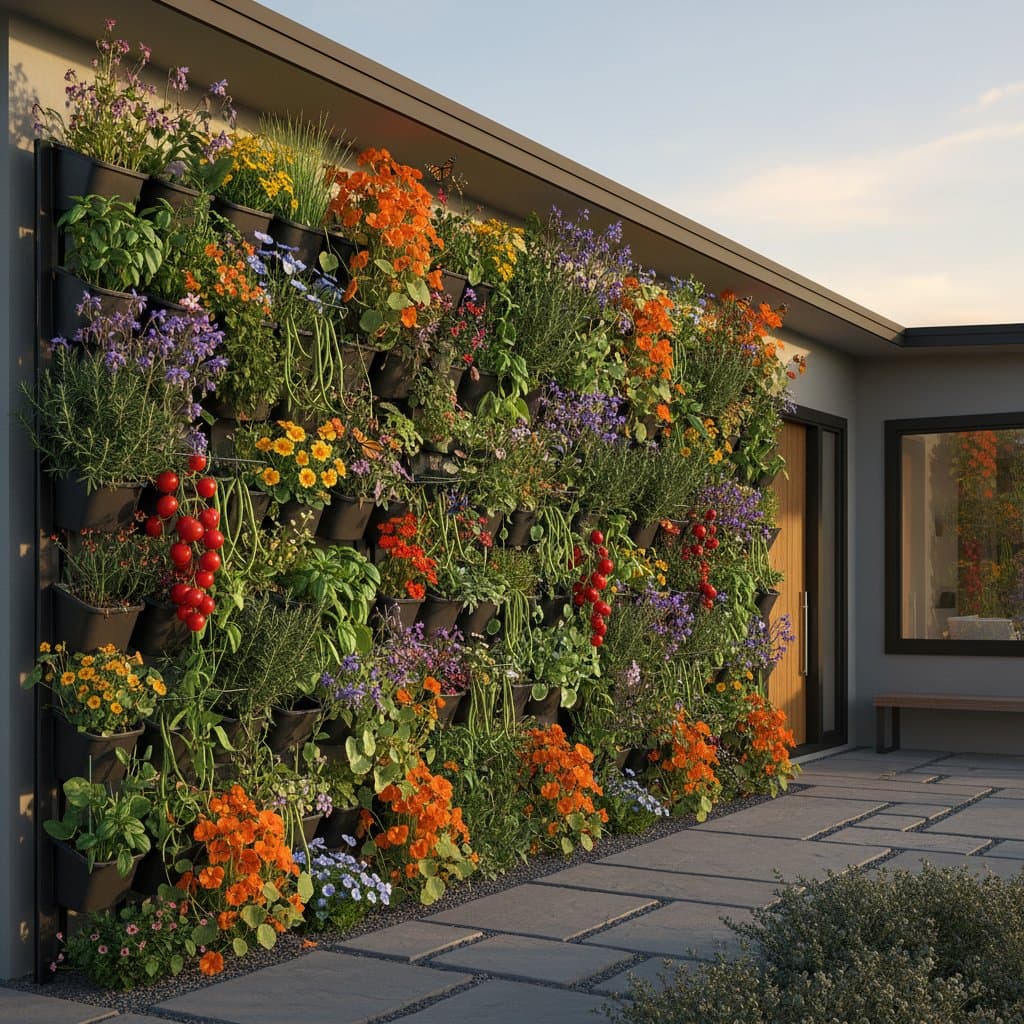
Edible Flower Walls Blooming in Front Yards
Key Takeaways
- Edible flower walls merge aesthetic appeal with practical benefits for small and expansive outdoor areas.
- They introduce the worldwide vertical gardening movement to suburban and urban residences.
- Families gain access to fresh herbs and edible flowers while establishing a visually compelling feature.
- Vertical setups accommodate renters and property owners, demanding little ground area.
When I relocated from a London townhouse to a modest cottage in the Cotswolds, I longed for the tiered foliage of my urban balcony garden. There, I cultivated herbs and climbing jasmine in every available nook, converting railings into compact vertical paradises. That background affirmed for me that walls serve productive roles alongside decorative ones. Today, edible flower walls flourish in front yards across regions, uniting the allure of flowers with the utility of a culinary garden.
Why Edible Flower Walls Gain Traction
Selecting Suitable Plants
Effective edible flower walls harmonize visual color, culinary flavor, and plant growth patterns. Consider these dependable options:
- Nasturtiums: Offer peppery flowers that cascade elegantly.
- Calendula: Produce vivid orange and yellow petals suited to moderate climates.
- Chive blossoms: Display soft purple hues with a subtle onion essence.
- Pansies and violas: Provide delicate, vibrant additions ideal for salads or sweets.
- Borage: Feature star-shaped blue blooms that draw pollinators and impart a cucumber-like taste.
During a visit to France, I observed a quaint Provençal café employing stacked clay pots for edible flowers near its entrance. The palette evolved seasonally, demonstrating how confined areas support dynamic exhibitions. This concept translates seamlessly to household settings, from courtyards and slim pathways to communal entryways.
Constructing and Caring for Your Wall
Several approaches allow creation of an edible flower wall:
- Modular vertical planters: These units attach readily to fences or outer walls and simplify replanting efforts.
- Repurposed containers: Transform vintage wooden crates or metal cans into planters by adding drainage layers.
- Living wall kits: Preassembled options incorporate irrigation tubing to streamline watering routines.
Interior designer and landscape consultant Daniel Park recommends modest beginnings. "A partially populated wall appears more appealing than an overcrowded one that falters. Concentrate on select varieties and scale up based on local performance," he advises.
Once installed, upkeep remains straightforward. Prune routinely to promote uniform development, and integrate drip irrigation or self-watering mechanisms to ease daily responsibilities for active households. Numerous parents, like myself, discover that children engage eagerly with these features. Mine frequently compete to identify newly unfurled petals, converting garden tasks into collaborative traditions.
Drawing from Worldwide Traditions
Various societies maintain practices of integrating edible and decorative flora. In Japan, shiso and chrysanthemum coexist in streamlined landscapes. Throughout Italy, rosemary and lavender border walls for both scent and culinary use. Incorporating such customs into city and suburb front yards fosters heritage and international links.
Beyond visual impact, sustainability stands as a core benefit. These installations aid pollinators, lessen city heat buildup, and supply immediate fresh accents from your threshold. Renters join easily via portable trellises or adaptable planters suitable for balconies or terraces.
Evolving with Seasonal Harvests
An edible flower wall changes across seasons, cycling through hues, aromas, and tastes. It elevates routine outdoor moments into multisensory experiences.
Begin with one wall segment or fence panel. Test herbs and flowers adapted to your region, and observe your area awaken. Each gathered bloom underscores how aesthetic and nutritional elements thrive together at your entryway.