Key Benefits of Drought-Resistant Yards
- These landscapes cut water usage by up to 75 percent compared to conventional lawns, addressing regional shortages effectively.
- Native plants and hardscape elements preserve curb appeal while demanding minimal ongoing care.
- Improved soil practices and targeted watering systems ensure plant vitality in arid conditions.
- The approach aligns with broader climate adaptations, promoting biodiversity and community resilience.
A Transformative Suburban Vista
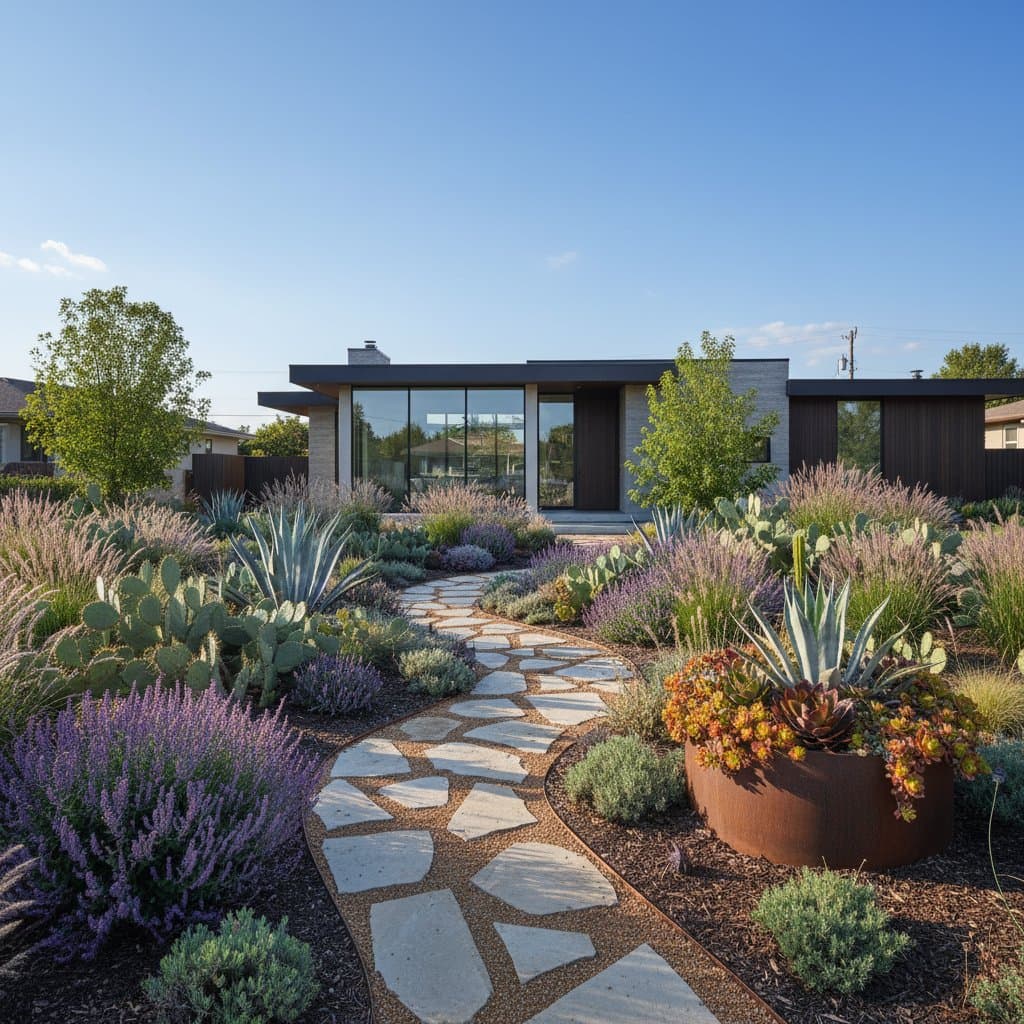
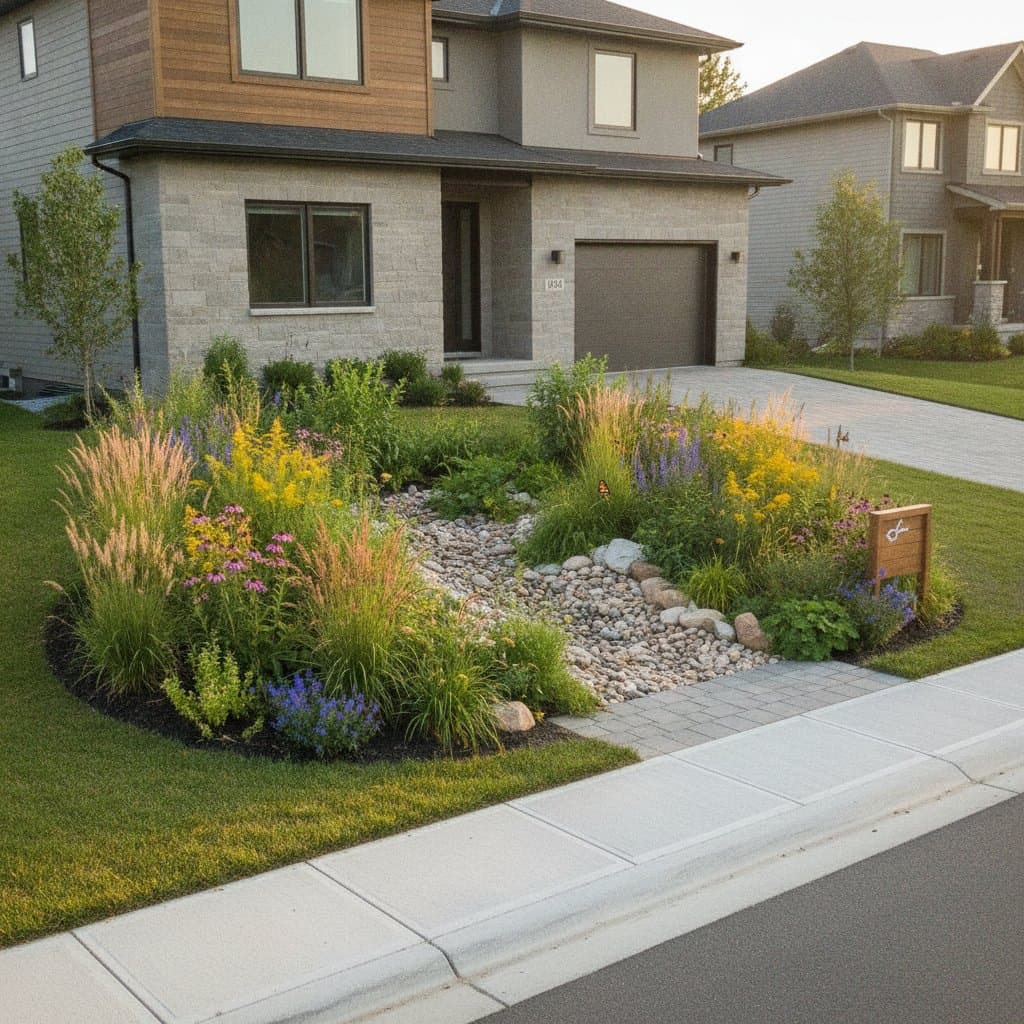
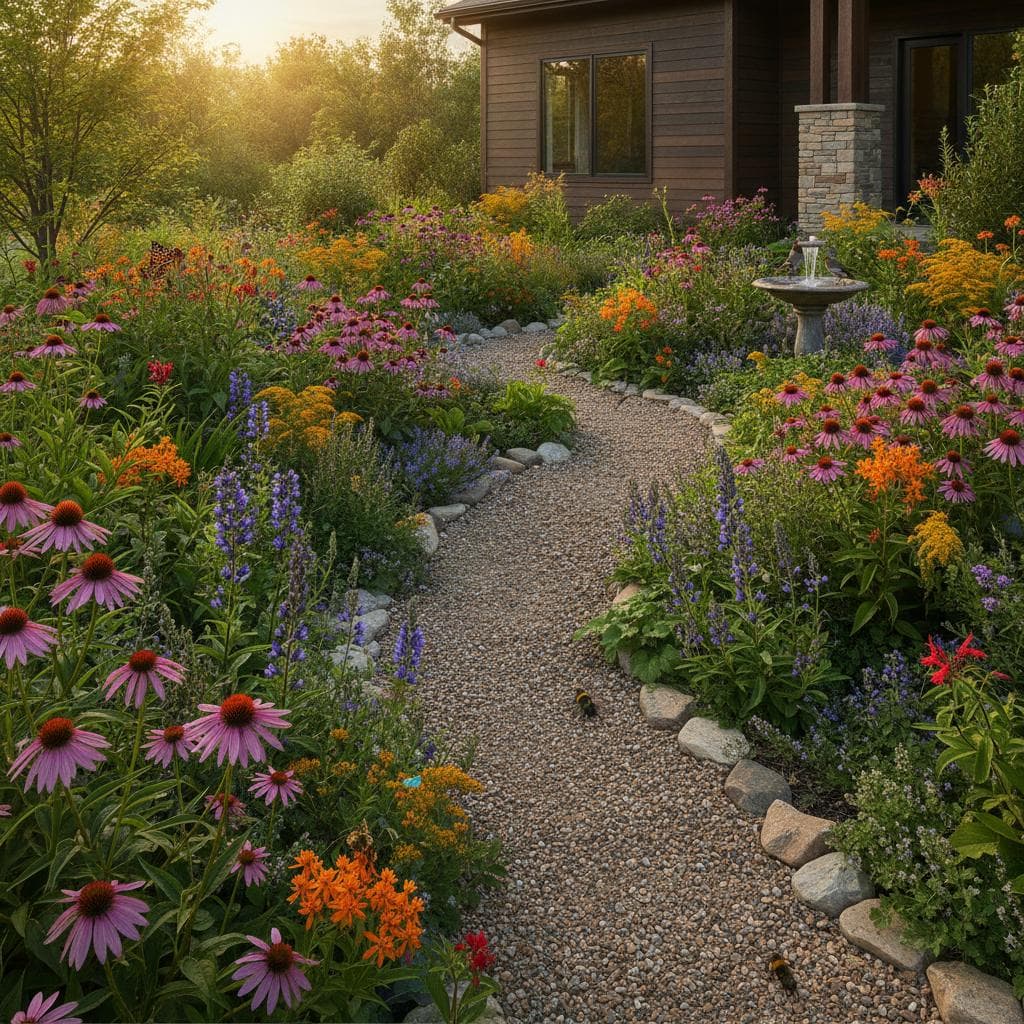
Envision a typical suburban avenue, formerly defined by lush, water-dependent grass. Today, one residence captures attention with its palette of soft greens, purples, and earthy browns. Pollinators hover over blooming drought-tolerant succulents, while polished river rocks frame a meandering path of crushed stone. Onlookers pause, noting how this space flourishes absent routine sprinklers or chemical inputs. Such a yard signals more than aesthetics; it demonstrates adaptation to environmental pressures.
Shifting Ideals in Outdoor Design
The pristine lawn long epitomized suburban achievement, bolstered by media portrayals and societal expectations. That vision relied on substantial irrigation and synthetic treatments. Prolonged droughts and regulatory limits now prompt reevaluation of spatial allure.
Preferences evolve toward individuality over uniformity. Social media showcases arid-adapted havens like terraced patios and arid flora arrangements, accelerating adoption. Prominent figures in design and entertainment champion these styles, embedding them in narratives of mindful habitation. Resilience supplants flawlessness as the hallmark of refined exteriors.
Scientific Foundations of Drought Tolerance
Examine the mechanics: conventional turf, often exotic grasses, demands persistent hydration for vitality. Drought-adapted flora possess inherent defenses. Certain varieties feature silvery coatings that limit transpiration; others extend roots to access subsurface reserves.
Sustainable horticulture specialists outline core strategies:
-
Strategic Planting: Opt for regionally indigenous species attuned to prevailing weather and terrain. Suitable options encompass California poppies for vivid spring displays, lavender for fragrant borders, agave for sculptural focal points, and feather grasses for gentle motion.
-
**Soil ** Amend ground with organic matter to boost retention and drainage. Compost integration enhances structure, fostering robust root networks that withstand moisture fluctuations.
-
Precise Watering: Employ subsurface emitters that release moisture directly to roots, slashing evaporation losses versus overhead methods.
These elements yield dynamic gardens that conserve resources and bolster local fauna.
Insights from Design and Science Professionals
Landscape architect Maria Torres views these designs as invitations to harmonize with local ecology. Her installations substitute sod with indigenous blooms and porous walkways. Clients appreciate the multidimensional forms and organic flow absent in monoculture turf.
Ecologist Dr. Aaron Kim underscores broader impacts. Such yards mitigate urban heat by absorbing rather than reflecting solar energy, while nurturing beneficial soil life. "Beyond conservation, you cultivate self-regulating habitats," Kim observes.
These perspectives affirm the dual merits: visual allure paired with planetary support. The goal extends survival to flourishing amid constraints.
Steps to Create Your Drought-Resistant Yard
Transitioning requires assessment over overhaul. Focus on site-specific needs for enduring results.
Assess Sun and Terrain Patterns
Track light exposure throughout the day. Note low-light areas for shade-lovers, inclines for erosion control, and low spots for moisture-tolerant selections. This mapping informs optimal positioning.
Transition Away from Turf
Partial conversion suits many. Retain play areas if desired, dedicating remainder to resilient features. Layer newspaper topped with mulch over existing grass to smother it naturally, avoiding harsh chemicals.
Select Complementary Flora
Blend evergreens, seasonal bloomers, and ground covers for continuous appeal. Pair low-water yucca with drought-hardy salvia and buffalo grass; cluster by hydration requirements to streamline care.
Incorporate Durable Surfaces and Coverings
Integrate pea gravel for pathways, flagstone for patios, and bark mulch around plantings. These suppress weeds, moderate soil temperature, and curb water loss.
Set Up Targeted Water Delivery
Install low-flow tubing connected to a controller that responds to rainfall data. Zone systems tailor output to distinct garden sectors, preventing overwatering.
Sustain with Minimal Intervention
Trim spent blooms to encourage reblooming, remove invasives promptly, and refresh mulch annually. This routine nurtures growth rather than combats decline.
Adaptations Across Settings
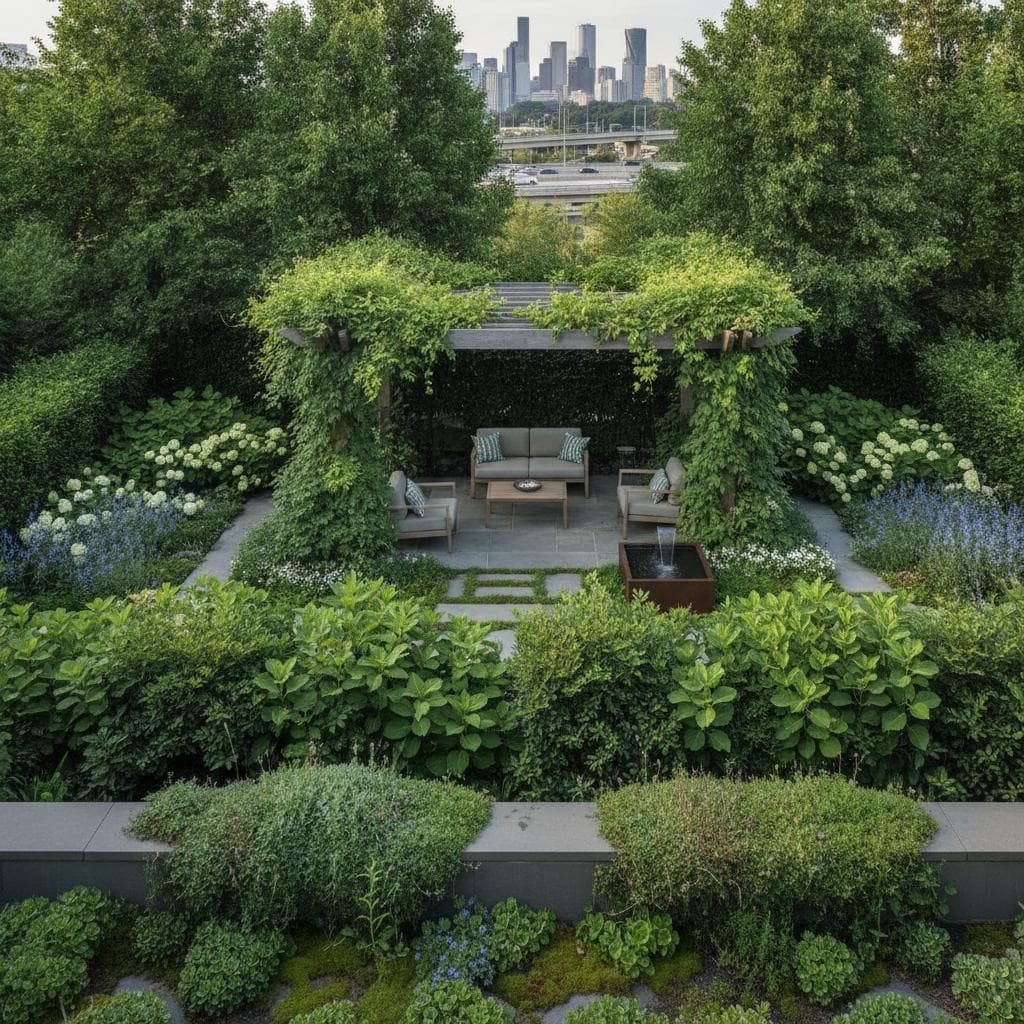
Suburban expanses lead, yet compact urban sites follow suit. High-rise dwellers craft container xeriscapes with potted echeveria, thyme, and yarrow, applying the same efficiency principles.
Municipal incentives accelerate change. Rebates fund turf removal in favor of bioswales or rock gardens. Diverse plantings now define blocks, echoing local flora.
Businesses benefit too. Resorts install water-wise grounds to lower expenses; campuses adopt them for educational value and fiscal savings.
Implications for Design and Environment
This landscaping evolution signals integrated responses to climate shifts. It parallels sustainable architecture and interiors that prioritize harmony with nature.
Publications spotlight textured, layered exteriors over seamless greens. Utilities showcase cases where usage halves without aesthetic compromise. Grass elimination transitions from bold to conventional, evoking satisfaction in resilience.
Nurturing Your Evolving Landscape
Initial plantings may appear modest, but maturation reveals depth. Seasonal shifts bring evolving hues and forms, demanding mindful observation.
Begin modestly: convert a border to indigenous perennials or add stone accents. Track responses to refine choices. This hands-on learning fosters connection to locale, proving elegance arises from intentional limits.
Sustainable outdoor design endures as a principle of balance, blending innovation with ecological regard.