Understanding Magnetic Decluttering as a Superior Organization Method
Home organization challenges often stem from storage solutions that prioritize concealment over accessibility. Traditional drawers and shelves encourage piling items out of sight, leading to frustration during retrieval. Magnetic decluttering addresses this by employing magnetism to secure items visibly and within reach, fostering habits that maintain order effortlessly.
This approach has gained popularity through social media demonstrations of utensils and tools adhering instantly to strips. Professionals in renovation and design recognize its longevity, tracing applications back decades in workshops and kitchens. The modern appeal lies in its adaptability to diverse spaces, provided one selects appropriate materials and installation methods.
Essential Materials for Effective Magnetic Storage
- Magnetic strips or bars: These serve as the foundation for larger displays, such as in kitchens or garages. Opt for models with steel construction and pre-drilled holes for secure screw mounting, which outperform adhesive alternatives in holding heavier loads over time.
- Neodymium magnets: Known for exceptional pull force, these suit precise storage of small metal objects like bits, blades, or clips. Exercise caution during handling to avoid injury from sudden attraction between magnets.
- Steel sheets or metallic adhesive tape: Apply these to non-ferrous surfaces, enabling magnet attachment on materials like wood or plaster. They expand versatility without requiring full wall modifications.
- Secure mounting supplies: Choose screws, wall anchors, and brackets matched to the substrate, such as drywall or masonry. Reserve tape for lightweight applications under 100 grams to prevent failures.
Safety protocols include donning protective gloves when manipulating potent magnets and maintaining distance from sensitive devices like computers or medical implants. In shared households, designate zones to minimize risks for all occupants.
Optimal Locations for Magnetic Decluttering Implementation
Magnetic systems excel in high-traffic areas where frequent access reduces the temptation to abandon items haphazardly. Evaluate each space for wall availability and item compatibility before proceeding.
Kitchen Applications
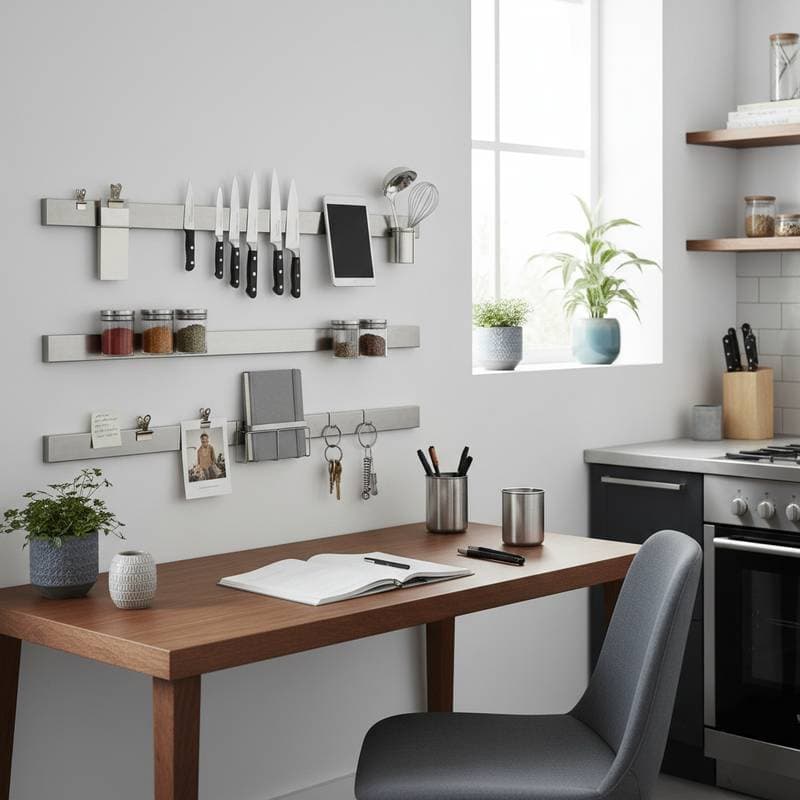
In cooking zones, magnetic strips mounted on backsplashes or inside pantry doors hold knives, measuring spoons, and metallic spice containers. This setup minimizes drawer rummaging, speeding meal preparation while keeping counters clear. For wet environments, select corrosion-resistant options to ensure longevity.
Workshop and Garage Setups
Tools in these areas benefit from visibility to prevent misplacement. Install bars along pegboards or above workbenches to organize wrenches, pliers, and bits. The result streamlines projects, as users grasp items instantly without searching cluttered bins.
Bathroom and Personal Care Spaces
Compact grooming essentials like razors, clippers, and tweezers adhere neatly to strips near mirrors. Pair with moisture-proof casings to combat humidity. This prevents sink clutter and promotes hygiene by isolating tools from shared surfaces.
Office and Creative Workstations
In deskside areas, magnets secure pens, clips, and rulers, enhancing focus during tasks. Integrate with desk edges or filing cabinets for a tidy aesthetic that supports productivity. Avoid placements near monitors to prevent data interference.
Entry and Transitional Zones
Near doors, magnetic boards capture keys, leashes, or mail clips, eliminating the scatter common in foyers. Trays with embedded magnets corral small accessories, creating a welcoming threshold free of disorder.
Steer clear of installations proximate to utilities or high-vibration spots, as these could compromise stability. For load-bearing or electrical proximity concerns, engage certified experts to evaluate and execute.
Advanced Techniques for Lasting Magnetic Organization
Refine installations with strategies honed from extensive practical use. These enhancements elevate basic setups into robust, customized systems.
- Apply soft liners, such as fabric pads, beneath items to shield surfaces from abrasions during attachment and removal.
- Integrate magnets with complementary tools like hooks or shelves for hybrid storage that accommodates varied item shapes.
- Label compartments with engraved tags on hooks to designate spots for specific tools or supplies, reinforcing organizational routines.
- Conceal strips within cabinet interiors for a seamless appearance, preserving wall aesthetics while maximizing utility.
- Prepare extras, including spare strips and magnets, to facilitate expansions as needs evolve.
For loads exceeding 2 kilograms, distribute weight across multiple points or reinforce with brackets. Regular inspections ensure components remain taut, averting accidents.
Achieving Sustainable Organization Through Magnetic Innovation
Implementing magnetic decluttering yields immediate gains in efficiency and visual appeal, transforming chaotic areas into functional havens. Users report reduced stress from streamlined retrievals and sustained tidiness that withstands daily wear.
Beyond aesthetics, this method encourages mindful habits, as visible storage prompts prompt returns. Customize further by experimenting with arrangements that align with personal workflows, ensuring the system evolves with lifestyle changes. The investment in quality materials pays dividends in a home that supports rather than hinders productivity.