Why Acoustic Panels Revolutionize Dining Decor
A beautifully designed dining room can still feel overwhelming due to poor sound control. The clatter of silverware, movement of chairs, and multiple conversations create an auditory overload that detracts from enjoyment. Homeowners often focus on visual elements like paint, fixtures, and furnishings, overlooking acoustics as a key to true comfort. Hard surfaces such as tile floors, large windows, and expansive walls reflect sound waves, amplifying chaos in open layouts.
Design professionals address this issue deliberately in commercial settings. Restaurants maintain a welcoming vibe amid crowds through targeted acoustic strategies. Homeowners can replicate this approach without compromising style. Acoustic panels serve as versatile elements that enhance both functionality and appearance in contemporary dining spaces.
The Real Problem Behind Noisy Dining Rooms
What Acoustic Panels Actually Do
These panels consist of dense cores like foam or mineral wool wrapped in fabric. The material generates friction that transforms sound vibrations into thermal energy, minimizing reflections. Proper application focuses on mid- and high-frequency absorption, resulting in balanced acoustics.
Visualize an untreated room as an acoustic echo chamber; panels act as diffusers that soften reverberations. Conversations become effortless, free from strain. This enhancement influences social dynamics, encouraging extended gatherings in a more hospitable setting. Panels thus unite aesthetic and practical benefits effectively.
Before You Begin: Understanding Placement and Design
Approach installation with intention to maximize impact. Identify primary reflection zones by simulating use: position yourself at the table and generate a sharp sound, such as a handclap, to locate persistent echoes. Prioritize those hotspots for treatment.
Key areas for coverage include:
- Wall reflections opposite the table: These capture direct sound paths from speakers.
- Ceiling zones: High or vaulted ceilings benefit from suspended panels to intercept overhead bounces.
- Room corners: Install thicker absorbers here to eliminate low-frequency buildup.
Aim for 20 to 30 percent wall coverage initially. This proportion achieves noticeable improvement while preserving openness. Adjust based on auditory tests post-installation.
Choosing Panels That Match Your Style
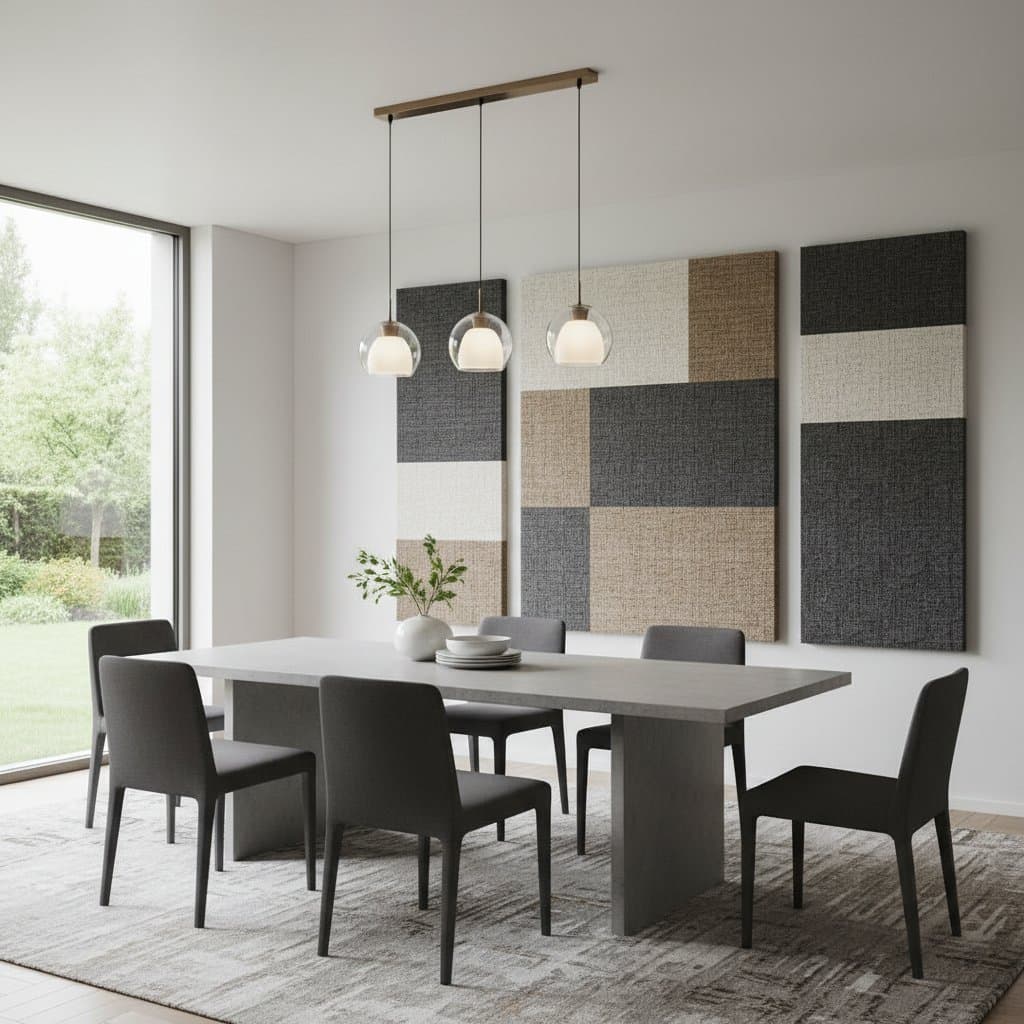
Contemporary panels defy outdated stereotypes of stark functionality. Options span vibrant hues, varied fabrics, and custom motifs, including photographic prints or textured simulations of natural materials. Select based on your room's motif to ensure harmony.
Minimalist interiors suit sleek, monochromatic mounts. Traditional schemes pair well with framed artwork panels or cushioned variants that echo upholstery. Integration elevates them from utilitarian to decorative assets.
Mounting proves straightforward with clips or adhesives for walls, akin to securing artwork. Ceiling applications require suspension hardware rated for the load. Confirm structural support prior to overhead fixes.
Cost, Skill Level, and DIY Feasibility
Home installation yields results comparable to expert work with basic tools. Proficiency equivalent to framing a poster suffices for standard setups.
Expenses range from affordable foam units at low cost per piece to premium custom options. A typical dining area treatment falls between several hundred and two thousand dollars, scaled to specifications. Benefits manifest quickly in enhanced usability.
Engage specialists for challenging surfaces like plaster or elevated ceilings to guarantee stability. Acousticians provide precise measurements for intricate rooms, preventing imbalances in sound distribution.
How to Know When You Have Enough Panels
Determine sufficiency through practical evaluation rather than exact metrics. Target conversational ease, not studio-level silence. Post-installation, use the space actively and assess voice projection and ambient control.
Introduce additional panels incrementally if echoes persist, maintaining even distribution. Symmetry prevents uneven acoustics across the area. Avoid excess, which can dampen vitality; seek a lively yet controlled ambiance.
Why Acoustic Panels Add More Than Comfort
These elements signal thoughtful space planning, prioritizing sensory experience. Diners appreciate fluid interactions without pinpointing the cause, marking the distinction of refined environments.
Acoustics affect cognition subtly. Reduced reflections promote mental ease, fostering perceptions of tranquility. Like strategic illumination or palette choices, sound management layers depth into design.
Pro Tips for Success
Draw from practical renovations with these strategies:
- Pair panels with soft accents like cloth runners, padded seating, and window treatments for amplified effect.
- Distribute treatments uniformly to avoid localized dead spots.
- Evaluate during actual dinners to gauge real-world performance.
- Incorporate vertical solutions such as baffles in integrated kitchens.
- Maintain with gentle dusting or vacuuming to preserve efficacy.
These practices refine outcomes systematically.
Elevate Dining Through Sound Control
Integrate acoustic panels to craft dining areas where auditory harmony matches visual grace. This upgrade fosters memorable meals in spaces that invite connection. Experience the difference in rooms designed for both sight and sound.