Establishing a clear baseline assessment lays the foundation for a smooth shift from a decorative lawn to a thriving edible ecosystem.
Planning Your Edible Yard: Essential Tools, Materials, and Design Principles
Approach the creation of an edible yard with the same methodical structure as a home renovation project. Start by outlining the project scope, allocating a practical budget, and developing a timeline divided into distinct phases.
Key Tools for the Job
- A sturdy spade or garden fork to turn and aerate soil
- Measuring tape paired with string to mark precise layouts
- Sharp pruning shears for trimming and shaping plants
- A mulching rake to spread materials evenly
- Components for drip irrigation to optimize water use
Fundamental Materials to Gather
- Rich compost and organic amendments to boost soil fertility
Organic mulch to control temperature and hold moisture
Kits for raised beds or untreated lumber to create structured planting zones
Supports like trellises and cages to guide vertical growth in crops
Strategic Design Elements
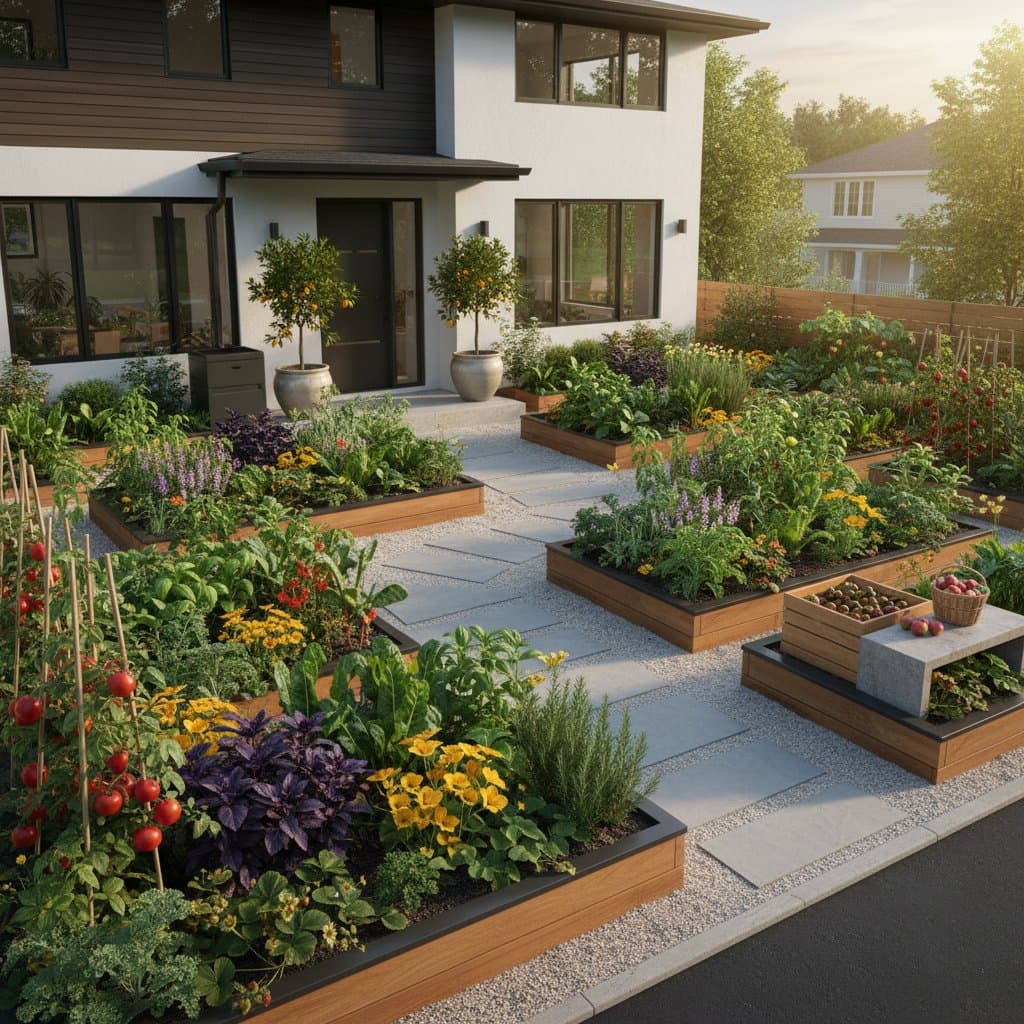
Design an edible yard that harmonizes visual appeal with functional output. Frame vegetable beds with attractive edging plants such as lavender or chives. Mix plant textures by combining broad-leafed greens with tall herbs or sprawling vines. Integrate perennial fruit options like blueberries or currants to provide interest across seasons.
In dry regions, select water-wise edibles including rosemary, thyme, and artichokes to ease irrigation needs. For moist areas, raised beds enhance air circulation and drainage, which helps ward off fungal issues. Space plants based on their full-grown dimensions to ensure easy access and a tidy appearance.
Incorporate safety from the outset. Position tall crops away from walkways to maintain clear sightlines. Place thorny varieties like raspberries in low-use spots. Include defined paths using gravel or flat stones to avoid compacting soil.
Step-by-Step Implementation: Converting Your Lawn
Step 1: Clear or Reuse the Existing Grass
Opt for a low-effort smothering technique by layering cardboard over the grass and topping it with organic mulch. This sheet mulching method starves the grass of light while the decomposing layers nourish the soil. For quicker progress, rent a sod cutter to strip the turf, then add the sod to a compost pile.
Step 2: Enhance Soil Quality
Break up dense soil to a depth of eight inches or more. Incorporate two to three inches of compost, and test the pH level afterward. Most vegetables thrive in soil that is slightly acidic to neutral. In soils dominated by clay, blend in coarse sand or perlite to promote better air flow.
Step 3: Set Up Efficient Irrigation
Install a drip system that targets water at the roots, cutting down on evaporation losses. Place emitters according to plant arrangements and required flow rates. Connect a timer or soil moisture sensor to automate watering and prevent overuse. Cover the lines with mulch to shield them from sun exposure and accidental damage.
Step 4: Plan and Plant the Layout
Draw a to-scale diagram prior to planting. Cluster plants with similar requirements for water and nutrients; for instance, greens need more frequent moisture than drought-hardy herbs. Shift the positions of annual vegetables yearly to avoid nutrient drain and pest cycles.
Place taller varieties on the northern edge of beds to prevent them from overshadowing shorter plants. Employ trellises for vining types like beans, cucumbers, or tomatoes to utilize space upward.
Step 5: Apply Mulch and Define Edges
Spread a three-inch layer of mulch around established plants, maintaining a two-inch gap from stems to avoid stem rot. This covering stabilizes soil temperatures, blocks weeds, and preserves wetness. Use stone, brick, or wood to outline borders, distinguishing garden areas from paths.
Step 6: Build Ongoing Care Habits
Create a weekly routine that includes monitoring water levels, pruning overgrowth, and gathering ripe produce. Spotting pests or shortages early limits their impact. Rely on natural controls such as neem oil applications or introducing helpful insects to preserve balance in the ecosystem.
Monitoring Progress: Steps to Long-Term Success
Maintain quality in your edible landscape through regular checks and record-keeping. Note details on plant vitality, crop outputs, and persistent challenges. Maintain a logbook or digital sheet to capture trends across seasons and guide refinements.
Examine irrigation setups each month for blockages or drips. Assess soil dampness by probing a small hole near roots; ideal soil breaks apart readily without excess dryness or saturation.
Prune regularly to support both plant health and garden looks. Cut away sick foliage right away, and thin dense areas to improve circulation. Such practices stimulate fresh growth for fruits and keep shapes uniform.
Conduct a yearly soil analysis for nutrient levels. Tailor your composting and feeding routines to the findings. Excess nutrients may lead to abundant leaves but fewer fruits, whereas insufficient amounts hinder overall strength.
Sustaining Your Garden: Year-Round Care Practices
Your edible yard will change with the seasons. Perennials such as strawberries, asparagus, and established herbs deliver yields over multiple years, while annuals cycle through plantings. Plan successions to keep production steady; follow summer staples like tomatoes and peppers with winter-hardy options such as lettuce and kale.
Recycle kitchen scraps and garden waste through composting to return nutrients to the soil. Position a compact bin or tumbler nearby for steady supply. Ensure piles stay damp and aerate them weekly to speed breakdown.
Control weeds diligently. Thick mulch and close plantings limit weed opportunities, yet manual pulling often proves necessary. Steer clear of synthetic weed killers to protect your harvest from residues.
Practical Strategies for Thriving Gardens
Blend beauty and utility by interplanting blooms with edibles. Flowers like marigolds, nasturtiums, and calendula repel insects while brightening the space.
Begin with a modest area to build skills before scaling up.
Select varieties bred for disease resistance and adapted to your region's weather.
Capture rainwater with barrels connected to downspouts for free irrigation.
Foster helpful wildlife by adding borders of local blooms.
Harvesting Rewards: The Lasting Impact of Edible Yards
Interest in edible landscapes surges as homeowners grasp their dual value in daily life and ecology. These gardens go beyond supplying fresh meals; they build durability, curb water use, and link individuals to nature's rhythms.
Converting a lawn to an edible haven demands upfront effort and steady attention, yet the payoffs resonate through every season. Each gathered crop affirms the worth of that dedication.