Key Principles of Hidden Storage
Hidden storage elevates dining rooms into versatile areas that maintain aesthetic appeal. These solutions conceal essentials without disrupting visual harmony. Homeowners achieve greater organization through thoughtful integration of space-saving features.
Budget-minded individuals benefit from built-in elements or adaptable furniture that address clutter effectively. Such options optimize available area while preserving room flow. Emphasis on safety and precise workmanship ensures reliable performance over time.
Individuals with intermediate woodworking skills find approachable projects that demand attention to joinery, precise alignment, and enduring quality. For intricate installations involving substantial cabinetry or electrical elements, professional expertise proves essential.
Project Essentials
Deciding Between Independent Work and Expert Assistance
Homeowners with foundational woodworking abilities manage tasks such as constructing a storage bench, adapting a sideboard, or incorporating a compact drawer array. Select robust hinges, glides, and fasteners suited for discreet enclosures.
Engage a specialist for endeavors that alter building structures, incorporate wiring, or demand expansive integrated cabinetry. Skilled carpenters seamlessly embed hidden features into trim or wall assemblies, upholding stability and coordinating finishes accurately.
Detailed Implementation Steps
1. Assess the Area Thoroughly
Determine storage requirements first. Common items include tablecloths, surplus plates, candles, and compact devices that accumulate on surfaces. Take precise measurements of the space and select between standalone units or embedded designs based on room configuration.
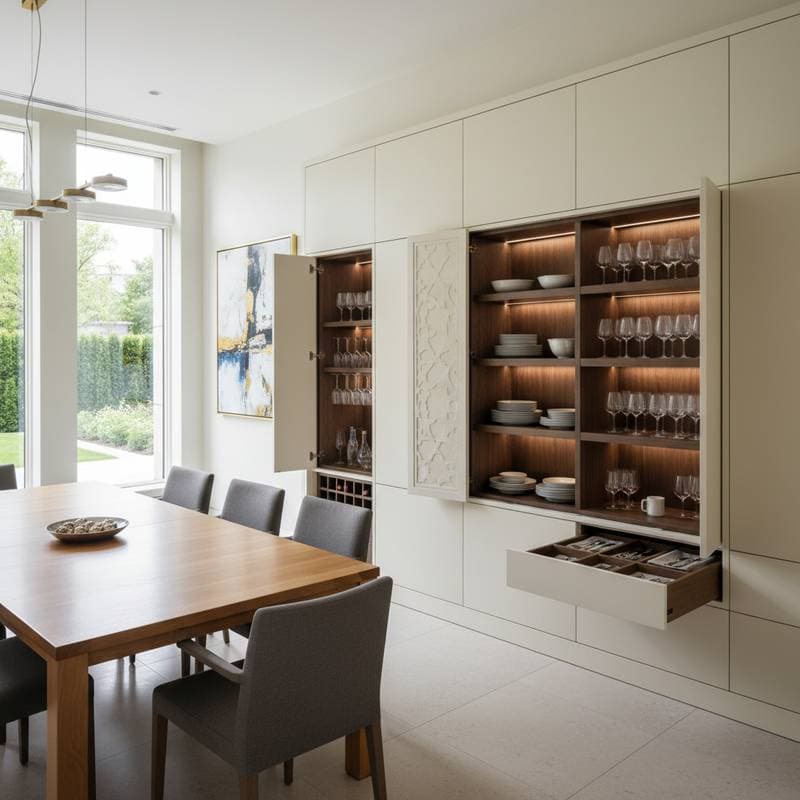
Compact dining areas gain from versatile furnishings like benches with integrated storage or cabinets featuring covert drawers. Spacious rooms accommodate options such as paneled walls or recessed sideboards with secret sections.
2. Plan for Utility and Visual Harmony
Draft designs using exact dimensions. Evaluate access frequency for each section. Position everyday items in convenient locations; reserve deeper areas for infrequent use.
When adapting an existing sideboard, substitute conventional drawers with retractable hidden units or add a disguised rear panel for concealed storage. Maintain streamlined profiles, uniform materials, and coordinated hardware to integrate flawlessly with surroundings.
3. Construct or Adapt the Framework
Prepare wood components with care and assemble dry fits prior to permanent joining. Ensure alignment precision, as minor deviations expose hidden elements. Secure joints firmly with adhesive; conceal fixings under plugs or trim.
Install full-extension glides behind frame fronts for hidden drawers. Employ soft-closing mechanisms on lift mechanisms to avoid abrupt motions. Verify operational smoothness through testing before completing assembly.
4. Apply Protective Finishes
Thorough finishing distinguishes amateur efforts from expert results. Sand surfaces meticulously, then distribute stain or paint uniformly. Seal with a resilient top layer to resist moisture, particularly for items like serveware.
Opt for slender applications that do not hinder mechanisms. Two applications of polyurethane or a sturdy oil suffice for dining pieces, promoting longevity without excess buildup.
5. Position and Verify Functionality
After completion, place the item in the dining space and operate all features. Mechanisms must function fluidly without exposing concealed aspects. Inspect for conflicts with seating, skirting, or adjacent surfaces.
Affix padding to bases or covers to minimize sound and safeguard floors. Confirm that locks or magnetic secures hold firmly.
Ensuring Superior Craftsmanship
Discretion defines effective hidden storage. Exactitude prevents detection through flaws like crooked edges, irregular spaces, or discordant coatings. Consider these practices to refine execution:
- Measure meticulously before cutting to guarantee snug fits without strain.
- Select uniform wood types to avoid differential swelling or shrinking.
- Conceal all fixings by recessing, filling, and smoothing.
- Install hardware temporarily to assess tolerances.
- Distribute finishes consistently over all areas to eliminate tonal shifts.
Well-executed work endures across decades, transcending temporary trends.
Financial and Practical Value
Implement hidden storage affordably by reusing existing pieces. Transform a vintage chest into a sideboard with internal adjustments and refreshed surfaces, for instance.
For fresh builds, employ veneered panels for non-visible sections to conserve resources. Reserve high-grade lumber for exposed elements like tops or fronts. Invest in dependable hardware, as inferior components falter with routine handling.
Those with limited funds prioritize singular focal pieces initially, such as a bench or cabinet, then incrementally enhance the scheme. Each step fosters a unified, efficient dining zone.
Prioritizing Safety and Expertise
Approach hidden storage with caution, placing safety paramount. Refrain from wall incisions without verifying subsurface elements. Utilize protective gear during cutting, abrading, or coating processes, and ensure sufficient air circulation for finishes.
Incorporate illumination, security features, or cabling only under licensed supervision to avert risks like fires or regulatory breaches. Delegate hazardous aspects while managing fabrication personally if qualified.
Anchor substantial units to walls to counter overturning risks. Apply stabilizing kits for elevated or slender constructions.
Advanced Techniques for Optimal Results
- Incorporate ventilation subtly to deter dampness buildup in sealed areas.
- Design access for routine convenience, avoiding overly obscure placements.
- Align coatings precisely to mask boundaries.
- Employ invisible magnetic latches for secure, hardware-free closures.
- Mark subtly with engravings or patterns for personal reference.
These refinements yield intentional, refined outcomes that enhance daily use.
Sustaining Long-Term Performance
Preserve hidden storage through routine care, akin to fine furnishings. Inspect mechanisms annually for fluidity and secure loose fittings. Refresh coatings as wear appears to maintain vibrancy.
Regular attention ensures continued reliability, transforming the dining room into a perpetually organized retreat that supports effortless hosting and serene gatherings.