Invisible Storage Solutions for Family Homes
Clutter accumulates quickly in busy households. Toys, mail, and daily essentials often occupy visible surfaces and disrupt calm interiors. Invisible storage addresses this issue by integrating compartments into furniture and architecture.
This approach maintains clean lines while providing practical capacity. It suits both owners and renters who seek organized spaces without visible disruption.
Core Benefits
- Everyday furniture gains multi functional capacity through concealed compartments.
- Visual calm increases when items remain out of sight yet accessible.
- Options scale from compact apartments to larger family residences.
- Design elements draw from international influences for fresh applications.
Visible Clutter and Its Effects
Open shelving frequently collects mismatched objects in daily use. What appears curated in photographs often becomes disorganized in practice. Visual noise from exposed items prevents the eye from resting and increases perceived disorder.
Furniture with Integrated Compartments
Select pieces that serve dual purposes. Lift top coffee tables store remote controls and small toys. Ottomans with removable lids hold blankets or magazines. Beds equipped with base drawers accommodate linens and off season clothing.
Entry benches can conceal footwear while providing seating. Kitchen islands sometimes feature panels that open to reveal additional drawers. These choices keep surfaces clear during routine activities.
Practical Furniture Options
- Lift top tables keep living room essentials within reach but hidden.
- Window seat benches organize items beneath cushions.
- Under bed systems maximize unused vertical space.
- Banquette seating in dining areas stores table linens below.
Architectural Storage Features
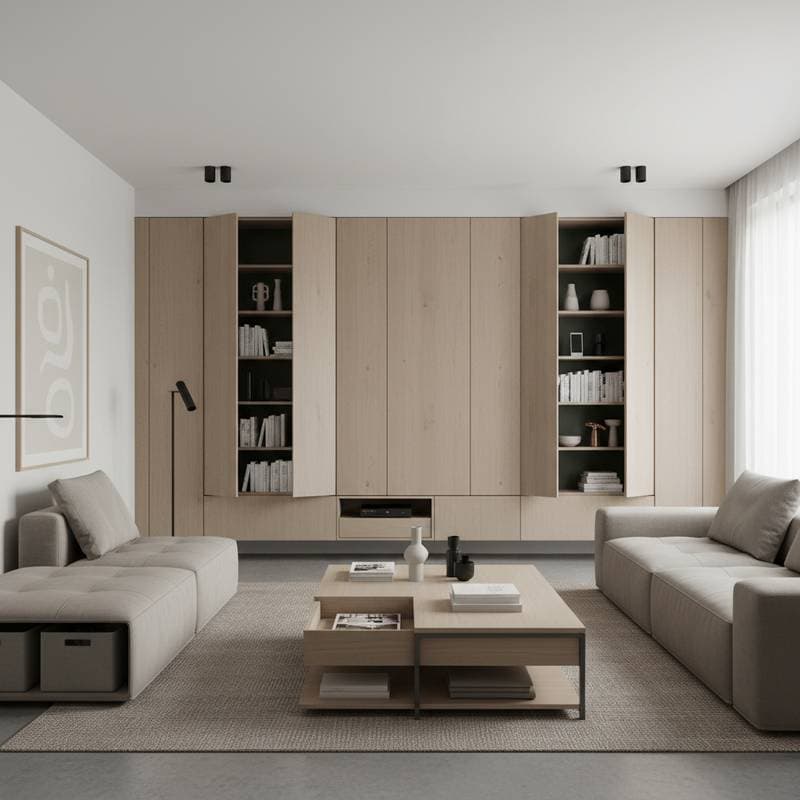
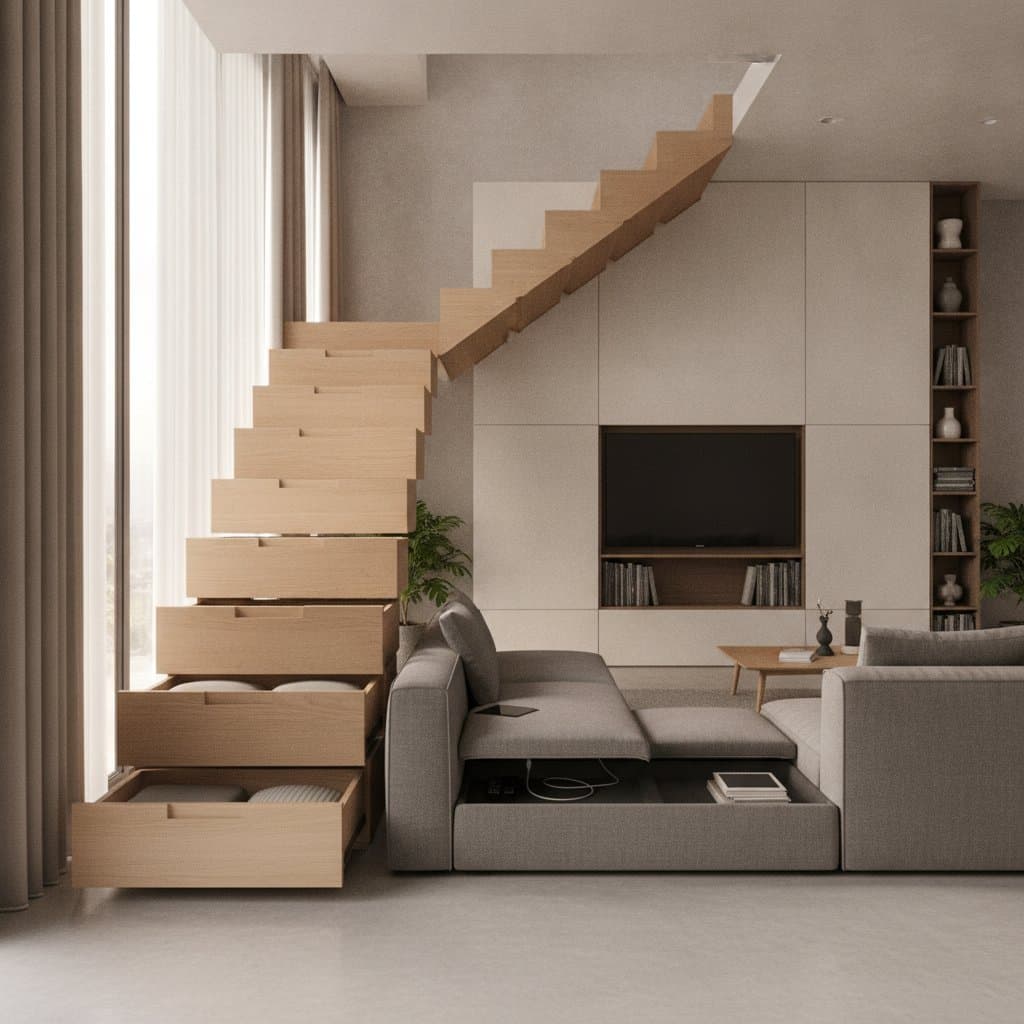
Built in solutions extend capacity without adding standalone units. Stair risers can incorporate shallow drawers for accessories. Wall panels that match surrounding trim conceal media equipment or shelving.
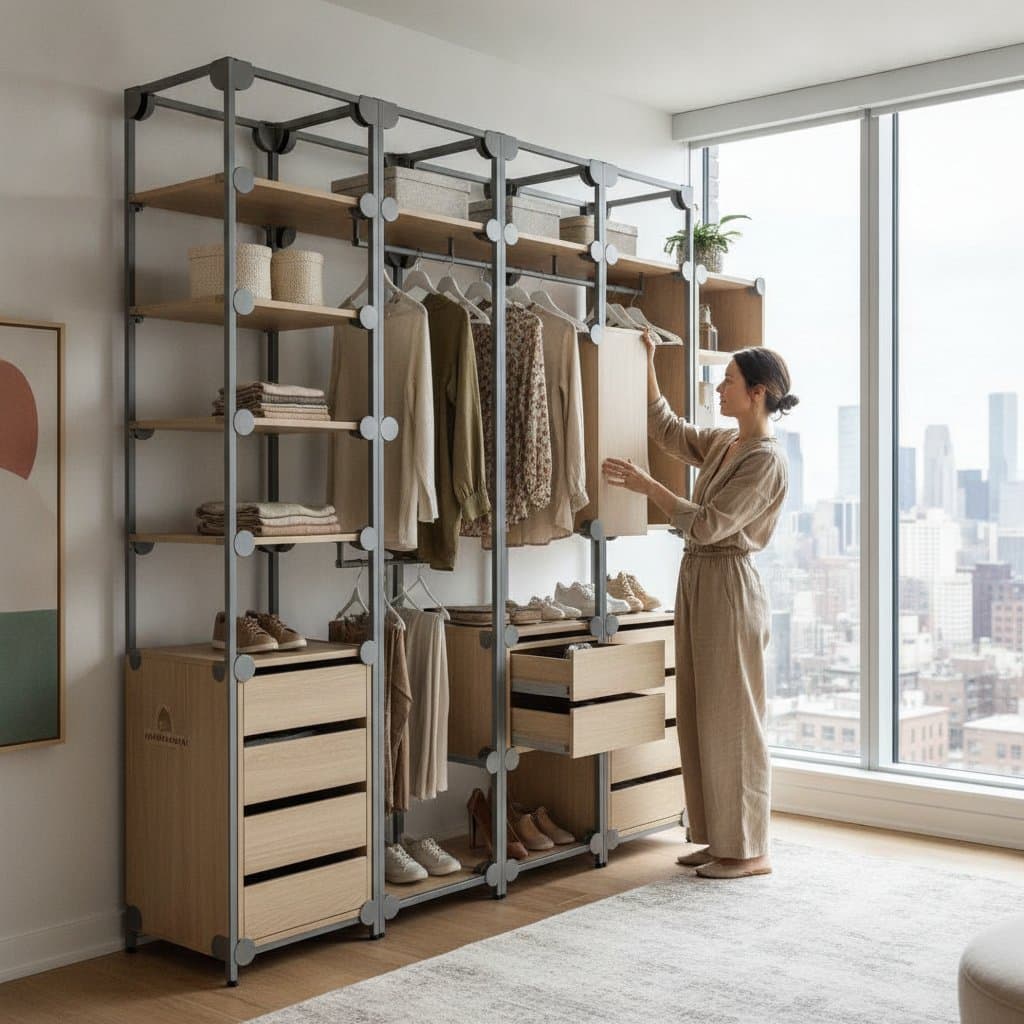
Toe kick drawers beneath cabinets store flat items such as baking trays. False backs in wardrobes provide secure spots for documents. These modifications integrate during renovation or new construction.
Architectural Integration Examples
- Stair drawers organize shoes near entry points.
- Panel systems hide wiring and devices in living areas.
- Base cabinet extensions utilize otherwise wasted space.
- Wardrobe modifications create discreet storage zones.
Renter Appropriate Approaches
Removable options allow flexibility in leased spaces. Mirrors with concealed compartments behind the glass organize jewelry or toiletries. Modular cubes with internal drawers fit into various room layouts.
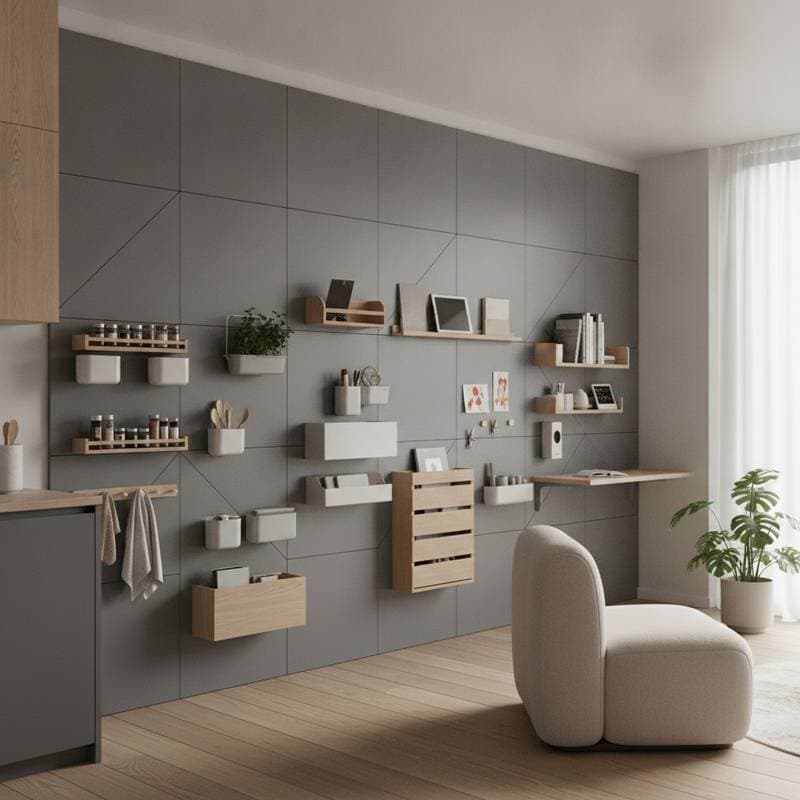
Over door organizers that resemble standard mirrors avoid wall alterations. Fold out desks collapse to free floor area when not required. These selections deliver function while preserving security deposits.
Renter Focused Selections
- Stackable cubes with internal drawers adapt to changing needs.
- Mirror backed units provide bathroom or hallway storage.
- Wall mounted fold down surfaces disappear after use.
- Lidded containers coordinate with existing finishes.
Daily Application of Hidden Systems
Consistent placement of items within designated compartments supports long term order. Residents spend less time searching and more time enjoying functional rooms. The method scales across property types and lifestyle demands.
Implementation begins with an audit of frequently used objects. Matching solutions to those objects produces measurable improvements in household efficiency.