Harvest Food from Your Front Yard with Edible Landscaping
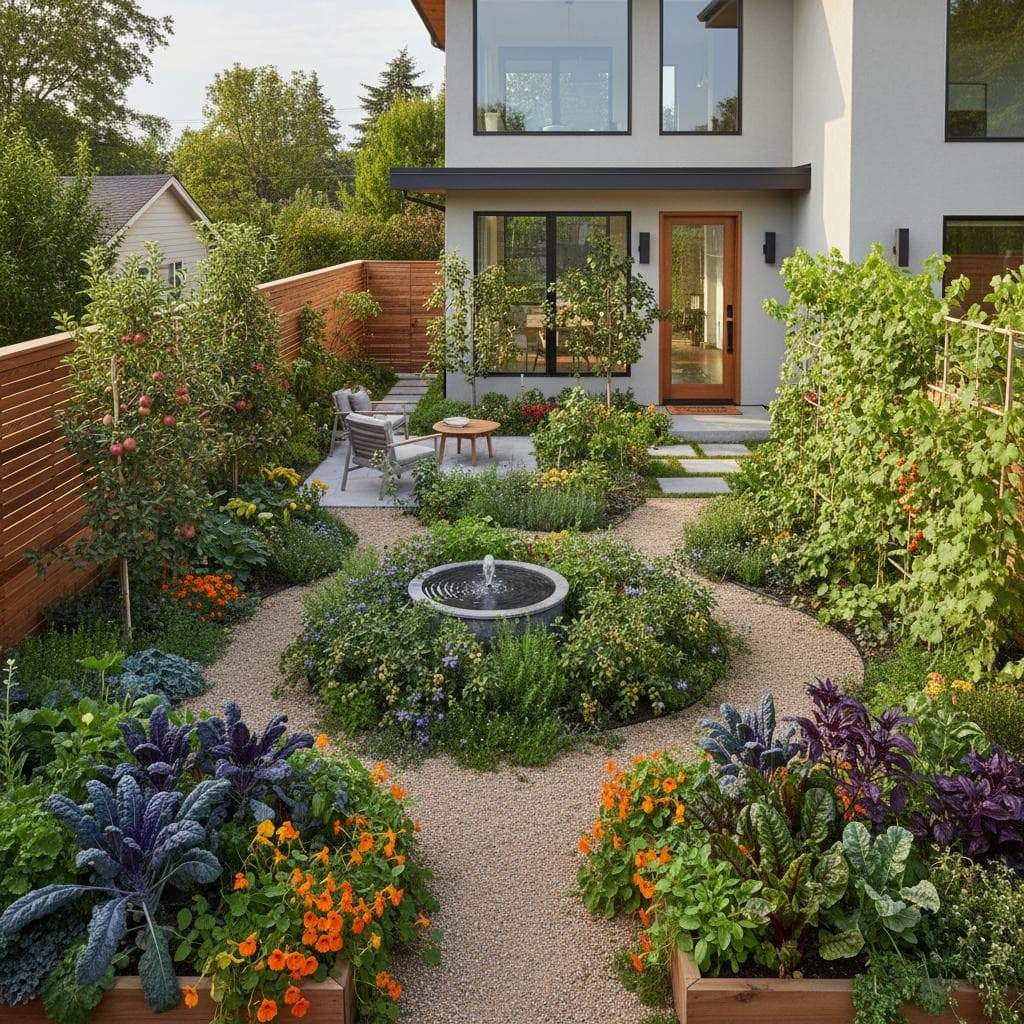
Imagine sunlight filtering through a vibrant front yard where lavender attracts bees, kale forms elegant green borders next to vivid marigolds, and a compact lemon tree arches gracefully over the path. The scent of citrus blends with basil and mint in the breeze. This scene represents edible landscaping, a practice that merges visual elegance with functional food production to create a front yard serving as a living pantry.
Rethinking the Traditional Lawn
Homeowners often maintain front yards as uniform grass expanses, which provide a clean appearance but offer limited utility. Edible landscaping challenges this approach by substituting ornamental plants with edible options such as fruits, vegetables, herbs, and flowers. These elements enhance sensory appeal and contribute to meals, resulting in a landscape that nourishes both visually and nutritionally.
Benefits of Growing Food in the Front Yard
Incorporating edibles into the front yard extends beyond obtaining fresh produce. This method reclaims underutilized space for purposeful cultivation, transforming bare soil into productive areas with each tomato plant or rosemary bush. Such landscapes attract pollinators, minimize food waste from stores, and encourage neighbors to adopt similar sustainable practices.
Experience the fulfillment of gathering ingredients for breakfast directly from your garden, particularly when the display captivates onlookers. Many edible plants function as perennials or require minimal upkeep as annuals, which reduces maintenance efforts after the initial establishment phase.
Design Principles for Edible Landscapes
Successful edible landscapes demand intentional planning to integrate food plants seamlessly into the overall aesthetic. Rather than confining vegetables to secluded areas, incorporate them as integral features. Consider these strategies to guide the process:
- Establish foundational elements with fruit trees or berry shrubs. Select dwarf varieties of apple or fig trees to introduce height and shade without overwhelming smaller spaces.
- Build layers for depth and vibrancy. Position greens such as Swiss chard or red mustard along edges to serve as colorful accents that double as salad components.
- Integrate herbs and flowers for fragrance and allure. Employ rosemary, thyme, and oregano as durable ground covers, complemented by edible flowers like nasturtiums or calendula to draw pollinators.
- Define paths and boundaries thoughtfully. Substitute traditional hedges with blueberry bushes or alternate lavender and lettuce along walkways for both form and function.
- Ensure year-round interest. Pair persistent evergreen herbs with rotating seasonal vegetables to sustain visual appeal throughout the calendar.
Sustainable Maintenance for an Edible Garden
An edible front yard requires nurturing practices that promote ecological balance. Steer clear of synthetic chemicals, which may damage helpful insects or contaminate waterways. Focus instead on enhancing soil vitality and supporting diverse wildlife.
- Enrich the soil organically. Incorporate compost from kitchen remnants, used coffee grounds, and fallen leaves to foster nutrient-dense earth that supports robust plant growth.
- Attract pollinators actively. Plant nectar-bearing flowers and eliminate chemical pesticides to welcome bees, butterflies, and hummingbirds as vital allies.
- Apply companion planting techniques. Position basil alongside tomatoes to ward off pests and improve taste; plant carrots near onions to reduce insect threats.
- Manage water efficiently. Deploy drip irrigation systems or harvest rainwater in barrels to conserve resources, and apply thick mulch layers to preserve soil moisture while inhibiting weed growth.
With these natural methods, the landscape develops into a self-regulating ecosystem alive with activity and yielding consistent, healthy produce.
Effective Plant Combinations for Edible Gardens
Beginners may find inspiration in these proven pairings that balance aesthetics and utility:
- Tomatoes paired with basil. This time-tested combination flourishes mutually; include marigolds to deter nematodes and inject bright yellow tones.
- Blueberries alongside lavender. These plants share a preference for acidic conditions, offering a compelling mix of deep blue berries and silvery leaves.
- Kale with pansies. The robust green foliage of kale contrasts elegantly with pansies' vivid petals, and both endure cooler temperatures well.
- Thyme and strawberries. Low-growing thyme weaves through strawberry runners, forming a scented carpet that enhances ground-level appeal.
- Lettuce bordered by nasturtiums. The spicy, edible nasturtium flowers encircle tender lettuces, providing versatile additions to fresh salads.
These pairings suit compact areas and adapt easily to larger plots or container setups on patios.
Enhancing Curb Appeal Through Edible Design
Concerns about a disordered appearance often deter edible landscaping efforts. Counter this with deliberate structure, employing repeating patterns, balanced symmetry, and defined edges to convey polish. Opt for raised beds with neat borders or ornamental containers to organize plantings effectively.
Select cultivars boasting appealing leaves or stems for sustained elegance. Train climbing beans on a trellis to form an artistic centerpiece, or arrange artichokes in a circular pattern around a central water feature for a refined, abundant look. Regular pruning of herbs into rounded shapes further elevates the tidy, cultivated vibe.
Fostering Community with Edible Landscapes
A food-producing front yard naturally draws people together, initiating dialogues and potential collaborations. Neighbors may trade surplus zucchini for citrus fruits or share advice on natural pest management. Young passersby gain insight into food origins beyond supermarket displays. What starts as an individual endeavor often influences broader perspectives on land use, nutrition, and design.
This approach also advances environmental goals. Every planted area bolsters pollinator habitats, conserves water relative to grass lawns, and lowers the carbon footprint associated with shipping produce over distances. Thus, the front yard emerges as a testament to innovation and responsibility.
Steps to Implement Your Edible Landscape
To initiate the transformation, start modestly by converting one flower bed into a herb assortment. Introduce berry shrubs along the entry path for immediate impact. Test various textures and colors to refine the composition until harmony emerges.
Maintain a nearby compost system to recycle household waste back into the soil. As familiarity grows, incorporate elements like a dwarf citrus tree, dedicated raised beds for leafy greens, or vertical strawberry panels. The landscape will mature progressively, mirroring personal preferences and principles.
Edible landscaping evolves alongside the gardener, embracing trial and adaptation while underscoring that homegrown bounty enhances both plate and panorama.