Why Gravel Gardens Require 90 Percent Less Water Than Traditional Lawns
Gravel gardens offer a sustainable alternative to water-intensive lawns. These designs feature drought-resistant plants and permeable surfaces that reduce irrigation needs dramatically. Homeowners gain low-maintenance yards that enhance curb appeal while conserving resources.
Essential Benefits
Gravel gardens demand minimal watering and eliminate mowing entirely. Proper soil preparation, effective weed barriers, and strategic drainage form the foundation of these landscapes. Selecting appropriate gravel types and companion plants ensures visual harmony and enduring performance.
Established gravel gardens lower water consumption, decrease maintenance expenses, and foster healthier soil conditions over time. Thoughtful layouts resist soil compaction, minimize runoff, and endure for decades with basic care.
Underlying Principles
Site Evaluation
Assess conditions before excavating or adding materials. Observe water movement post-rainfall; pooled areas signal inadequate percolation, necessitating deeper aggregates or sub-base modifications.
Sandy or loamy soils suit these gardens best. Amend heavy clay with coarse sand or crushed stone to avoid saturation. Full sun exposure optimizes performance, although partial shade accommodates certain plants.
Note invasive roots or weed hotspots that might compromise the design. Align gravel hues and plant forms with your home's facade and surrounding elements for cohesive aesthetics.
Record findings to determine material volumes, suitable flora, and project scale. This preparation avoids expensive alterations and streamlines execution.
Preparation Steps
Approach gravel garden creation with organized planning, akin to broader landscaping endeavors.
Required Tools:
- Flat shovel, garden rake, wheelbarrow
- Landscape fabric or robust weed barrier
- Hand tamper or plate compactor
- Measuring tape, marking paint
- Garden hose for testing layouts and flow
Essential Materials:
- Gravel selections (pea gravel, decomposed granite, crushed stone; 10-20 mm diameter)
- Compacted crushed rock or coarse sand sub-base
- Topsoil for planting areas
- Drought-resistant options like lavender, sedum, ornamental grasses
Safety Measures:
Wear gloves and eye protection during gravel handling and compaction. Adopt correct form for shoveling and lifting to minimize injury risk. Restrict access to work areas until stability is achieved.
Timeline and Coordination:
Allocate two to three days based on area size. Sequence sub-base compaction and planting prior to final gravel spreading. Coordinate material deliveries to minimize site disruption.
Installation Process
Clearing the Site
Excavate grass, roots, and debris completely. Employ a sharp spade or sod cutter for thorough removal. Compost or discard organics away from the site, then level the soil evenly.
Establishing Grades and Drainage
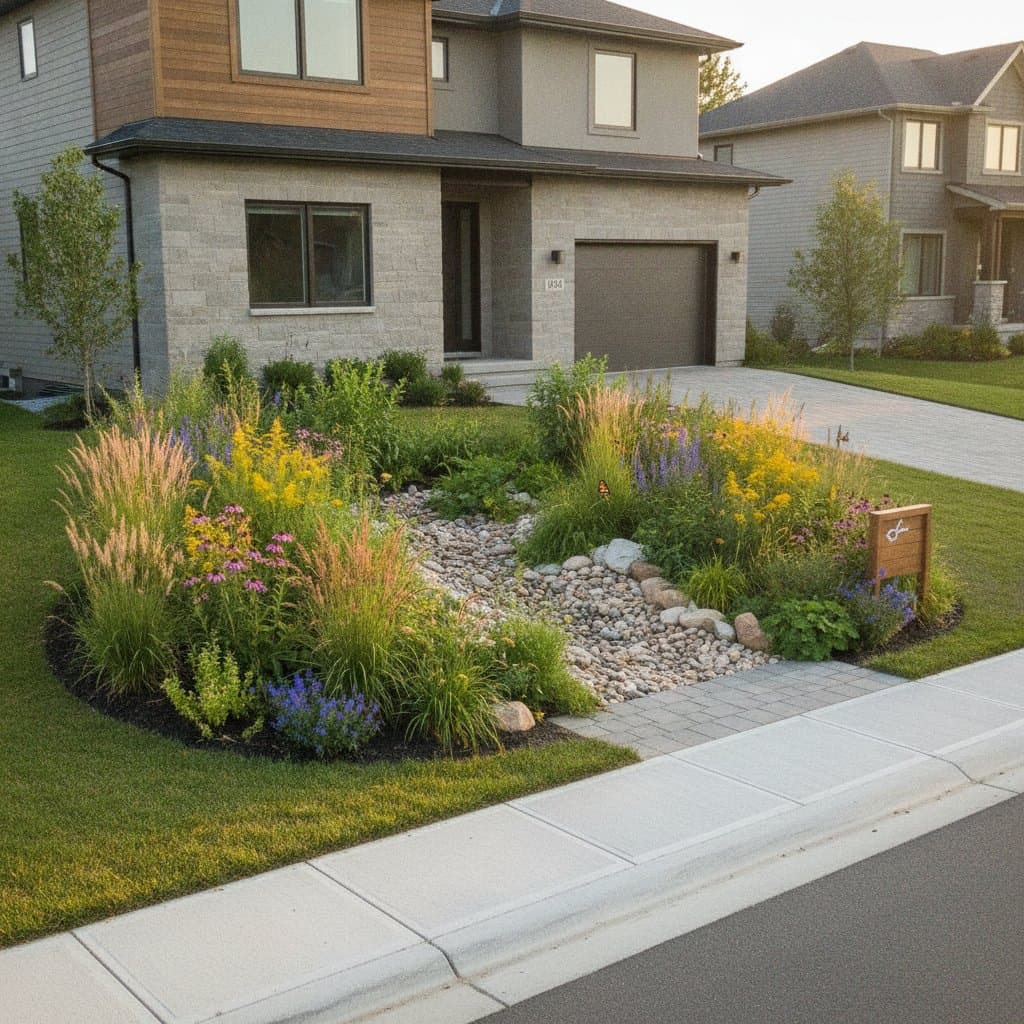
Shape the soil with a gentle slope, one inch drop per ten feet, directing away from buildings. This promotes runoff and avoids foundation issues. For suboptimal natural flow, install shallow stone-filled trenches as auxiliary drains.
Applying Weed Barriers
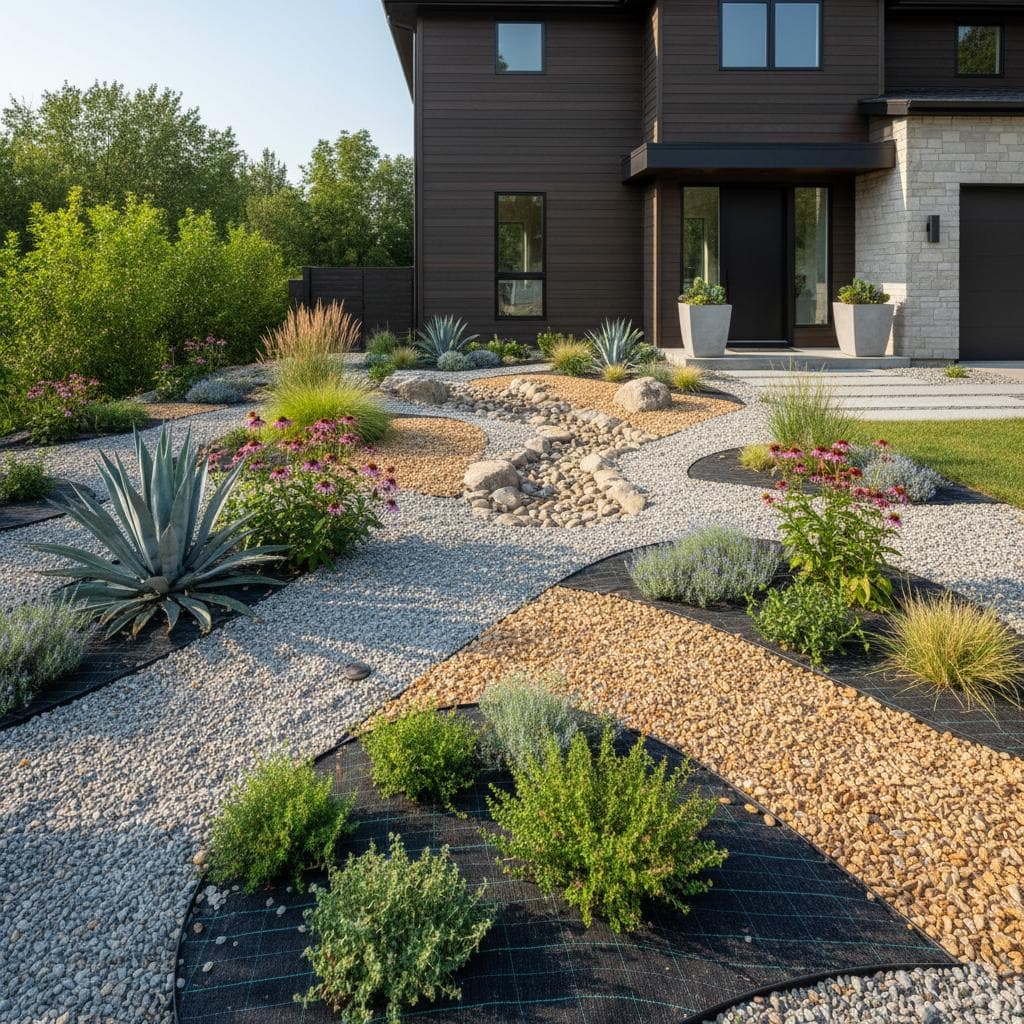
Unroll landscape fabric across the prepared surface, overlapping edges by six inches minimum. Anchor with staples spaced every twelve inches. The material curbs weeds yet permits root access to moisture.
Building the Sub-Base
Distribute two to three inches of crushed rock or coarse sand. Compact thoroughly with a tamper or plate until firm. This layer anchors the surface and averts settling.
Positioning Plants
For integrated greenery, slice X-shapes in the fabric at planting spots. Excavate modest holes and position root balls just below fabric level. Refill with soil-gravel blend to enhance drainage.
Spreading Gravel
Apply gravel to two-inch depth uniformly. Rake smooth, covering fully without gaps. Thin layers near plants facilitate watering and ventilation.
Defining Edges
Set metal, stone, or concrete borders to contain gravel and delineate boundaries. These prevent spillover and sustain neatness.
Testing and Refining
Irrigate lightly to compact materials and evaluate flow. Address any pooling by raking or regrading. Monitor over days for fabric exposure or instability, correcting as required.
Performance Checks
Inspect the completed garden against key standards.
- Drainage Efficiency: Water penetrates rapidly, free of standing pools.
- Stability: The surface supports foot traffic solidly.
- Weed Suppression: Few intrusions in initial weeks confirm barrier efficacy.
- Uniformity: Depth and color remain consistent visually.
Supplement settled zones with gravel and recompress. Prompt reviews mitigate ongoing concerns.
Ongoing Care
These gardens need infrequent attention compared to turf.
- Weed Removal: Extract manually or apply vinegar solutions selectively.
- Gravel Refresh: Replenish thinly every few years for volume and vibrancy.
- Plant Trimming: Prune perennials as seasons shift to support vitality.
- Debris Clearance: Broom or blow away leaves to deter weed-friendly buildup.
- Flow Verification: Post-rain assessments ensure even drainage; tweak slopes if needed.
Routine efforts sustain efficiency and allure without lawn-like burdens.
Advanced Techniques
Blend gravel varieties for textural richness and organic feel. Incorporate subtle elevations to heighten interest and drainage.
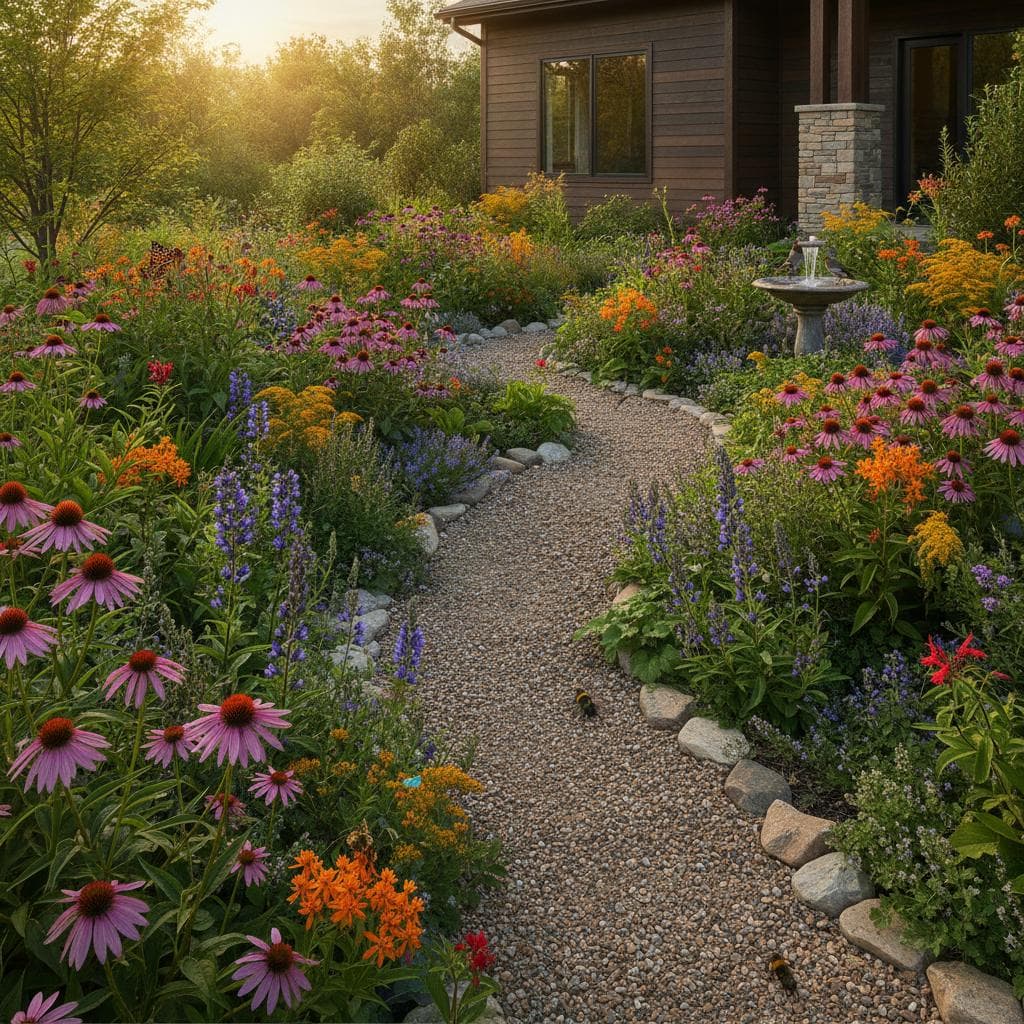
Embed stepping stones or pads for traffic paths and social zones. Opt for resilient, low-fertilizer plants suited to aridity.
Annually inspect edges to secure containment and polish.
Gravel gardens convert high-effort spaces into eco-conscious retreats. Diligent design, execution, and care yield lasting beauty, resource savings, and effortless enjoyment.