Key Points
- Japandi fusion combines Japanese Zen minimalism and Scandinavian functionality to craft tranquil outdoor spaces.
- This style emphasizes natural materials, clean lines, and intentional simplicity to foster relaxation and mindfulness.
- Design a Japandi garden by balancing symmetry with organic shapes, incorporating sustainable elements, and reducing visual clutter.
- The outcome is a serene environment that functions as a meditative retreat and a practical extension of daily life.
The Harmony of Two Design Philosophies
Japandi merges the Japanese wabi-sabi philosophy, which celebrates natural imperfection and quiet simplicity, with the Scandinavian hygge approach, focused on comfort and practical design. Both traditions value calm, restraint, and a strong connection to nature, rendering their blend perfect for outdoor areas that prioritize tranquility over ornamentation.
Evaluating Your Outdoor Space
Assess the existing layout and condition of your yard before embarking on a Japandi transformation. Spot features that already promote peace, such as established trees, natural stone elements, or subtle water accents. Identify disruptions to harmony, like dense plant clusters, synthetic ornaments, or incompatible furniture.
Use this checklist to guide your evaluation:
- Light and Shadow: Observe sunlight patterns across the area. Japanese and Scandinavian styles depend on natural light and shade to establish rhythm and depth.
- Existing Materials: Determine reusable items. Aged wood, stone paths, and gravel zones integrate seamlessly into Japandi designs.
- Scale and Proportion: Examine relationships between space sections. Zen principles rely on balanced spacing and sizing alongside material selection.
- Drainage and Soil: Test moisture retention and soil type prior to adding moss, bamboo, or grasses. Effective drainage supports plant vitality over time.
This initial review aligns all subsequent choices with the aims of harmony and deliberate minimalism.
Planning Your Japandi Garden
Thoughtful preparation and curated selections form the foundation of a Japandi garden. The final design appears unforced, but each part demands intention. Gather these essentials ahead of time:
Tools
- Shovel, rake, and tamper to prepare surfaces
- Level to achieve flat pathways and stone arrangements
- Pruning shears for accurate plant shaping
- Power washer or stiff brush to refresh current features
- Measuring tape for uniform intervals and alignments
Materials
- Natural stone or gravel as base layers
- Timber or bamboo for borders and seats
- Neutral ceramic pots or vessels
- Simple lighting with soft, warm output
- Climate-appropriate, low-care native plants
Core Design Elements
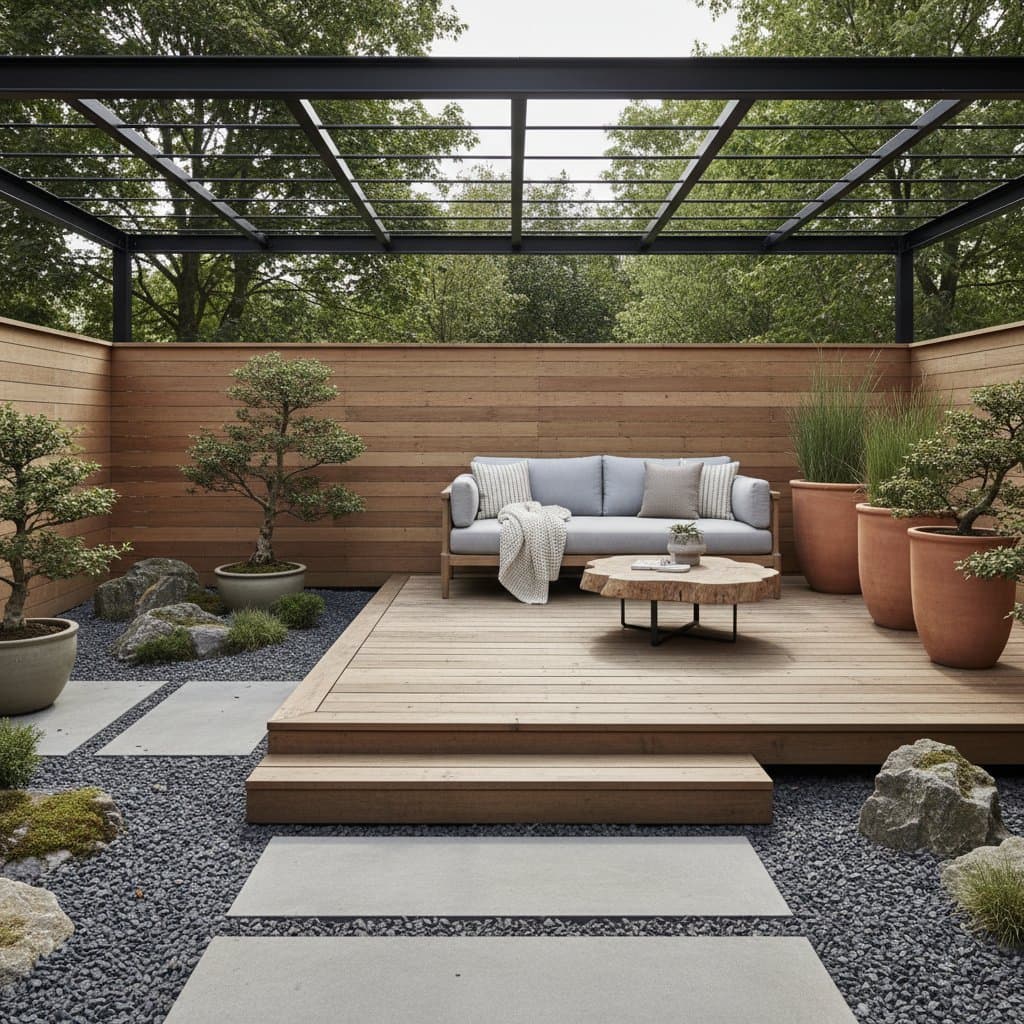
- Pathways: Arrange gravel or flat stones in flowing patterns to direct foot traffic. Space them to promote a deliberate pace, about fifteen to eighteen inches apart.
- Water Features: Incorporate a modest pool or bamboo spout for gentle sound and movement, avoiding sensory overload.
- Seating: Select low, geometric benches from raw wood or stone to encourage grounded relaxation.
- Plants: Pair Japanese maples, grasses, moss, and hardy shrubs. Restrict hues to ensure visual unity.
- Lighting: Employ understated sources like embedded LEDs or lanterns to accentuate surfaces softly.
Prioritize safety throughout. Verify that electrical setups for lights or pumps comply with outdoor specifications. Opt for non-slip surfaces near water, and consult local codes for any built features or installations.
Building the Garden Step by Step
Site Preparation
Clear weeds, litter, and excess items to declutter the area. Level the ground for optimal drainage. Firm up gravel foundations for paths and seats to avoid shifts later.
Pathways and Zones
Outline routes with string or markings. Ensure flow feels organic in a Japandi layout, steering clear of harsh angles. Install stones or gravel with even gaps suited to natural steps.
Hardscape Installation
Place large rocks, seats, or low walls first as stabilizing points. Maintain straightforward lines and basic shapes. One well-placed stone bench by water outshines scattered accents for peace.
Water and Lighting Setup
Fit fountains or pools with hidden pumps for seamless integration. Border them with polished stones. Position lights to illuminate textures like water flow or wood grain, using amber LEDs for a cozy effect.
Planting and Details
Group plants by texture and height for balance, not strict lines. Soften stone edges with moss and ferns. Position taller elements at the rear and shorter ones forward to build perspective. Stick to a palette of subdued greens, grays, and earth tones.
Conclude with sparse additions, such as a plain teak table or neutral cushions. Shun bright synthetics or intricate designs that clash with the organic vibe.
Ensuring Balance and Functionality
After completion, inspect from multiple vantage points for symmetry, scale, and clear views. A strong Japandi garden conveys composure universally. Confirm these aspects:
- Water elements run silently, free of splashes or hums.
- Paths shed rain without puddles.
- Lights offer clear sight without harsh beams.
- Plants allow room for breeze and expansion.
Monitor wood for wear and apply natural sealants periodically. Top up gravel yearly to sustain evenness.
Ongoing Care for Lasting Harmony
Japandi spaces mature elegantly with minimal intervention. Maintenance preserves essence without overhauling.
Daily and Weekly Routines
- Rake gravel to restore patterns.
- Trim plants lightly to honor their shape.
- Clear debris to uphold crisp edges.
- Service water systems and filters to avoid buildup.
- Wipe lights to keep their gentle radiance.
Seasonal Care
In cold areas, shelter movable pieces and cover bamboo. In heat, provide measured watering to combat drought. Aim to sustain poise, embracing subtle shifts over forced perfection.
Practical Strategies for Excellence
- Embrace Minimalism: Success stems from omissions as much as inclusions. Excess adornment erodes serenity.
- Layer Textures: Blend polished stones, textured wood, and plush greens for tactile interest.
- Emphasize Eco-Friendliness: Source regional materials and resilient plants to cut upkeep and ecological strain.
- Select for Patina: Favor options that gain charm through time, reducing replacement needs.
- Maintain Unity: Repeat shapes and substances to forge seamless cohesion.
Embracing the Everyday Retreat
A Japandi garden subtly beckons one to pause and notice daily nuances in light and form. It unites Japanese introspection with Nordic utility, extending the home into a purposeful haven.
As seasons pass, the space develops depth through weathered surfaces and grown foliage. This evolution honors wabi-sabi's nod to transience and hygge's trust in lasting ease. Diligent care attuned to nature's pace ensures enduring calm and delight.