Project Overview
Working Time: 2 to 4 weekends for initial setup
Total Time: One growing season for full results
Skill Level: Intermediate gardening and basic landscaping skills
Estimated Cost: Moderate, depending on plant selection and irrigation options
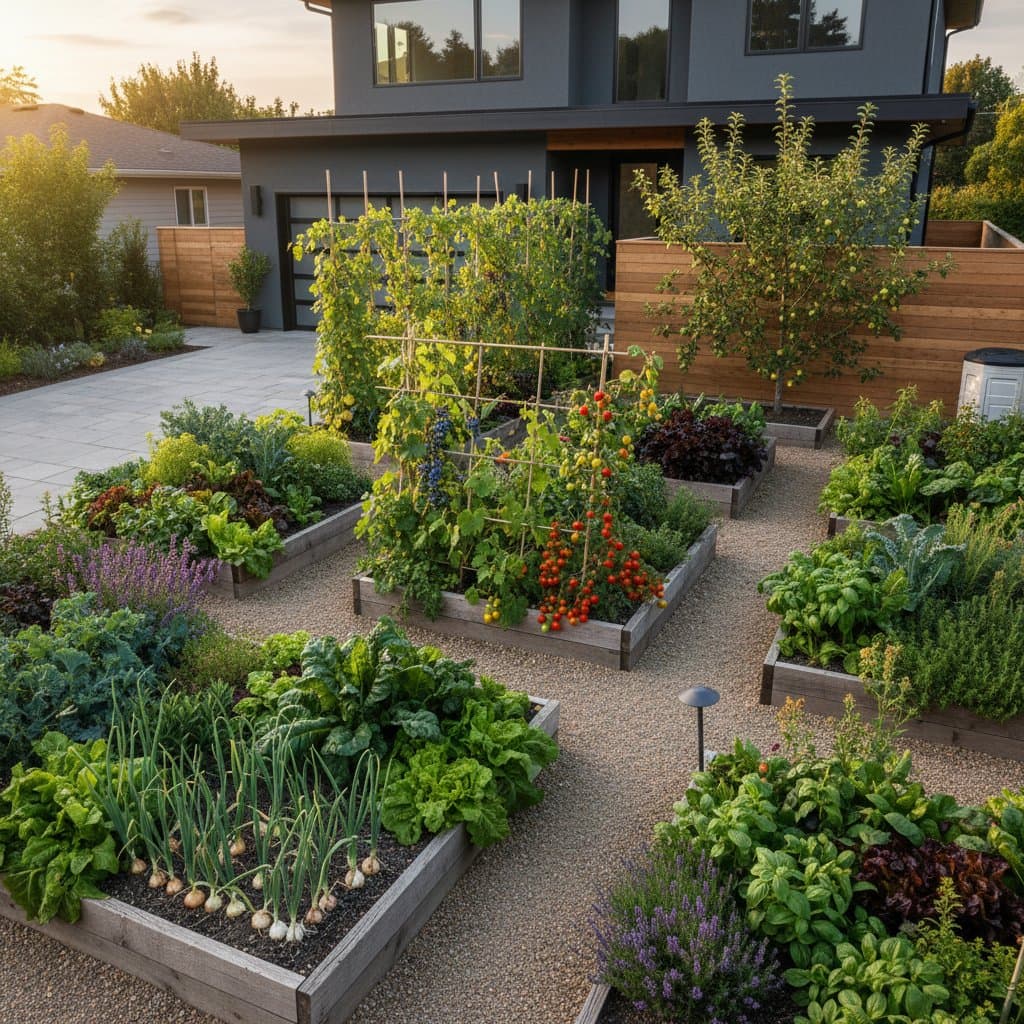
An edible front yard combines the productivity of a vegetable garden with the elegance of a traditional landscape. Homeowners can replace large lawns and ornamental shrubs with fruit trees, berry bushes, herbs, and vegetables, all arranged to complement the home's architecture. This approach, called foodscaping, attracts those who value sustainability, self-reliance, and long-term cost savings.
Foodscaping turns unused spaces into sources of fresh produce while maintaining visual appeal. Many homeowners harvest enough herbs, fruits, and vegetables to cut weekly grocery costs by 20 to 30 percent. The design focuses on native and drought-tolerant plants to build resilience against local weather changes.
Deciding Between DIY and Professional Help
Key Materials and Tools
Materials:
- Compost or aged manure to improve soil fertility
- Organic mulch or wood chips to block weeds
- Lumber for raised beds or stones for borders
- Dwarf fruit trees and berry shrubs suited to your climate zone
- Herbs and vegetables matched to local conditions
- Slow-release organic fertilizer
Tools:
- Shovel and garden fork for digging and turning soil
- Rake and hoe for smoothing surfaces and removing weeds
- Pruning shears for trimming plants
- Wheelbarrow for moving supplies
- Drip irrigation kit or garden hose for consistent watering
Use on-site materials to keep costs down. Reuse soil from old flower beds and recycle existing borders or stones. Invest in quality soil enhancers, pest-resistant plants, and water-efficient systems that support strong roots.
Step-by-Step Implementation Guide
1. Assess and Plan the Layout
Begin by checking sunlight patterns, soil type, and water access across the front yard. Most edible plants need six to eight hours of direct sun each day; options like mint or kale thrive in partial shade. Draw a detailed site map on graph paper, marking boundaries, paths, and views from the road.
Add vertical supports like trellises for climbing plants to use space efficiently without blocking sightlines. Keep pathways at least three feet wide for easy harvesting access. Account for full-grown plant sizes to prevent crowding, which reduces airflow and increases pest risks.
2. Prepare the Soil Base
Healthy, draining soil forms the foundation for thriving plants. Remove grass and tough weeds with a sod cutter or by hand. Loosen packed soil using a garden fork, working down 12 inches to aid root growth.
Mix in two to three inches of compost per square yard, incorporating it into the top six inches. For clay-heavy soil, add one inch of coarse sand or gypsum with the organic material to improve drainage. Use a home soil test kit to check pH levels; target 6.0 to 7.0, raising it with lime if too acidic or lowering it with sulfur if too alkaline.
3. Choose Plants for Form and Function
Select varieties that provide beauty and bountiful harvests. Focus on perennials for lasting framework and annuals for changing displays.
Recommended combinations include:
- Edge fillers: Compact herbs like thyme, oregano, and chives create tidy borders and supply kitchen essentials.
- Mid-level shrubs: Blueberries or currants yield berries and display colorful autumn leaves, growing three to five feet high.
- Central trees: Dwarf apples, figs, or plums add structure, light shade, and fruit, kept under eight feet with pruning.
- Space fillers: Swiss chard, rainbow carrots, or bell peppers bring color and texture to gaps.
Consult USDA hardiness zones through local extension offices for suitable choices. Select disease-resistant types to minimize care demands.
4. Position Elements for Visual Balance
Treat the layout like a layered artwork. Use flowing bed outlines and varying heights, from low ground covers to taller trees, to draw attention naturally. Place plants based on their eventual spread; for example, space dwarf trees 10 feet apart for branch room.
Lay permeable walkways with gravel or flagstone to allow easy passage and avoid compressing soil. Apply two to four inches of mulch over exposed dirt, renewing it each year to control weeds and retain moisture. This method keeps the yard neat and welcoming across seasons.
5. Set Up Irrigation and Maintenance Systems
Targeted watering keeps plants vigorous while conserving resources. Install drip lines or soaker hoses with a timer, directing water to roots to cut evaporation and disease chances. Deliver deep waterings once or twice a week, based on rain; provide about one inch each time.
Trim woody plants in late winter to improve air flow and fruiting. Pick ripe items right away to encourage more growth, and shift annual positions yearly to maintain soil nutrients. Spot-treat pests like aphids with insecticidal soap in the evening, sparing helpful insects.
Maintaining High Standards
A well-kept edible yard shows purposeful design, not neglect. Clear paths often, cut back overgrowth, and refresh borders with new mulch. Adequate spacing and fertile soil ward off typical issues; perform yearly soil tests to adjust nutrients as needed.
Avoid chemical treatments near walkways to protect soil biology and avoid residues. Practice companion planting, pairing marigolds with tomatoes to deter insects naturally. These steps create a self-regulating environment with little daily work.
Building for the Long Term
Edible landscapes mature into efficient features. Established trees and perennials use less water and feed as roots expand. Refresh mulch yearly, add compost as a spring side-dressing, and check watering setups for optimal performance.
Record observations in a notebook, tracking harvests and adjustments by season. Grow the garden slowly by introducing supportive plants, like beans that fix nitrogen beside fruit trees, to increase variety.
Proven Techniques from Experts
- Start small with a 100-square-foot test plot to gauge soil and light before full commitment.
- Plant flowers that attract pollinators, such as borage or nasturtiums, to improve yields on fruits and vegetables.
- Shape fruit trees with annual pruning to an open center, eliminating crossing limbs for superior sunlight access.
- Attach durable labels to record planting dates, types, and care instructions for future reference.
- In dry climates, build raised beds 12 inches high with built-in basins to collect and reuse rainwater.
Realizing the Benefits of Your Garden
Transforming the front yard into an edible haven blends practicality with charm. Each component delivers fresh food, lowers expenses, and earns compliments from passersby. With thoughtful planning and steady care, this area supports independence and lasting enjoyment.