The Rise of Mud Rooms in 2026 Home Design
Mud rooms have transitioned from simple utility areas to essential components of modern residences. These spaces serve as buffers between the exterior environment and interior living areas, managing the influx of outdoor elements. Designers predict that by 2026, mud rooms will appear in over 70 percent of new home builds, driven by a demand for organized, low-maintenance lifestyles.
The appeal lies in their adaptability. Homeowners appreciate how mud rooms accommodate diverse needs, from family logistics to personal hobbies. In regions with variable weather, such as the Pacific Northwest or the English countryside, these areas prove particularly valuable by preventing tracked-in moisture and debris.
Key Benefits of Incorporating a Mud Room
- Establishes a clear boundary to maintain cleanliness throughout the home
Provides customized storage solutions for daily essentials
Integrates aesthetic elements with practical features for cohesive design
Enhances property resale value through improved functionality
Draws from international influences to offer versatile styling options
Practical Advantages for Family Households
Busy schedules often lead to disarray at entry points, but a dedicated mud room addresses this challenge effectively. Family members can deposit items upon arrival without disrupting main living spaces. This setup fosters a sense of order that extends to the entire household.
Consider the daily impact. Children return from school with backpacks and sports equipment, while adults bring work bags and outerwear. A mud room centralizes these items, reducing search times and frustration. One parent noted that implementing such a space cut morning preparation by 15 minutes per person.
Interior design expert Carla Nguyen emphasizes efficiency in urban settings. She states, "A compact mud room transforms household dynamics. Focus on zoning rather than expansive square footage."
Core functions include:
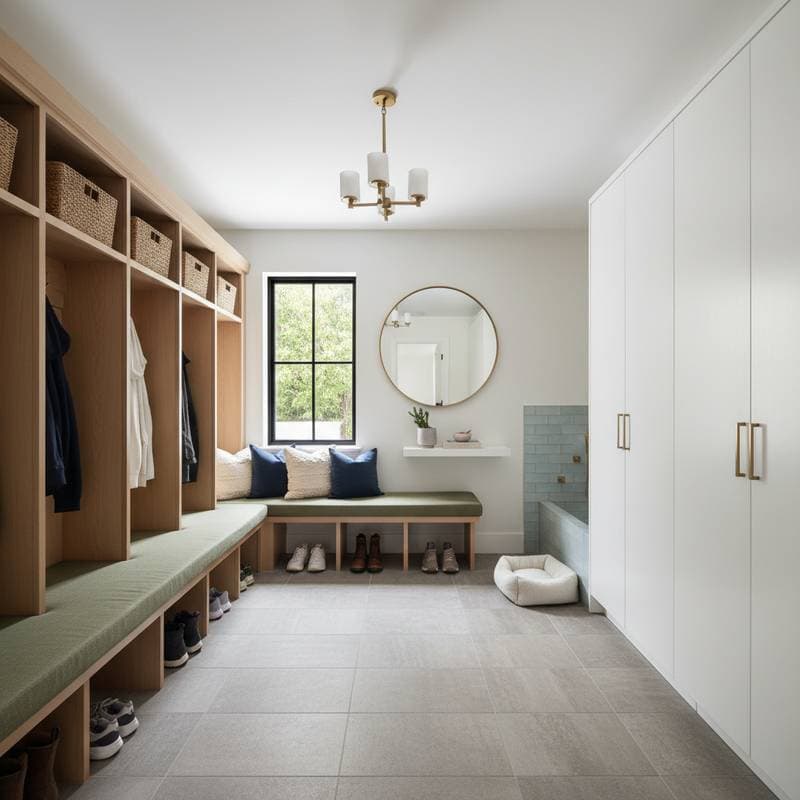
- Clutter containment: Captures soil, damp apparel, and gear at the entrance to protect interior floors.
- Organizational support: Features like hooks, compartments, and seating facilitate swift storage and retrieval.
- **Routine ** Prepares essentials for departures, promoting smoother transitions.
- Pet accommodations: Includes cleanup areas to manage animal-related messes before they spread.
- Information center: Incorporates surfaces for notes, schedules, and correspondence to streamline communication.
Strategies for Small-Scale Implementations
Space constraints do not preclude mud room benefits, especially in apartments or townhouses. Compact designs maximize utility through innovative layouts. For instance, a 4-foot-wide hallway can host wall-mounted units that serve multiple purposes.
Vertical elements prove transformative in tight areas. Tall shelving units store less frequently used items overhead, while lower sections handle daily necessities. Multifunctional benches with integrated drawers offer seating and concealed storage, ideal for shoe organization.
Protective flooring enhances durability. Select vinyl or cork mats that withstand heavy use and simplify cleaning. In a New York City apartment renovation, such adaptations created a functional zone without altering the overall footprint.
Effective small-space tactics:
- Employ wall-mounted systems to preserve floor area.
- Choose slim, cushioned benches for brief rests.
- Layer removable floor coverings for easy maintenance.
- Utilize lidded containers for discreet item concealment.
- Select adjustable fixtures that evolve with changing needs.
Retail trends reflect growing interest, with modular kits available from major suppliers. These allow customization to fit any entry configuration, emphasizing the zone's role as a transitional threshold.
Designing Functional Zones Within a Mud Room
Effective mud rooms divide into purposeful segments, each addressing specific activities. This zoning approach ensures efficiency and prevents overlap. Begin by mapping traffic patterns to position elements logically.
The entry segment handles initial arrivals. Place durable mats and trays here to collect debris immediately. Adjacent storage areas accommodate bulkier items, such as coats or umbrellas, using open shelving for visibility.
Utility-focused zones expand capabilities. A compact sink enables spot cleaning of garments or paws, while cabinets house detergents and tools. In larger setups, integrate a drying rack for air circulation.
Pet-specific areas streamline care routines. Dedicate a corner with hooks for leashes, bins for toys, and absorbent towels. This containment keeps related items accessible yet isolated.
Zoning recommendations:
- Arrival area: Mats and hooks for quick unloading.
- Storage sector: Shelves and bins for organized containment.
- Utility section: Sink or washer for immediate maintenance.
- Pet station: Dedicated supplies for animal handling.
Enhancing Daily Life Through Mud Room Integration
A thoughtfully designed mud room elevates home functionality and aesthetic appeal. Homeowners report reduced stress from streamlined entries, allowing more time for meaningful interactions. Property appraisers note that these features can increase market value by up to 5 percent in family-oriented neighborhoods.
Global inspirations add depth. Scandinavian minimalism favors clean lines and natural woods, while Mediterranean styles incorporate tiled floors and vibrant accents. Tailor the design to personal tastes for a space that reflects lifestyle priorities.
To begin, assess your entryway's potential. Measure available space and list essential functions. Consult local designers for bespoke solutions, ensuring the mud room aligns with broader home aesthetics. The result is a harmonious environment that supports effortless living well into 2026 and beyond.