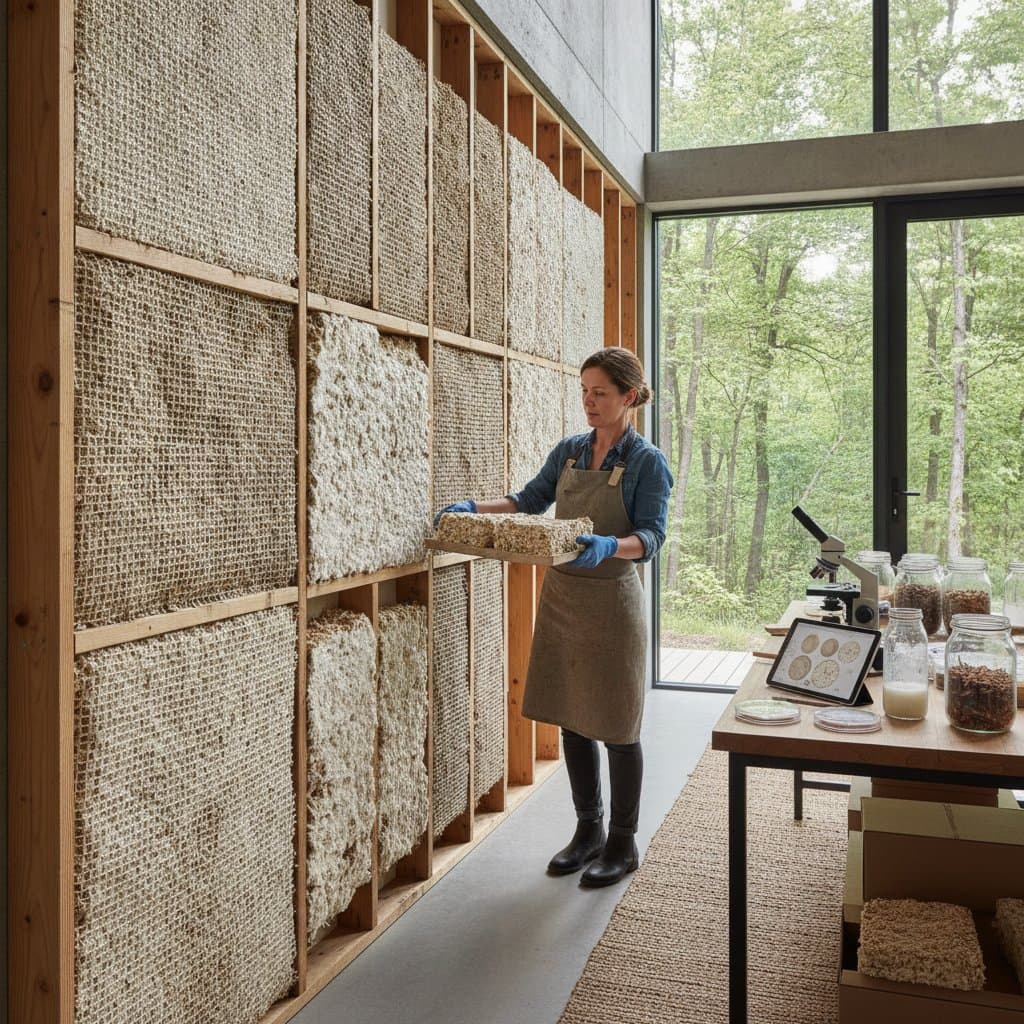
Mycelium Insulation: Sustainable Homes Built From Fungi
Mycelium offers one of the most intriguing options among sustainable materials in design. Insulation grown from fungi rather than manufactured through conventional processes provides a natural, compostable solution. This material delivers strong thermal performance along with sound absorption and fire resistance. It also helps regulate moisture levels in homes.
If you have ever considered whether your walls could reduce environmental impact, mycelium insulation presents a practical path forward.
Defining Mycelium
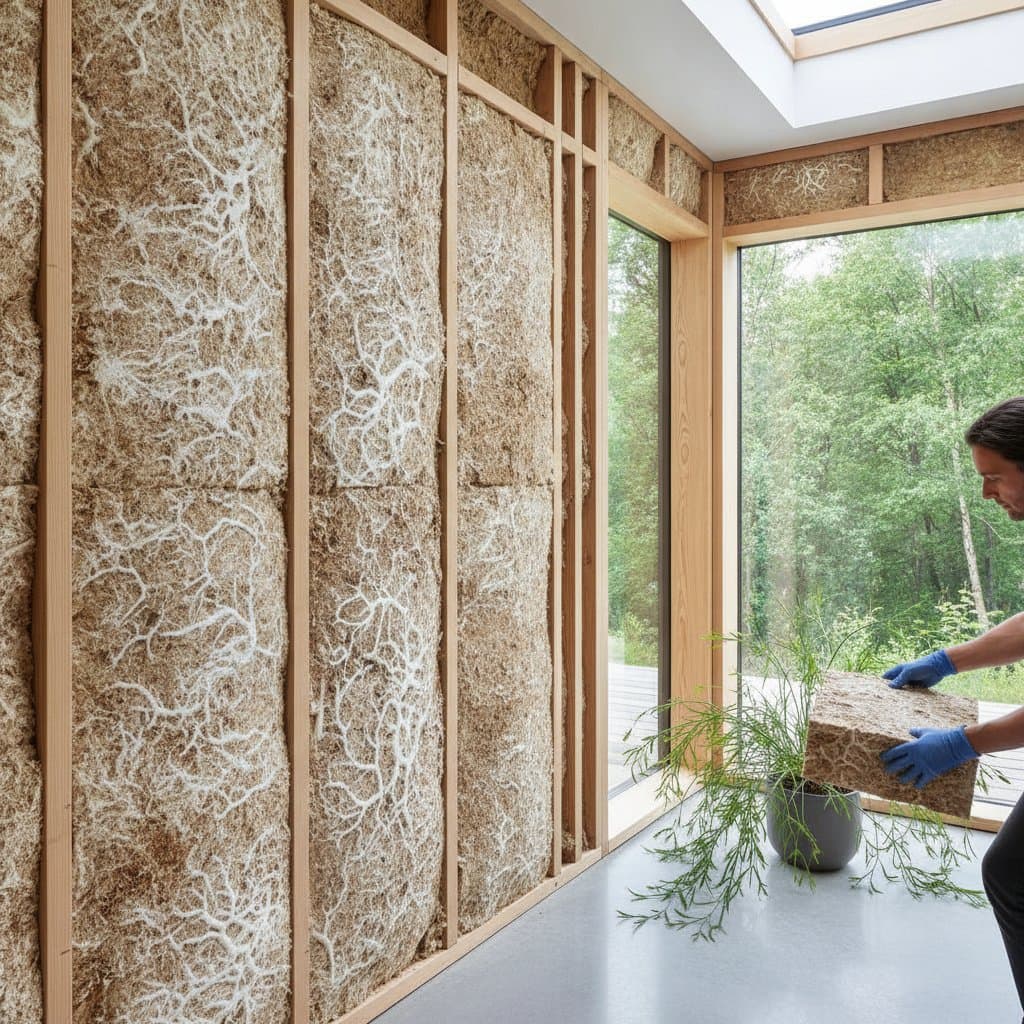
Mycelium forms the root-like network of fungi that spreads beneath mushrooms. This organism functions as nature connective tissue by weaving through soil, wood, and organic matter. Under controlled conditions, mycelium develops into dense, foam-like structures. Heat treatment then halts growth and yields a lightweight solid material that resists fire, allows breathability, and breaks down naturally.
Performance Advantages
Mycelium insulation provides several measurable benefits compared with standard options.
- Thermal performance occurs as microscopic fibers create air pockets that reduce heat transfer without synthetic binders.
- Sound absorption improves because the dense yet porous structure dampens noise effectively in home offices or shared spaces.
- Fire resistance appears naturally as the material chars rather than melts, eliminating the need for chemical additives.
- Moisture regulation happens through natural breathability that manages humidity and lowers mold risk.
- End-of-life handling allows composting without residual toxins.
Compostability distinguishes mycelium from materials that persist in landfills for centuries. The material returns nutrients to soil instead of generating long-term waste.
Production Process
Traditional insulation manufacturing consumes high energy through heat, chemicals, and fossil fuels. Mycelium insulation grows on agricultural waste such as corn husks or sawdust. Fungi consume the substrate and fill molds to produce panels or blocks with minimal energy input and almost no byproduct.
The growth process resembles a natural form of three-dimensional forming. Fungi bind particles without glues or resins. Heat treatment stabilizes the material for immediate installation.
This closed-loop approach uses waste as feedstock and permits safe decomposition at end of life. It represents genuine circular design in construction.
Aesthetic Integration
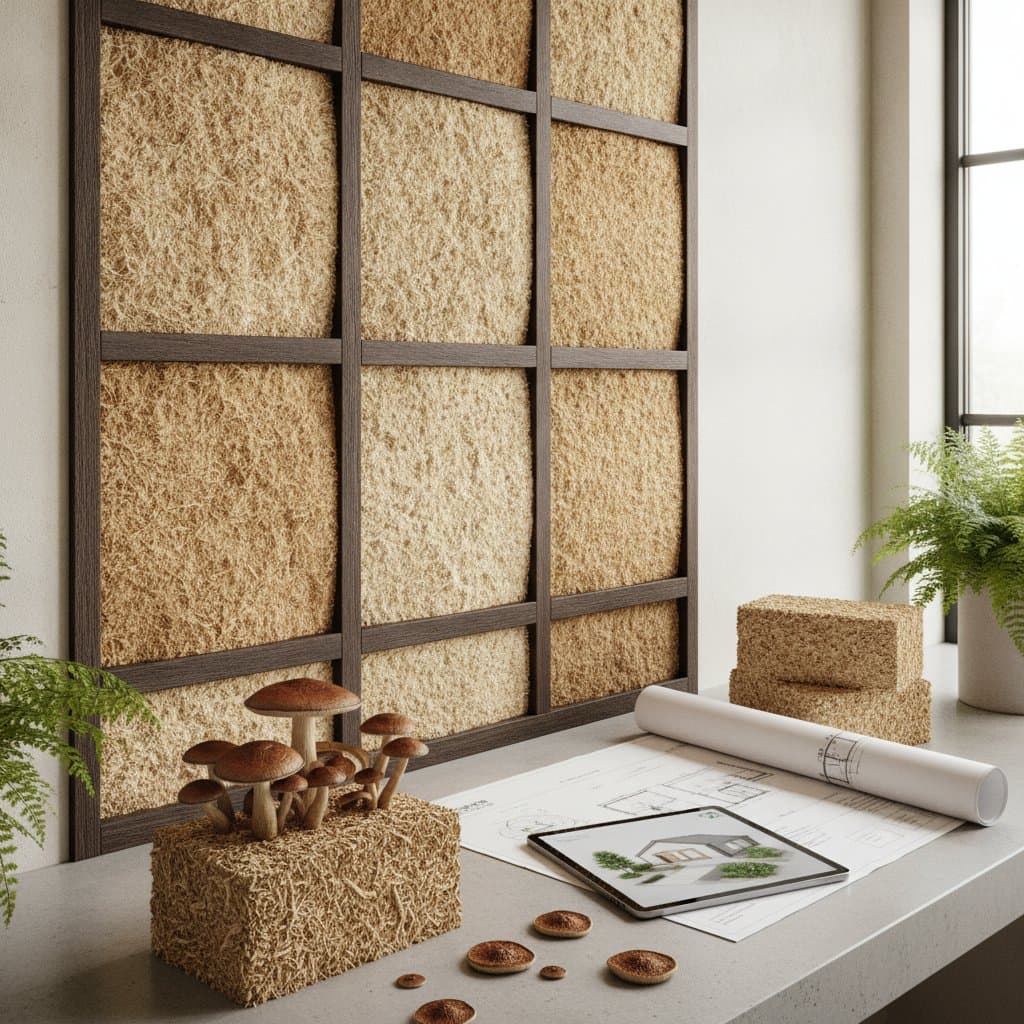
Although insulation typically remains hidden, mycelium panels now appear in visible interior applications. The surface feels soft and organic with a slightly rough texture and off-white tones ranging from cream to light tan. These qualities add warmth and authenticity to rooms.
Minimalist and biophilic designers value the direct link to natural systems. Some projects expose mycelium sections as acoustic panels or decorative elements that communicate sustainability commitments.
Current Availability
Mycelium insulation remains in testing for long-term durability, moisture performance, and standardized installation. Production volumes keep costs above fiberglass or cellulose at present. Commercial scaling is advancing as additional manufacturers enter the market.
During renovations or new construction, consult architects about bio-based insulation choices. Pilot projects already incorporate mycelium panels in eco-focused developments. Monitoring supplier availability supports timely adoption as demand increases.
Comparison With Alternatives
Mycelium insulation aligns with other natural products while adding distinct advantages.
- Sheep wool provides good insulation and moisture control yet depends on animal sourcing and may require pest treatments.
- Cellulose uses recycled paper at low cost but often includes chemical treatments for fire and pest resistance.
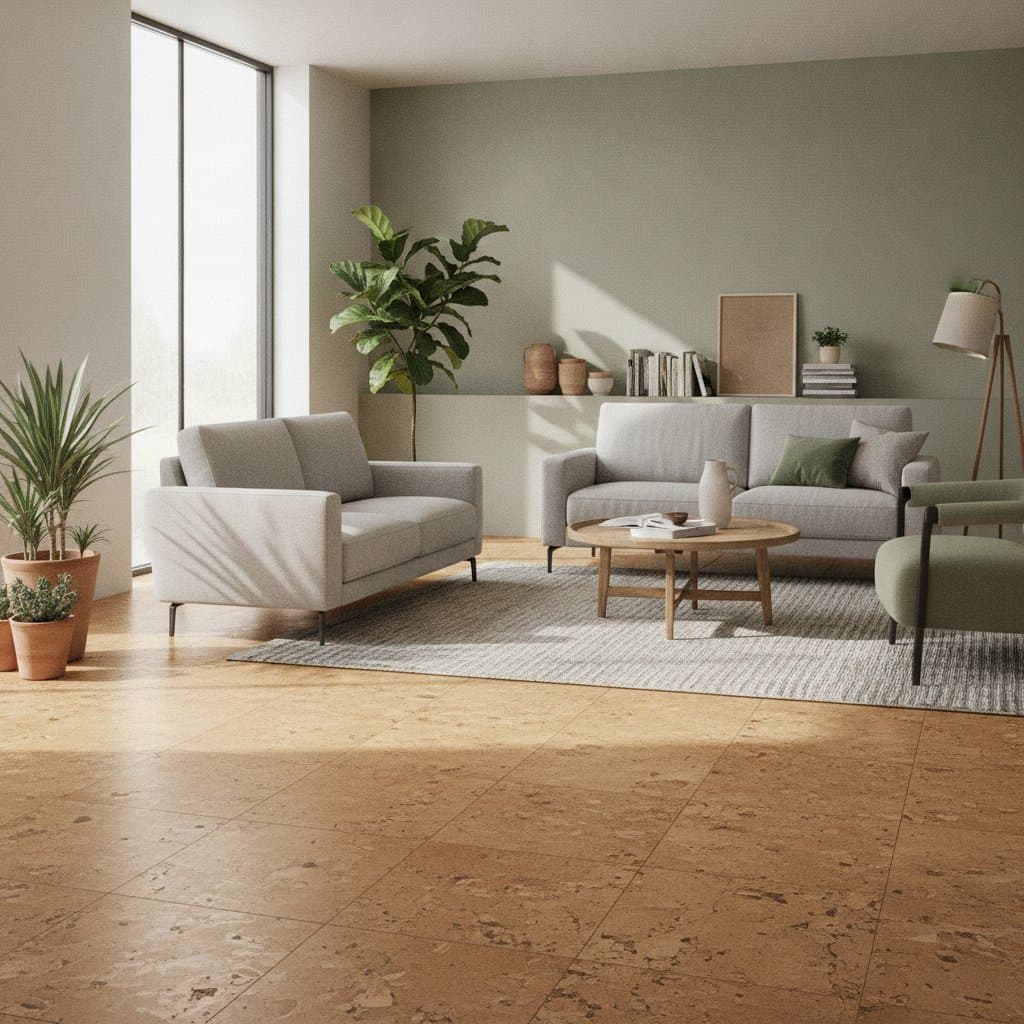
- Cork offers renewability and durability though harvesting and transport increase its carbon impact.
- Hemp delivers strong sustainability metrics but can prove expensive and regionally limited.
Mycelium combines favorable traits with minimal processing, waste utilization, and shape flexibility for custom applications.
Selecting Suppliers
Incorporating mycelium insulation connects homes to emerging standards of natural performance. Begin by contacting suppliers that focus on bio-based materials. Request details on sourcing methods, third-party certifications, and test data for thermal and fire performance. Combine mycelium with complementary choices such as lime plaster, reclaimed wood, or natural fiber textiles to maintain consistent environmental criteria throughout the project.