Acoustic Ceiling Tiles Transform Noisy Rooms
Picture this. You settle into your living room after a long day. Footsteps from above echo through the space. The refrigerator hum blends with distant conversation. Unwanted noise invades even well designed rooms. Acoustic ceiling tiles offer a stylish solution that reduces sound without sacrificing appearance.
How Sound Behaves in Rooms
Sound travels across hard surfaces and fills a space with echoes. Bare drywall, concrete, and plaster reflect waves rather than absorb them. Acoustic tiles interrupt this process. They use porous materials that trap sound energy and convert it into minimal heat. The result is a quieter and more balanced room.
These tiles benefit city apartments with thin walls and family homes where sound travels through vents. Conversations gain clarity. Music gains depth. Silence becomes restful rather than tense.
Materials That Deliver Performance
- Mineral fiber provides dense sound absorption at an accessible price.
- Wood wool combines shredded wood with cement for natural texture and eco appeal.
- Fabric wrapped foam supports custom colors and patterns with strong noise control.
- Recycled PET felt repurposes plastic into durable acoustic surfaces.
Select the material that matches priorities such as sustainability, visual flexibility, or maximum absorption.
Design Options Beyond Basic Panels
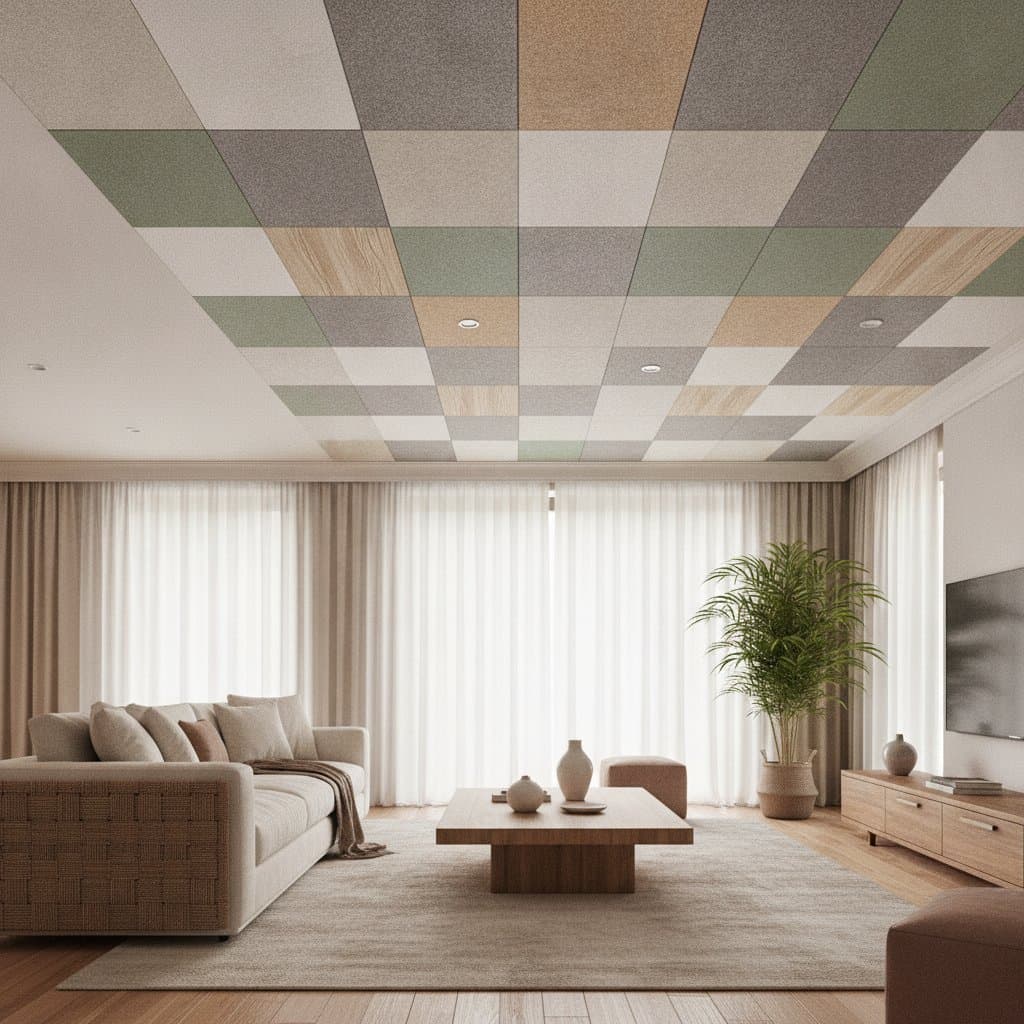
Modern acoustic tiles extend past office stereotypes. Geometric shapes create architectural interest. Minimalist finishes blend with existing decor. Some products replicate wood or stone for added warmth. Creative layouts allow ceilings to serve as design statements while improving acoustics.
Suitable Spaces for Installation
Acoustic tiles suit many residential settings.
- Open concept homes gain defined conversation zones.
- Apartments reduce sound transfer between units.
- Home offices support clearer calls and focus.
- Bedrooms promote restful conditions.
- Basements and media rooms improve sound quality.
Partial coverage above a dining area or workspace can target noise effectively.
Sustainable Material Choices
Eco conscious options include cork tiles for organic texture and renewability. Hemp fiber panels offer breathable performance with rustic appeal. Recycled felt converts plastic bottles into sound absorbing surfaces. These choices maintain design flexibility through varied shapes and colors.
Installation Steps for Homeowners
Many installations qualify as manageable projects. Follow these steps.
- Assess the ceiling structure to determine grid, adhesive, or clip methods.
- Measure and mark layout starting from the center for alignment.
- Clean the surface to promote adhesion.
- Mount tiles according to manufacturer guidance.
- Press firmly to remove air gaps.
The change in room comfort appears quickly with limited disruption.
Complementary Sound Strategies
Ceiling tiles perform best alongside other treatments. Rugs, curtains, and soft furnishings absorb additional sound. Hard surfaces such as glass and metal reflect noise. Thoughtful material mixing creates cohesive calm. Color selection further influences mood. Light tones expand space visually. Darker tones add intimacy.
Creative Layout Approaches
Consider these directions for visual impact.
- Alternate triangles or hexagons for geometric statements.
- Blend shades into an ombré gradient.
- Use wood look or cork finishes for organic warmth.
- Combine varied textures to suggest movement.
Ongoing Care and Budget Factors
Tiles require only light dusting or vacuuming. Moisture resistant versions suit kitchens and humid areas. Damaged panels replace individually. Prices range from affordable mineral fiber to premium fabric designs. Modest investments yield gains in comfort, property value, and slight insulation benefits.
Benefits for Daily Living
Noise control supports concentration, mood, and sleep. Reduced echoes allow relaxed reading and clear conversation. Music playback improves without distortion. Start with one room to observe the difference. Expansion to additional spaces follows naturally once benefits appear.
Acoustic tiles shape both sound and atmosphere. They turn intrusive echoes into subtle background elements and support a home environment that feels calm and cohesive.