Mycelium Insulation: 2026's Eco Home Game-Changer
The concept of insulating homes with mushrooms may seem unconventional, yet mycelium insulation draws increasing interest from environmentally aware homeowners. This natural substance stands ready to supplant conventional foam and fiberglass, delivering a secure, sustainable, and aesthetically pleasing method to maintain comfortable indoor temperatures. For individuals concerned with reducing energy costs while protecting the environment, grasping this development proves essential as it emerges in residential architecture.
Why Mycelium Captures Designers' Attention
Mycelium combines advanced innovation with organic origins in a manner that captivates the design community. Composed of the thread-like roots of fungi, it binds agricultural byproducts such as straw or wood chips into cohesive forms. Under regulated growth conditions, these networks solidify into lightweight panels or blocks suitable for construction.
Key Advantages of Mycelium as an Insulator
Mycelium excels through its intricate structure, where fine filaments capture air pockets to enhance thermal resistance. This property retains warmth in winter and blocks heat in summer, outperforming many synthetic alternatives. Unlike fiberglass, which poses risks of skin and respiratory irritation, mycelium requires no special handling gear during installation.
Designer Theo Marks from Studio Habitat notes, “People often express surprise at the stability of a fungus-based material. Once dried and treated, it performs similarly to cork or dense foam.” Additionally, it manages moisture levels to inhibit mold, while serving as an acoustic dampener ideal for noise-sensitive urban dwellings. Laboratory evaluations confirm its thermal efficiency matches industry standards, augmented by eco-friendly attributes like low-water cultivation on waste substrates and natural decomposition.
The Production Process for Mycelium Insulation
Creating mycelium insulation involves a straightforward, low-impact method. Producers combine mycelium spores with substrates like sawdust or hemp hurds, then pack the blend into molds. Over a few days, the fungi colonize the material, forming a uniform mass as they metabolize the nutrients.
Subsequent heat treatment halts growth, resulting in a sturdy, desiccated panel. Emerging manufacturers develop interlocking boards that align with conventional framing systems. Others innovate with self-installable tiles, akin to rigid foam sheets, fostering localized production that minimizes shipping distances and bolsters community-based resource cycles.
Broader Benefits Extending Past Efficiency
Beyond thermal performance, mycelium supports occupant well-being by eliminating chemical emissions. Free from volatile organic compounds and petroleum derivatives, it fosters superior air quality and mitigates health risks associated with traditional insulators. Families with allergies or sensitivities particularly appreciate this purity.
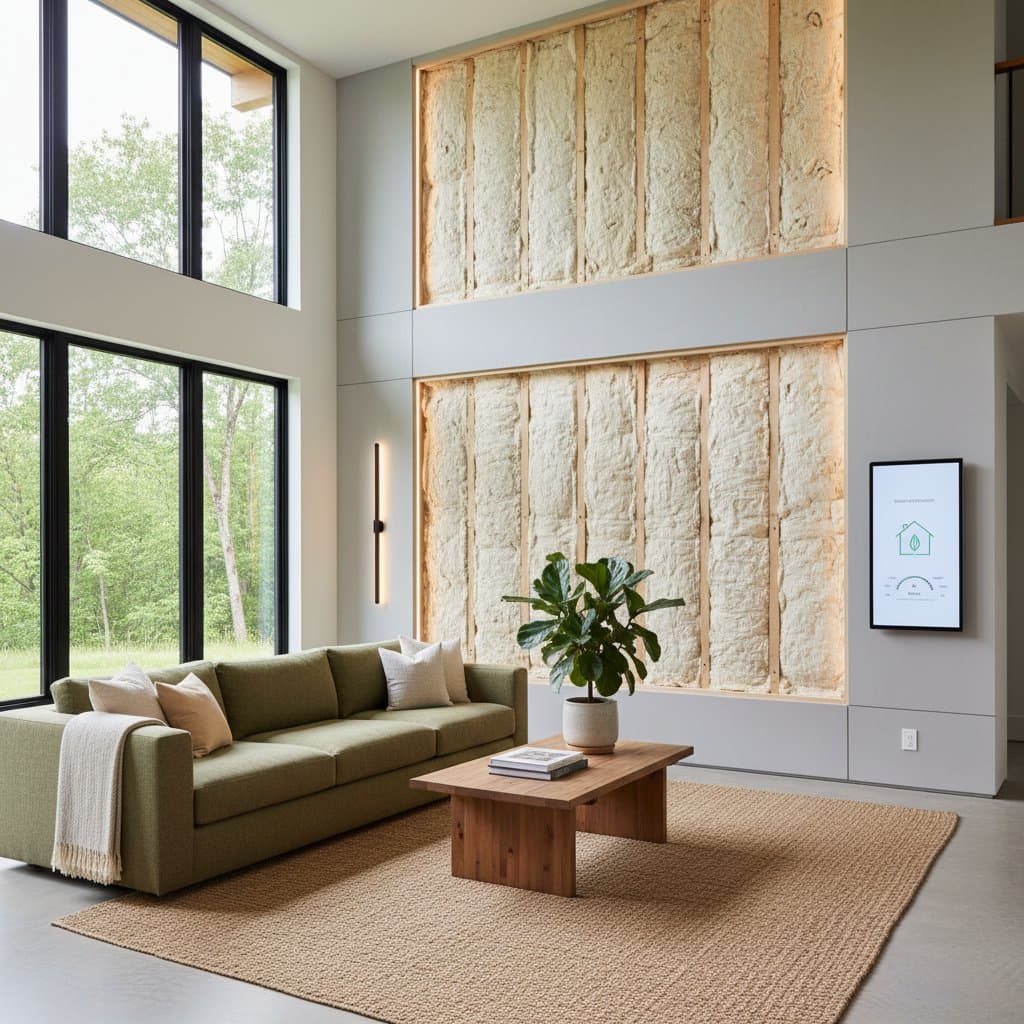
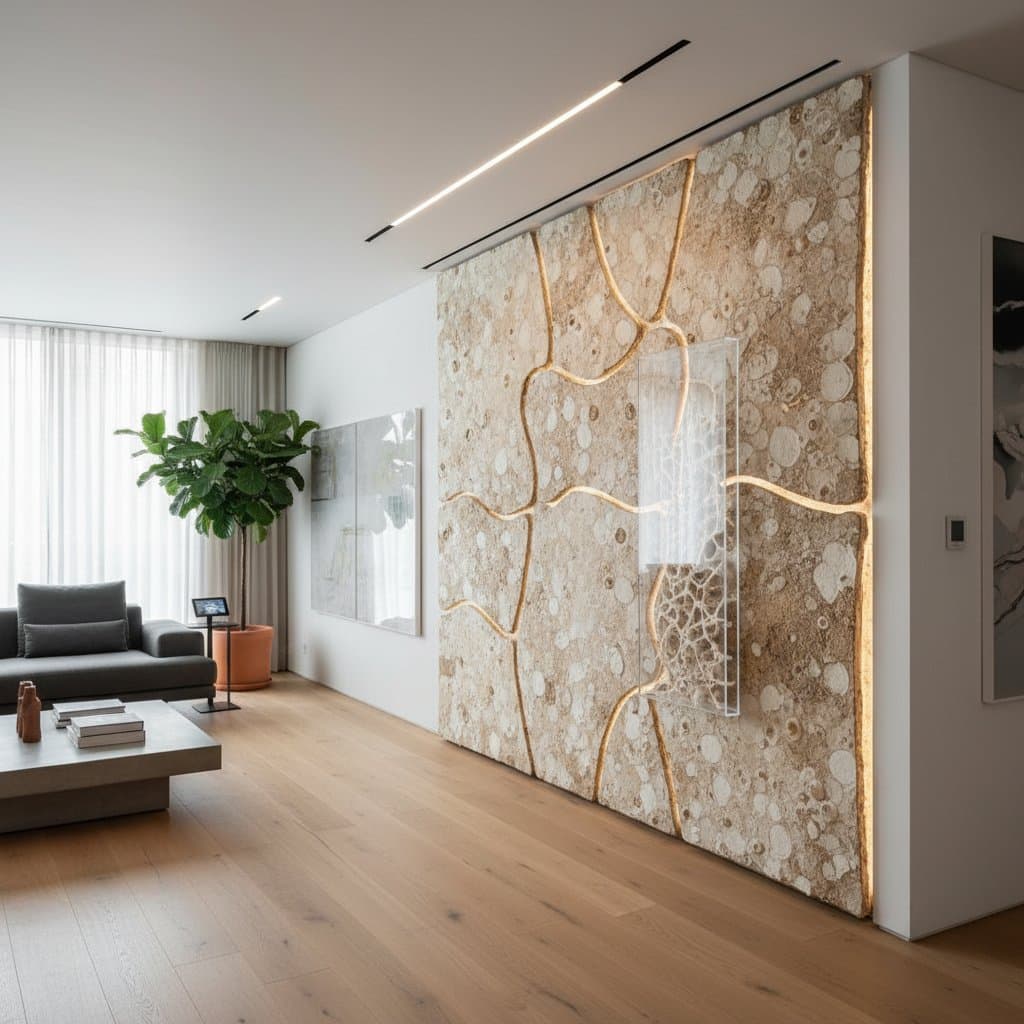
Mycelium also sequesters carbon during its growth phase, locking away atmospheric CO2 within the final product. Designer Marina Chen of Eco Studio Interiors observes, “Few construction materials achieve zero emissions while capturing carbon; mycelium accomplishes both.” Aesthetically, its earthy texture suits exposed applications in contemporary or biophilic designs, evolving subtly over time to enhance room ambiance without synthetic uniformity.
Addressing Practical Challenges Ahead
As with any nascent technology, mycelium faces production and distribution obstacles. Large-volume manufacturing remains limited, leading to regional availability gaps and premiums over established options like fiberglass. Prices should decline with scaled adoption and refined processes.
Ongoing assessments affirm its resilience against insects and fire, though proper moisture control during setup remains crucial. Home renovation expert James Hill recommends, “Treat it like any natural material. Keep moisture out, and it will last for decades.” Integrating vapor barriers and sealants ensures decades of reliable service. Prospective users should consult contractors familiar with innovative suppliers or academic prototypes to gauge feasibility for upcoming projects.
Steps to Incorporate Mycelium in Your Space
Those eager to adopt mycelium can begin with targeted applications. Seek out boards designed for attics, outbuildings, or minor wall sections from specialized vendors. Online platforms offer trial kits for hands-on evaluation of insulation qualities prior to broader use.
Renters might opt for removable acoustic panels or decorative accents that improve soundproofing and climate control without structural changes. These lightweight elements install easily and remove cleanly, providing tangible eco-upgrades in leased properties. Such incremental steps demonstrate the material's versatility across living situations.
Creative Applications in Design Practice
Professionals extend mycelium's utility into diverse elements like suspended ceilings, structural furniture components, and sculptural partitions. Its tactile surface complements materials such as reclaimed timber, earthen plasters, and woven textiles, cultivating serene, nature-inspired environments.
Architect Riley Grant from TerraForm Studio explains, “We incorporate mycelium to convey a story of integration. It underscores that residences form part of larger ecological networks.” This approach signals a paradigm shift toward regenerative building practices that prioritize renewal over resource extraction. Even modest integrations prompt reflection on sustainable choices in everyday spaces.
Embracing Mycelium for Lasting Home Wellness
Selecting mycelium insulation represents a commitment to holistic living that prioritizes health, efficiency, and planetary stewardship. As residential upgrades loom on the horizon, engaging with sustainable specialists or sourcing pilot products positions individuals at the forefront of green innovation.
Explore compatibility through consultations or pilot installations to witness its contributions firsthand. By choosing materials that align performance with ecological integrity, homes evolve into resilient sanctuaries that sustain both inhabitants and the environment.