Mycelium Insulation: Sustainable Revolution for Modern Homes
Dek: Mycelium insulation reshapes perspectives on home comfort, energy savings, and environmental impact. Learn how this natural innovation creates warmer, quieter, and more eco-conscious living spaces.
What Exactly Is Mycelium Insulation?
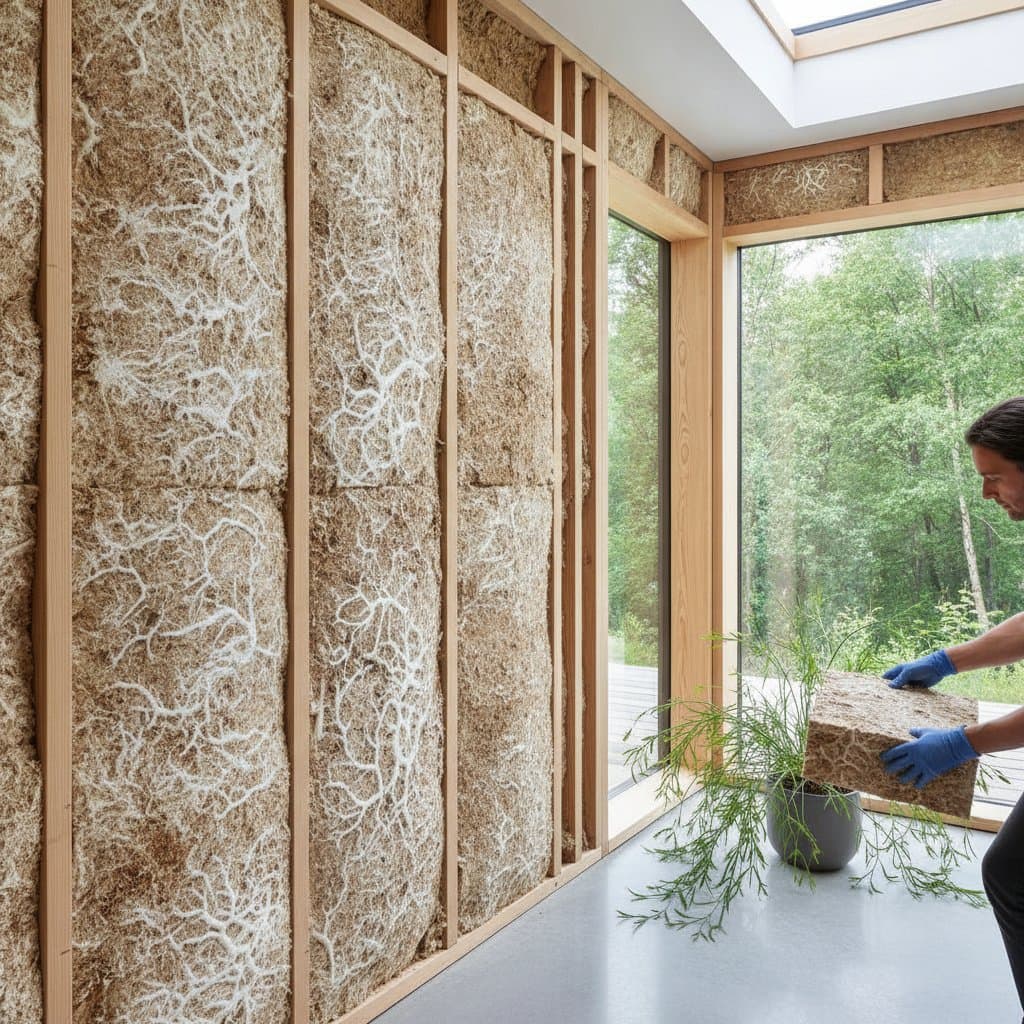
Mycelium forms the root-like structure of fungi, which naturally interconnects organic materials. Under controlled environments, this network develops into sturdy, lightweight panels ideal for insulation purposes. The production begins with substrates such as corn husks, hemp fibers, or wood chips, serving as nourishment for the mycelium to expand and bind the components into a cohesive, foam-resembling structure.
After growth completes, the material undergoes heat treatment to halt further development, resulting in a durable, mold-resistant product. Visually similar to compressed cork or rigid foam boards, mycelium insulation remains entirely bio-based and devoid of synthetic additives. Its non-toxic composition ensures safety for installation crews and residents alike, minimizing health risks associated with chemical exposure.
Comparing Mycelium to Traditional Materials
Evaluating insulation choices requires examining mycelium alongside established alternatives like fiberglass, spray foam, and mineral wool to highlight distinct advantages.
Fiberglass provides low-cost installation and broad availability, yet it poses irritation risks to skin and respiratory systems during handling. Compression or moisture exposure diminishes its insulating effectiveness over time. Spray foam delivers excellent thermal barriers through expansion, but its petroleum-derived formula contributes to volatile organic compound emissions that persist indoors.
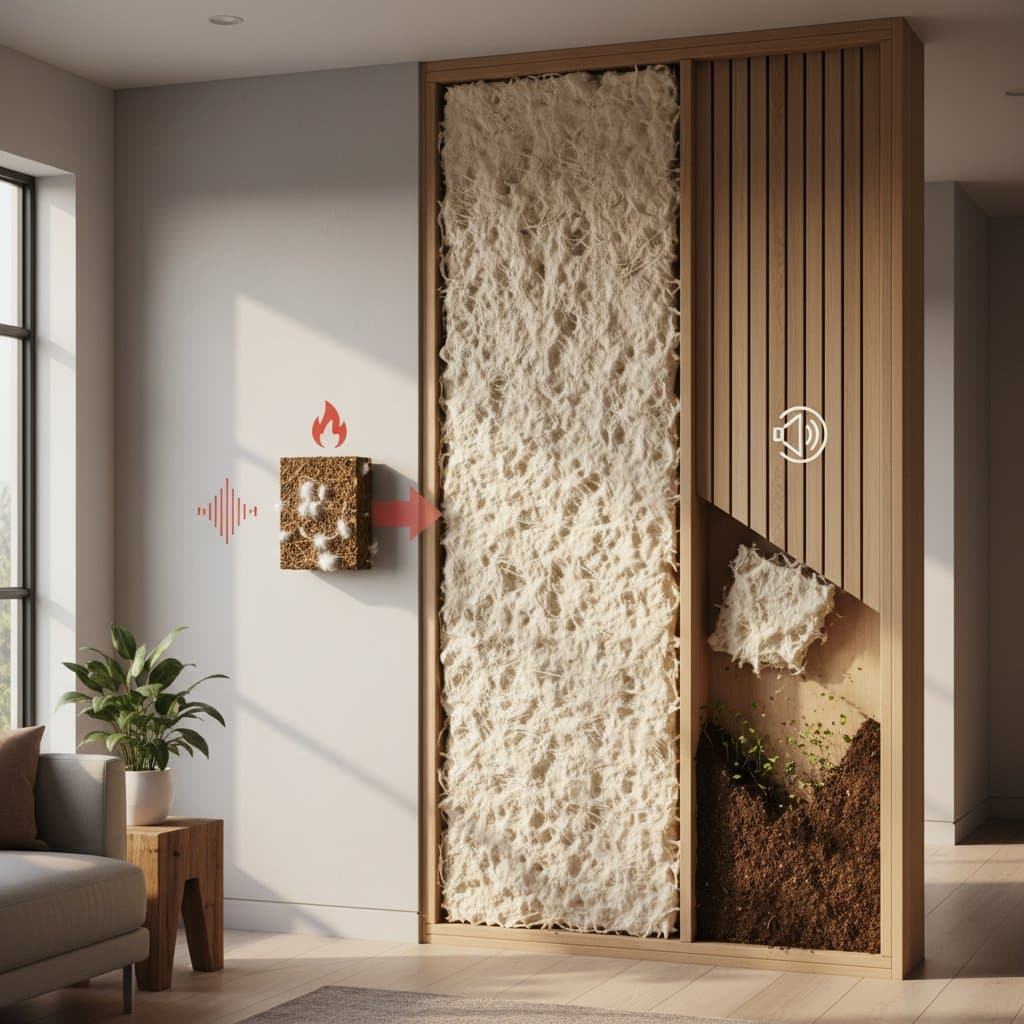
Mineral wool withstands high temperatures and offers longevity, although manufacturing demands significant energy inputs and releases particulates. In contrast, mycelium insulation emerges as fully renewable, compostable at end-of-life, and inherently fire-resistant without chemical treatments. Production involves minimal energy, while it excels in both thermal regulation and sound absorption, often surpassing conventional options in multi-functional performance.
Architect Daniel Cho of EcoBuild Collective observed, “Mycelium insulation does not merely match traditional materials; it elevates standards for what insulation should achieve. This innovation demonstrates that ecological priorities align seamlessly with practical demands.”
For typical home applications, mycelium arrives in panel or block formats that integrate easily with standard framing. Installers position these between wall studs, beneath drywall, or within cavity systems, mirroring rigid foam methods. The primary distinctions appear in sourcing sustainability and disposal simplicity, rather than operational mechanics.
How to Integrate Mycelium Insulation into Your Next Project
Incorporating mycelium insulation suits both new constructions and renovations, provided planners account for its unique properties early in the design phase. Collaborate with professionals experienced in bio-based materials to optimize outcomes.
Follow these steps for successful implementation:
-
Schedule an Initial Consultation: Inquire with architects or contractors about prior experience with mycelium products. Suppliers frequently offer detailed installation manuals, on-site demonstrations, or certification programs to build confidence.
-
Select Appropriate Formats: Manufacturers provide options including rigid panels for walls, flexible mats for irregular spaces, or molded composites for custom fits. Assess project specifications, such as cavity depth or load requirements, to choose the best variant.
-
Combine with Compatible Systems: Mycelium manages humidity effectively on its own, so integrate it with permeable finishes like lime-based plasters, earthen walls, or low-VOC paints. Avoid impermeable barriers that trap moisture and compromise breathability.
-
Leverage Acoustic Benefits: In homes with multiple stories or adjacent units, apply mycelium in floor assemblies or partition walls to dampen noise transmission. Test sound reduction ratings from specific products to meet local building codes.
-
Plan for Future Adaptability: The compostable quality supports easy removal during updates, reducing landfill contributions. Calculate lifecycle costs, including energy rebates, to justify investment in variable climates.
Begin with modest trials, such as insulating an attic space or outdoor structure, to evaluate real-world efficacy before scaling to full-home applications. This approach builds familiarity without overwhelming budgets.
Maintenance and Performance Over Time
Mycelium insulation demands minimal ongoing care once properly installed. Its inherent stability resists pests, and it preserves thermal resistance, measured by R-value, under dry conditions. Protected within building envelopes, the material endures for 30 years or more, outperforming many synthetics in longevity.
Routine inspections focus on preventing water intrusion through roof seals or foundation drains. In damp regions, incorporate ventilation strategies to maintain optimal humidity levels below 60 percent. Regular attic or crawlspace checks, performed annually, identify potential issues early.
Energy consultant Maria Lopez remarked, “Many assume natural materials lack robustness, yet mycelium consistently exceeds expectations. Proper installation ensures resilience, even in challenging humid conditions.”
Performance data from field studies confirms consistent energy reductions of 15 to 25 percent in heated or cooled spaces. Acoustic improvements reduce ambient noise by up to 50 percent, enhancing overall livability without additional treatments.
Where to Find It
Mycelium insulation gains traction through dedicated producers specializing in bio-materials for construction. Source panels from established brands via green building outlets or online platforms that ship nationwide. Lightweight design facilitates cost-effective transport, though regional stock may fluctuate based on production capacity.
For introductory exposure, explore mycelium-derived acoustic tiles or room dividers available at design stores. These items showcase the material's texture and benefits in low-commitment settings, such as home offices or media rooms. Verify certifications like Cradle to Cradle for assured quality and environmental claims.
As adoption grows, expect wider distribution through major suppliers, potentially lowering prices through economies of scale.
Embracing Mycelium for Lasting Home Benefits
Mycelium insulation captivates by bridging natural origins with contemporary functionality, fostering deeper connections between inhabitants and their environments. This material proves that high-performing builds need not rely on industrial processes; bio-sourced alternatives deliver equivalent or superior results.
Homeowners pursuing healthier, quieter, and more efficient spaces find mycelium a strategic addition. It aligns with goals of reduced carbon footprints while providing tangible comforts like stable temperatures and cleaner air. From partial retrofits to comprehensive overhauls, selecting mycelium advances designs that honor both people and planet.
Ultimately, this choice nurtures homes as dynamic entities, where materials contribute to well-being across generations. Mycelium exemplifies how innovation rooted in nature elevates everyday living.