Assessment: Evaluating Your Space and Goals
Prior to incorporating mycelium panels, assess environmental conditions and functional objectives. Mycelium thrives in environments with consistent temperature and humidity.
1. Environmental Suitability
- Maintain moderate indoor temperatures, avoiding prolonged direct moisture exposure.
- Keep relative humidity stable to prevent excessive drying or condensation buildup.
- Ensure gentle, consistent airflow to avoid localized moisture accumulation.
2. Application Goals
- For aesthetic purposes, apply as decorative wall coverings or art panels.
- To improve acoustics, install as sound-absorbing treatments in offices or studios.
- Upgrade insulation by layering panels on interior walls to boost energy efficiency.
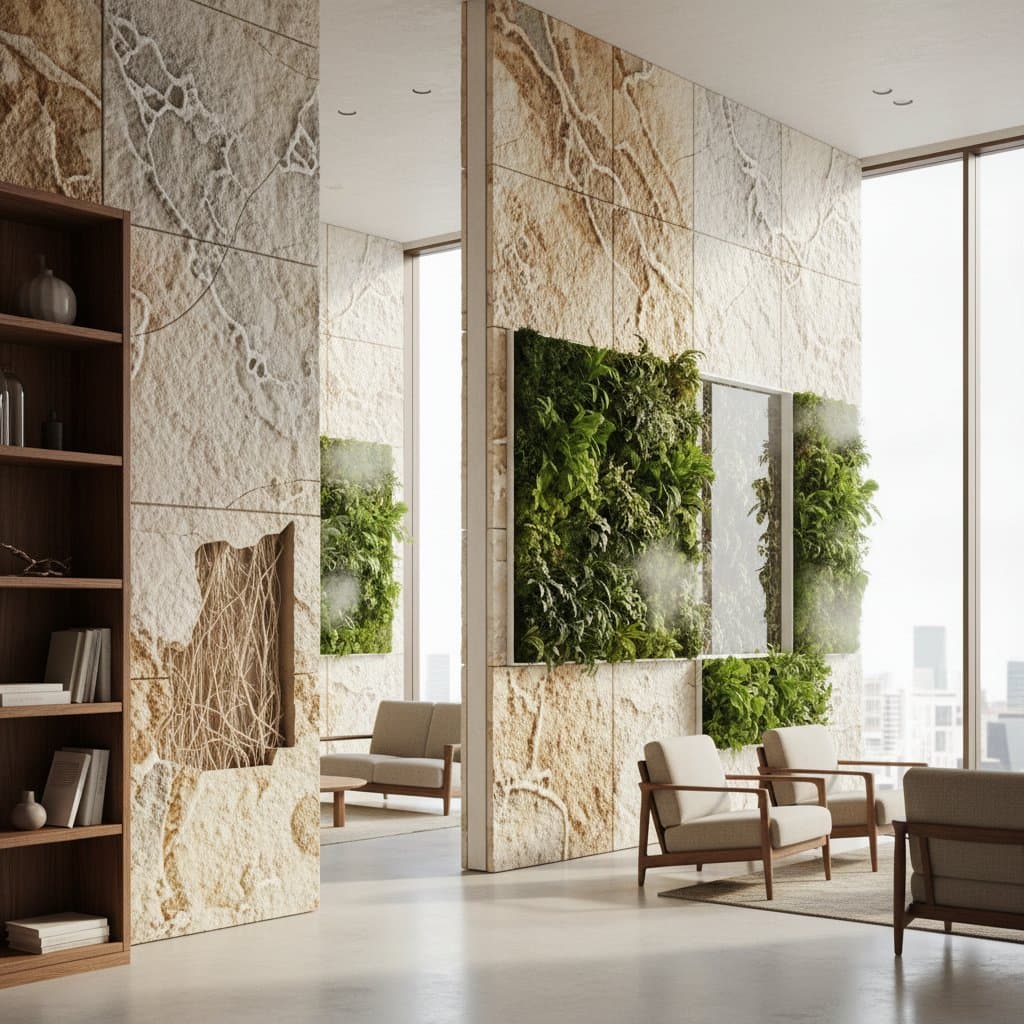
- Create living wall systems where panels stay biologically active for air filtration and humidity control.
3. Structural Considerations
- Inspect existing wall framing, moisture barriers, and vapor control layers for integrity.
- Confirm surfaces remain clean, dry, and free of mold or damage.
- Verify that walls support the added weight of installed panels.
This evaluation phase identifies suitability for dry mycelium composites versus living panels requiring ongoing hydration.
Implementation: Step-by-Step Installation Process
1. Prepare the Substrate
Clean the wall surface to remove dust, oils, or prior finishes that could hinder adhesion. For living systems, install a moisture barrier membrane to safeguard the structure while permitting vapor diffusion. Decorative or acoustic setups benefit from a basic primer application.
2. Measure and Cut Panels
Position panels flat and mark dimensions with a straightedge. Use a utility knife or fine-toothed saw for precise cuts, preserving clean edges on the fibrous material akin to cork or dense foam.
3. Dry-Fit and Layout
Assemble panels on the floor to verify fit and pattern. Incorporate 3-millimeter expansion gaps between panels, particularly for living versions subject to minor moisture-induced shifts.
4. Mounting
Select mounting based on the specific application:
- Adhesive Installation: Apply natural, low-VOC adhesive evenly to panel backs and press securely against the wall.
- Mechanical Fastening: Secure panels to furring strips with screws or nails, distributing fasteners uniformly for load balance; suitable for removable or extensive installations.
- Living Wall Framework: Attach active panels to open-backed frames facilitating airflow and periodic misting.
5. Sealing and Finishing
Apply breathable coatings like limewash, milk paint, or beeswax to dry panels. Steer clear of synthetic paints that retain moisture. Leave living walls unsealed to support moisture and air exchange. Enhance visuals by adding moss or small plants for bioactivity.
6. Conditioning and Stabilization
Mist living panels lightly over several days to promote stabilization. Sustain moderate humidity and shield from direct sunlight. Allow dry panels 24 hours for adhesives and finishes to set before resuming normal use.
Maintenance: Sustaining the Living System
Stabilized mycelium panels demand little upkeep, yet consistent care prolongs lifespan and preserves aesthetics.
For Dry Panels
- Clean surfaces with a soft, dry cloth or vacuum brush attachment; refrain from water or harsh cleaners.
- Repair minor damage by filling with a mixture of fine sawdust and natural glue, then reapply original finish.
- Anticipate several years of service in stable conditions; replace compromised sections as needed.
For Living Panels
- Mist surfaces every few days to keep them lightly damp without saturation.
- Promote gentle ventilation to deter stagnation.
- Trim excess growth or spores with sterilized scissors if fuzz appears, and adjust humidity accordingly.
- Apply diluted organic nutrient spray quarterly to bolster vitality.
Living walls often exhibit gradual color shifts, imparting an organic patina reminiscent of weathered wood or stone.
Cost and Value Considerations
Mycelium panels exceed the cost of conventional drywall or foam due to cultivation demands and nascent production scales. However, they impose a lighter environmental burden. Advancing technology promises cost reductions through expanded manufacturing.
Factor in long-term benefits such as enhanced insulation savings, minimized waste fees, and reduced ecological impact. Improved air quality lowers HVAC upkeep expenses. These panels aid sustainable certifications and energy upgrades with quantifiable credits.
Opt for DIY to cut labor costs versus professional installation. Engage bio-design experts for extensive living walls to optimize moisture and microbial equilibrium.
Integration with Broader Home Systems
Mycelium panels complement sustainable elements like bamboo framing, recycled wood accents, and low-VOC paints. Within comprehensive renovations, they foster ecosystems regulating temperature, humidity, and sound.
In multi-room setups, pair with rainwater harvesting or greywater systems for living panel irrigation. Employ as modular components in prefabricated walls for straightforward swaps or repositioning.
For renewable energy pursuits, align with solar ventilation to regulate humidity efficiently while curbing power use.
Pro Tips for Success
- Initiate with a pilot installation to monitor environmental interactions prior to full commitment.
- Employ solely breathable finishes and natural adhesives to avoid impeding mycelium respiration.
- Document maintenance details including humidity, temperature, and cleaning schedules.
- Choose companion plants like ferns or mosses that match mycelium humidity preferences.
- Quarantine any affected panels promptly to halt potential spread.
These strategies preserve functionality and allure in living wall projects.
Advancing Sustainable Design
Mycelium panels herald a shift toward regenerative interiors, blending biological innovation with practical home enhancement. By 2026, widespread adoption promises to supplant foam insulation, yielding spaces that breathe, purify, and endure. Homeowners embracing this technology contribute to a greener built environment while enjoying tangible wellness gains.