The Shift from Grass to Produce in an Era of Rising Costs
Homeowners increasingly question the value of maintaining a front lawn that demands resources without return. The concept of converting such spaces into edible gardens addresses escalating grocery prices and constrained budgets effectively. This approach transforms unused yard areas into productive assets that yield fresh vegetables and herbs.
Concerns about appearance or neighbor reactions often deter people from this change. Proper design and upkeep, however, ensure an edible front yard rivals traditional landscapes in beauty while generating substantial savings on seasonal produce. Professionals in landscaping recognize this as a strategic evolution, utilizing existing space and soil more efficiently to produce tangible benefits.
Understanding the Demands of Front Yard Edible Gardening
Evaluating Your Yard for Optimal Planting
Observe sunlight patterns across your front yard at various times to identify suitable areas. Vegetables typically require a minimum of six hours of direct sun daily. In shaded spots from trees or structures, select shade-tolerant options like spinach, kale, or mint to maximize productivity.
Test soil composition to address specific needs. Incorporate compost into clay soils for better drainage, and into sandy soils for improved water retention. Affordable kits from garden suppliers reveal pH levels, guiding amendments such as lime for acidity or sulfur for alkalinity.
Review local ordinances and community guidelines before proceeding. Restrictions may apply to visible gardens; integrate ornamental elements like flowering herbs to create a cohesive, appealing design that complies with standards.
Essential Tools and Materials for Setup
Basic equipment suffices for most projects, focusing on durability and functionality:
- Shovel and spade for excavation and border creation
- Garden fork to aerate dense soil
- Wheelbarrow to transport amendments and debris
- Rake for smoothing prepared beds
- Pruning shears for precise plant care
- Drip irrigation or soaker hose for targeted watering
Key materials include:
- Compost or well-rotted manure to boost soil fertility
- Organic mulch like straw to conserve moisture
- Raised bed kits from untreated lumber, bricks, or corrugated metal if native soil proves inadequate
- Seeds or transplants for vegetables and herbs
- Edging stones or bricks to delineate sections
Designing an Effective Garden Layout
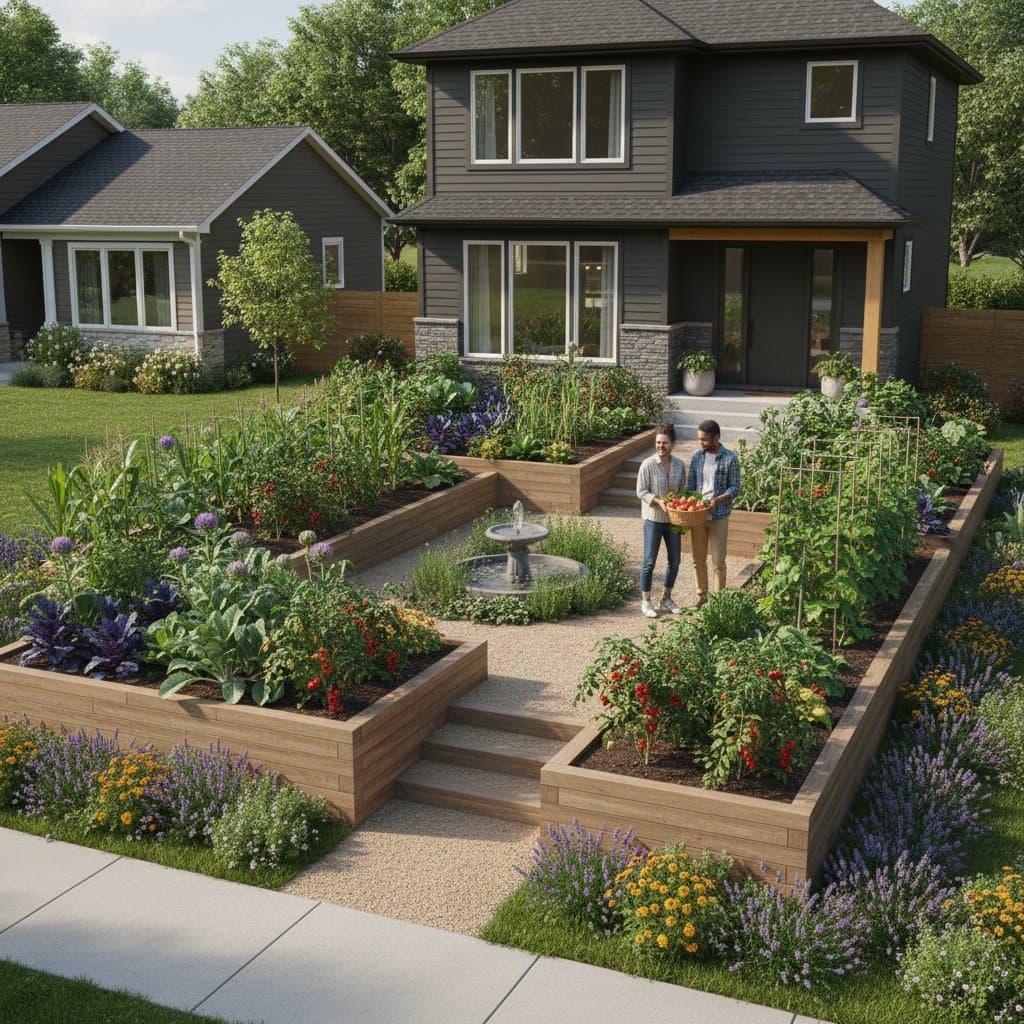
Divide the yard into organized zones that combine aesthetics with utility. Install bordered beds using wood or stone for clean lines, and incorporate pathways of gravel, bark, or pavers for easy access.
Select a central feature such as a compact fruit tree, upright herb like sage, or a trellis supporting vining crops including cucumbers or pole beans. Position taller plants like peppers or sunflowers in rear or middle areas, with ground-level varieties such as radishes and parsley along borders.
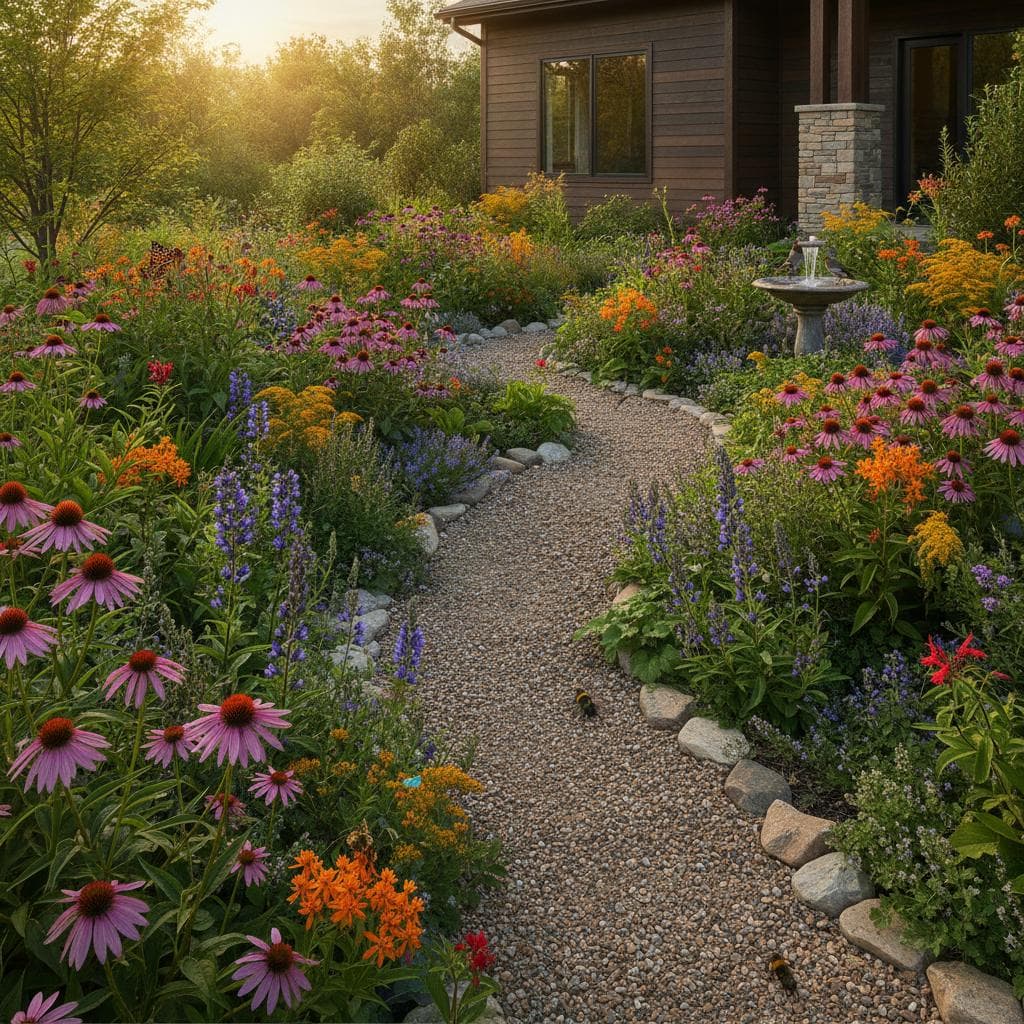
Incorporate edible blooms like violas or borage for vibrant color and pest deterrence while drawing beneficial insects. Maintain visual harmony by interspersing non-edible accents such as sedum or hostas, ensuring the overall effect appears curated rather than haphazard.
Steps for Planting and Ongoing Care
Plant once soil temperatures stabilize, typically after the last frost in spring. Adhere to recommended spacing on seed packets to prevent competition, which invites pathogens and diminishes harvests. For example, space tomato plants 24 inches apart to allow air circulation.
Apply a 2- to 3-inch layer of mulch immediately after planting to suppress weeds and maintain even soil moisture. Deliver water deeply two to three times weekly, targeting the root zone to promote robust development rather than frequent light sprinkles.
Apply organic fertilizers, such as fish emulsion or compost tea, every three to four weeks during active growth. Monitor for issues like nutrient lockout in brassicas, adjusting with balanced formulas as needed.
Conduct weekly inspections for insects such as squash bugs or whiteflies. Remove affected leaves promptly or apply neem-based sprays, following label dilutions to protect pollinators.
Troubleshooting Frequent Garden Challenges
Inconsistent Plant Development: This stems from variable light exposure or uneven soil nutrients. Relocate shade-sensitive crops and amend beds with uniform compost layers for the following cycle.
Foliage Discoloration: Excess moisture or lacks in nitrogen often cause yellowing. Enhance drainage with raised profiles and supplement with kelp meal for micronutrients.
Persistent Weeds: Increase mulch thickness to 4 inches or use landscape fabric beneath for barrier effects. Dense planting of cover crops like clover between rows further inhibits growth.
Premature Flowering: High temperatures trigger bolting in cool-season greens. Opt for heat-tolerant strains such as 'Jericho' lettuce and install shade cloth during peaks.
Document seasonal observations in a journal to refine techniques, leading to progressively higher yields and fewer setbacks.
Engaging Professionals for Complex Projects
For sites with heavy clay, erosion-prone inclines, or inadequate irrigation, hire a landscape specialist for foundational work. They install efficient systems like French drains or automated timers, streamlining long-term care.
Professionals ensure compliance with zoning laws through hybrid designs that merge edibles with natives. Address any utility integrations, such as low-voltage lighting, through licensed experts to avoid hazards.
Initial professional input prevents recurring issues, offering a reliable framework that evolves with your needs.
Enduring Advantages of an Edible Front Yard
A mature garden offsets produce expenses by $300 to $500 annually, depending on scale and crop choices. Residents enjoy superior freshness, minimized packaging waste, and heightened awareness of food origins.
Mulched beds retain water more effectively than turf, potentially halving irrigation needs in arid climates. Eliminate expenses on lawn treatments and equipment, while enriching soil naturally over time for greater resilience.
From a real estate viewpoint, thoughtfully executed edible yards enhance marketability. Prospective buyers value functional beauty that signals stewardship and modernity.
Strategies for Sustained Garden Performance
Begin modestly by reworking a single bed, expanding as confidence grows. Employ companion strategies, pairing marigolds with eggplant to repel nematodes organically.
Alternate crop families annually, rotating nightshades away from legumes to preserve soil health. Frequent harvesting, such as daily snips of microgreens, stimulates continuous production.
Preserve neatness through biweekly edging and debris removal, reinforcing the garden's role as a refined home feature.
Sustaining Productivity Over Seasons
Edible yards reward persistence with compounding returns. Refresh soil annually with 2 inches of compost, renew mulch as it decomposes, and select family-favored varieties like cherry tomatoes or perpetual spinach.
Prioritize perennials such as blueberries or oregano for minimal annual input. Compact setups, even 100 square feet, supply 20 to 30 percent of vegetable requirements.
This conversion elevates your front yard from ornamental expense to vital resource, enriching finances, health, and neighborhood interactions.