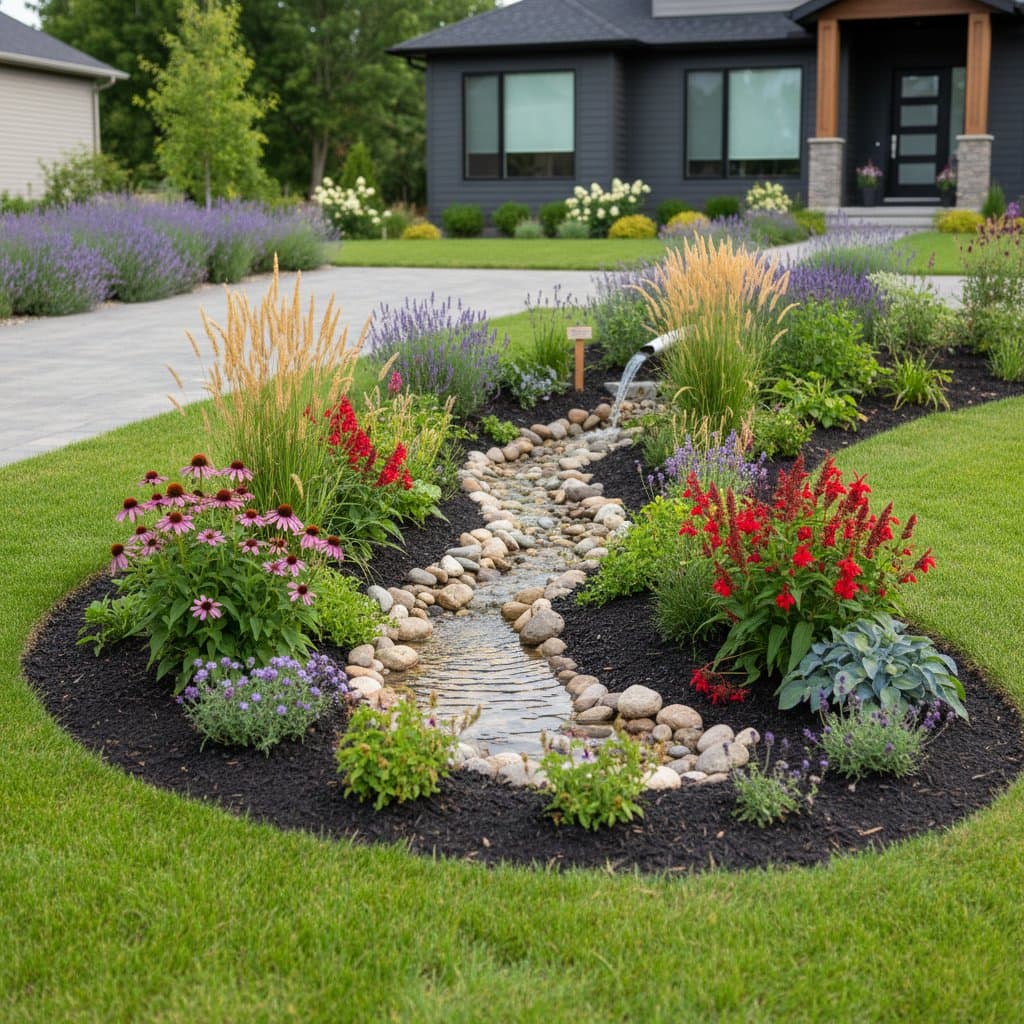
Rain Gardens: Harnessing Rainfall for Sustainable Irrigation
Envision a front yard that welcomes rainfall with open arms rather than forming unsightly puddles. Native grasses absorb the moisture, wildflowers bloom vibrantly, and pollinators gather amid the foliage. This scene represents a rain garden, a practical and affordable approach to landscaping that redefines how homeowners manage water, enhance beauty, and promote environmental health.
Rain gardens capture stormwater runoff, filter it through natural soil layers, and support diverse plant life. They reduce reliance on municipal water supplies during dry periods and mitigate flooding risks after heavy rains. Homeowners increasingly adopt this method to create resilient landscapes that align with broader sustainability goals.
Purposeful Design for Water Management
The Rising Popularity of Rain Gardens
Communities worldwide grapple with water scarcity and intensified storm events due to climate change. Rain gardens address these challenges by integrating seamlessly into residential designs, offering a cost-effective alternative to traditional lawns. They require up to 50 percent less water than conventional turf, according to landscape experts, making them ideal for regions with restrictions.
Modern aesthetics favor naturalistic elements, and rain gardens deliver with their undulating shapes and textured plantings. They transform mundane yards into dynamic spaces that evolve with the weather. Landscape architect Elena Torres notes, "Rain gardens embody the shift toward regenerative design, where every element serves multiple purposes—from erosion control to aesthetic enhancement."
Homeowners report increased property values and neighbor admiration after installation. These gardens also qualify for rebates in many municipalities, further incentivizing adoption. The trend extends beyond front yards to community parks and commercial sites, signaling a broader cultural embrace of water-conscious living.
Steps to Create Your Rain Garden
Assess your site carefully before beginning construction. Identify low-lying areas where water naturally converges, ensuring the spot receives at least four hours of sunlight daily for optimal plant growth. Measure the drainage area, such as roof sections or paved surfaces, to size the garden appropriately—aim for one square foot of garden per 10 square feet of contributing impervious surface.
Prepare the site by marking the basin outline with string and stakes. Remove sod and till the soil to a depth of 12 inches, then amend with a rain garden soil mix: 60 percent sand, 20 percent compost, and 20 percent topsoil. This composition promotes rapid infiltration while retaining enough moisture for plants.
Follow these detailed steps:
-
Excavate the basin. Create a saucer-shaped depression with sides sloping at a 3:1 ratio for stability. The center should be deepest, transitioning to shallower edges.
-
Install an overflow outlet. Add a shallow trench or pipe at one edge to direct excess water away during intense storms, preventing overflow toward structures.
-
Select and plant species. Position wetland-tolerant plants like blue flag iris in the lowest areas, mid-range tolerants such as bee balm on berms, and drought-resistant options like little bluestem on the perimeter. Space plants according to mature size to allow for root expansion.
-
Apply mulch and edging. Spread two to three inches of organic mulch over bare soil to conserve moisture and moderate soil temperature. Use natural stone or recycled edging materials to define boundaries and guide surface flow.
-
Test and adjust. Simulate rainfall with a hose to verify drainage; the basin should empty within 24 to 48 hours. Fine-tune plant placement or soil amendments as needed.
Establishment takes one to two growing seasons, during which supplemental watering may be necessary. Once mature, the garden operates autonomously, requiring only annual inspections for sediment buildup or invasive species.
Benefits and Ongoing Care
Observe the garden's performance after installation to appreciate its full impact. Post-rainfall, water percolates slowly, nourishing roots without waste. In arid conditions, deep soil moisture sustains foliage, contrasting with parched adjacent areas.
Beyond water savings, rain gardens boost ecological value by attracting bees, butterflies, and birds, fostering a mini-wildlife corridor. They also reduce mowing and fertilizing needs, cutting maintenance time and costs by up to 70 percent.
Maintain vitality through routine tasks: remove debris after storms, divide overcrowded perennials every three years, and replenish mulch in spring. Monitor for pests, favoring organic controls to preserve the garden's natural balance. With these practices, your rain garden evolves into a enduring feature that enhances both your property and the environment.